How University Labs Are Shaping the Future of Biodegradable Plastics
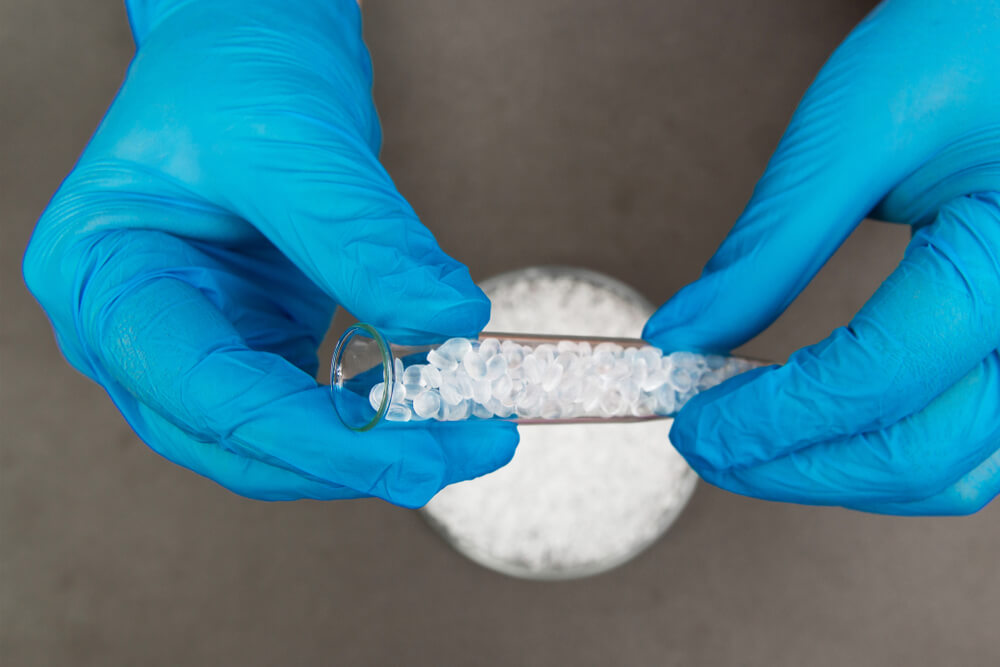
Plastics revolutionized medicine, transportation, food preservation, as well as the global economy. The fact that they are convenient cannot be denied, but the negative side has become hard to ignore. Hundreds of billions of tons are still sitting in landfills, in ecosystems, in the oceans, and even in the human body in form of micro- and nanoplastics.
How Are Students Influencing the Research?
University students have become a strong force in the second wave of sustainable manufacturing as policymakers argue the waste-management reforms, and industries consider new materials. In chemistry, engineering, and materials-science departments, there is an overlap between curiosity and scientific discipline in which college STEM students devise, experiment with, and develop solutions to the problem of alternatives to traditional plastics.
Many professors describe their classrooms as a sustainable materials lab on a smaller scale. The controlled ovens, tensile testers, pressure plates, microscopy instruments, and digital sensors are used instead of massive reactors or industrial machinery, which students operate. These tools enable them to examine the action of biodegradable materials with astonishing intensity.
Some universities go so far as to have a lab-simulation platform where students who cannot use physical equipment can apply their theoretical knowledge to something that is more like experience. Regardless of whether the experiment takes place on campus benches or in virtual reality, the objectives are the same: less pollution, new materials, and the possibility of organic and mineral-based materials competing in the power and properties of plastics.
Related: The Power of Bioplastics: Engineering a Plastic Free Future
Evaluation of Biodegradable Materials Inside College Labs
Structured, controlled research is encouraged in modern engineering labs. Students adhere to measurement procedures that are nearly identical to those used by businesses. They can better comprehend why some plastic substitutes only work in specific settings thanks to this kind of scholarly rigor.
A typical student-run experiment might include the following tests:
- Tensile strength analysis to determine how much force a material withstands.
- Elongation measurement to see whether it stretches or snaps.
- Moisture absorption tracking over several days in sealed humidity chambers.
- Thermal stability checks using small heat plates and infrared scanners.
- Biodegradation assessments in soil, compost, and controlled aqueous settings.
Students often work as a team, but individual responsibility remains high. A single student-researcher may control instrumentation, another may model data, while a third manages sample preparation. Collaboration mirrors a small research lab more than a classroom.
Diversity of measurements promotes innovativeness as well. A group of students who explored the use of algae-based films found that the relationship formed by pulverized eggshell enhanced bonds at the micro-level. A different team that was working on casein-based plastic accidentally produced a substance that was surprisingly brittle but the failure that they made caused them to find out a potentially useful food-safe coating.
The Role of Data and Analysis
Some teams struggle with data modeling, especially when mechanical properties fluctuate across small sample groups. Instead of letting inconsistent data hinder progress, students increasingly rely on digital tools that help with formula manipulation, force-curve interpretation, and uncertainty calculations. These platforms reinforce technical confidence and encourage broader problem-solving skills across research domains.
Because projects rely on precise numerical interpretation, analytical tools offer enormous support for student innovation in plastics, especially under tight deadlines. A popular choice among students is using an AI research assistant that can quickly highlight key information on various types of academic publications. This enables them to move from data collection to actual problem-solving much faster.
Related: Why Big Companies Should Invest in Sustainable and Innovative Plastic Alternatives?
New Curiosity About the Limits of Plastic Alternatives
Today’s engineering and chemistry students are already aware of the scope of the plastics crisis. Scientific reporting, documentaries, and public campaigns have made sure of that. They are most surprised by how difficult it is to replace plastics instead of just cutting them. Conventional polymers have remarkable durability, stability, moisture resistance, and predictable mechanical behavior. A lot of natural substitutes fall short in at least one of those areas. Students are being inspired to delve deeper into material science by this gap.
In introductory project courses, students compare the fundamental behavior of:
- Starch-based bioplastics
- Cellulose composites
- Gelatin and whey-derived casein plastics
- Bacterial polyhydroxyalkanoates (PHAs)
- Fungal mycelium composites
- Algae and seaweed-derived films
Each option offers benefits and drawbacks: Cellulose shows good strength but limited flexibility. Starch performs well for packaging but suffers under humidity. Mycelium absorbs shock surprisingly well, but decomposes unless sealed. These contrasts force students to think critically about real-world constraints. Innovation requires trade-offs.
For a semester-long college STEM project, instructors at universities assign students to choose a material and try to enhance at least one of its properties, such as strength, moisture resistance, elasticity, or biodegradation rate. Attempts range from adding natural fibers to altering the curing temperature. Even unsuccessful experiments provide valuable insights into how far natural materials can be stretched before fundamental limitations prevent them from doing so.
Related: 5 Edible Cutlery Brands for Incredible Eats and Drinks On-the-go Without Plastic!
A Look at the Bioplastic Materials Students Investigate
Below is a reference table summarizing the primary materials students encounter and the challenges that frequently appear in project reports:
| Material Type | Advantage | Limitation | Typical Campus Use |
| Starch-based bioplastic | Low cost and easy preparation | High moisture sensitivity | Packaging prototypes, small containers |
| Cellulose composite | Good strength and stability | Requires more processing steps | Structural panels, classroom demos |
| Mycelium composite | Shock absorption and natural insulative properties | Slow growth and variable density | Sustainable packaging, molded panels |
| PHA (bacterial polymer) | True biodegradation and strong potential for industrial use | Expensive and slow to produce | High-end research projects |
| Algae-based film | Transparent and flexible | Short lifespan and weak tensile strength | Food-safe wraps, experimental coatings |
The table illustrates what students quickly learn: each option works well in one location but poorly in another. This contrast promotes focused inquiry rather than frustration. Electronics packaging could be handled by a cellulose-based prototype, while shipping materials could be protected by mycelium. There is more potential in diversity than in a single ideal replacement.
Related: Plastic-Free Blister Pack: A Sustainable Packaging Solution
Real Experiments in Undergraduate Classrooms
A walk through a typical materials lab during project season reveals a surprising level of creativity. Descriptions from several faculty members across different institutions highlight recurring project themes.
Projects with strong results often include:
- Cornstarch blends cured to reduce swelling while retaining flexibility
- Seaweed polymers modified with small quantities of natural oil
- Mycelium bricks growing inside 3D-printed molds
- Casein plastic chips compared against petroleum polymers for thermal resistance
- PHAs cultivated from safe bacterial cultures under varied nutrient levels
Unexpected findings enrich discussions. Some students discover that organic fibers, such as jute or hemp, dramatically improve tensile strength in bioplastics. Others notice that slight pH changes transform brittleness. These observations help students think like material scientists rather than passive learners.
Potential for Real-World Impact
Experimental freedom is encouraged in higher education settings. Even though there is no financial risk associated with mistakes, the learning value is still enormous. When students enter industry or graduate school with experience choosing raw materials, evaluating mechanical properties, and comprehending environmental implications, the larger scientific community undoubtedly benefits.
Beyond their own training, this student-led project has an impact. Their initiatives often develop into:
- Capstone research posters presented at sustainability conferences
- Partnerships with local companies exploring eco-friendly packaging
- Internal university competitions designed to reward low-waste solutions
- Prototype showcases for community groups concerned about pollution
Universities act as incubators rather than final manufacturing hubs. Yet ideas seeded in campus labs often find new life when shared with faculty, entrepreneurs, or regional sustainability leaders. Student creativity pushes established experts to rethink old assumptions.
Related: Why Big Companies Should Invest in Sustainable and Innovative Plastic Alternatives?
The Future of Plastic Alternatives
The plastic pollution crisis exists across oceans, industries, and generations, and yet the answers can be found in the most unexpected corners of the world. In the college lab, students are experimenting with unfamiliar materials, analyzing uncertain reactions, and disproving the assumptions on which all the production has rested for the past several decades.
The next ten years may see the discovery of new materials that are far more adaptable than the current prototypes as research continues. Students are in a position to hasten this change. While their aspirations push the world towards cleaner futures, their experiments show what is possible. Every prototype advances society towards sustainable manufacturing, even if none of them are successful. More than ever, the world needs that momentum to secure the future of biodegradable plastics.