New Product Safety Course: Microplastics in Non-Food Consumer Products
Microplastics Are Hiding in Your Products.
Learn How to Find Them - Before Regulators Do.
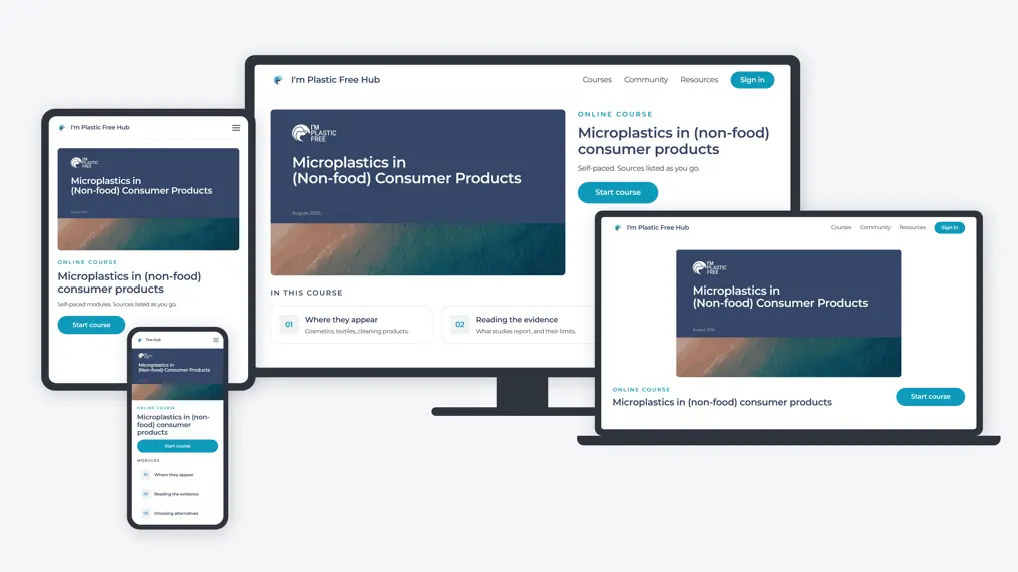
The world’s first online course giving procurement, QA, compliance and retail teams a practical framework to identify and reduce micro- and nanoplastic risk in non-food consumer goods.
Your Supply Chain Has a Hidden Risk. We Offer a Practical Framework, not just Hidden Theory.
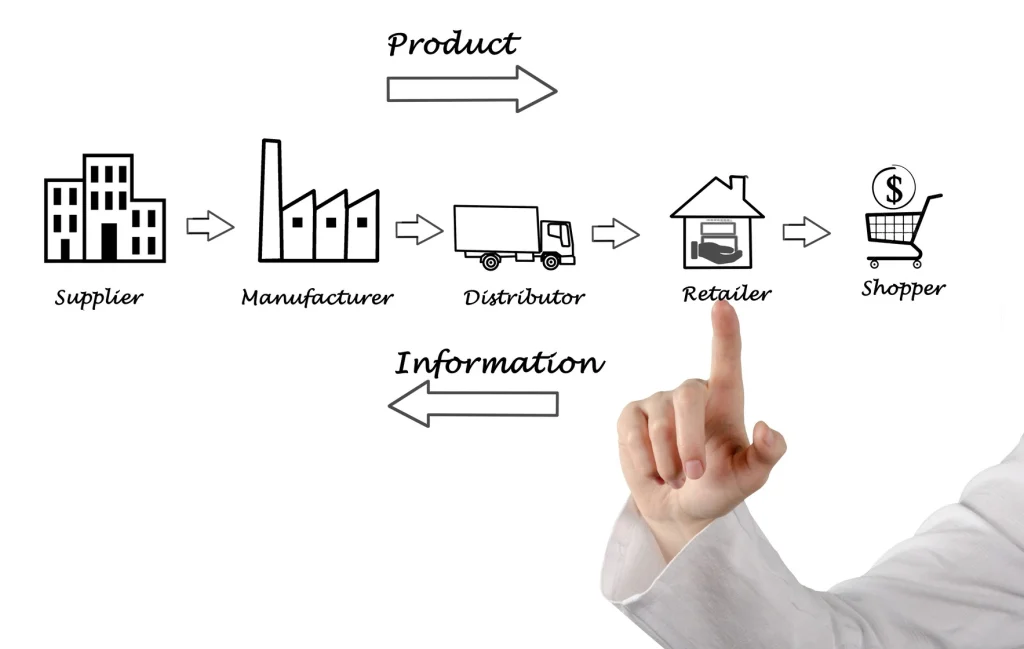
Micro- and nanoplastics are shedding from everyday consumer goods — textiles, apparel, packaging, molded plastic components — at every stage of the product lifecycle. Regulators are tightening standards. Retailers are asking harder questions. Consumers are paying attention.
Most procurement, QA and compliance teams have no formal way to spot this risk before it becomes a failed audit, a lost contract, or a reputational crisis.
This course gives your team a clear, three-step method: understand the hazard, identify which products and materials are at risk, and apply proven strategies to reduce it. Built for real procurement and QA workflows — with an optional deep-dive for the textile industry.
Why Join This Training?
- First-to-market expertise: the only course translating microplastic science into an operational framework for consumer goods businesses.
- Built for your role, not a science degree — no chemistry background needed.
- Actionable frameworks and checklists you can apply immediately to audits and specs.
- Get ahead of fast-evolving international compliance standards.
- Protect brand reputation with verifiable, low-shedding products.
- Flexible depth — core modules for every industry, plus a textile-specific add-on.
Who Is It For?
- Procurement, Sourcing & Category Managers
- QA & Compliance Professionals
- Retailers, Importers, Founders & Small Business Owners
- Government & public sector product safety professionals
What You'll Walk Away With
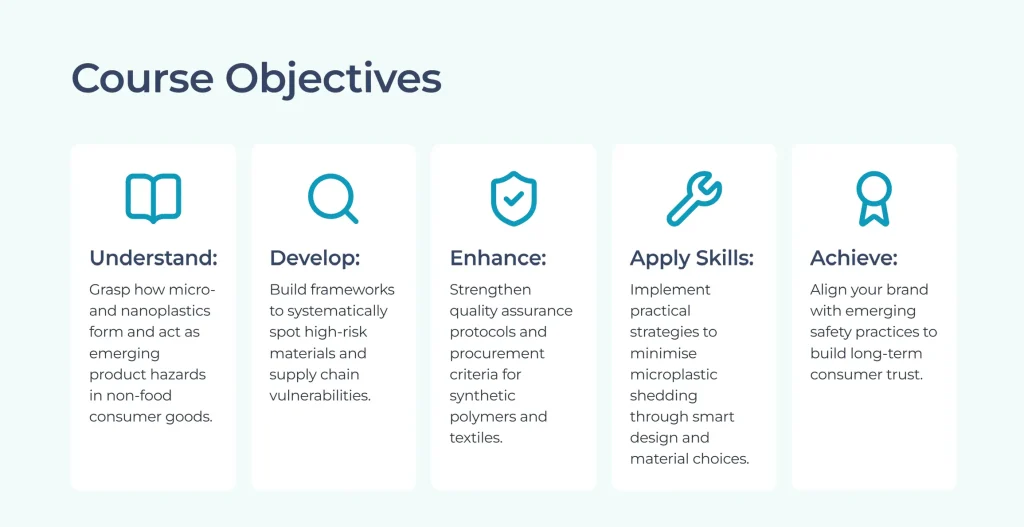
- A clear understanding of how microplastics form and where liability hides in your products.
- A repeatable framework to flag high-risk materials and suppliers.
- Procurement and QA criteria updated to manage synthetic polymer risk.
- Practical mitigation strategies for materials, design and production.
- A stronger compliance position, and…
- A trust story you can tell retailers and customers.
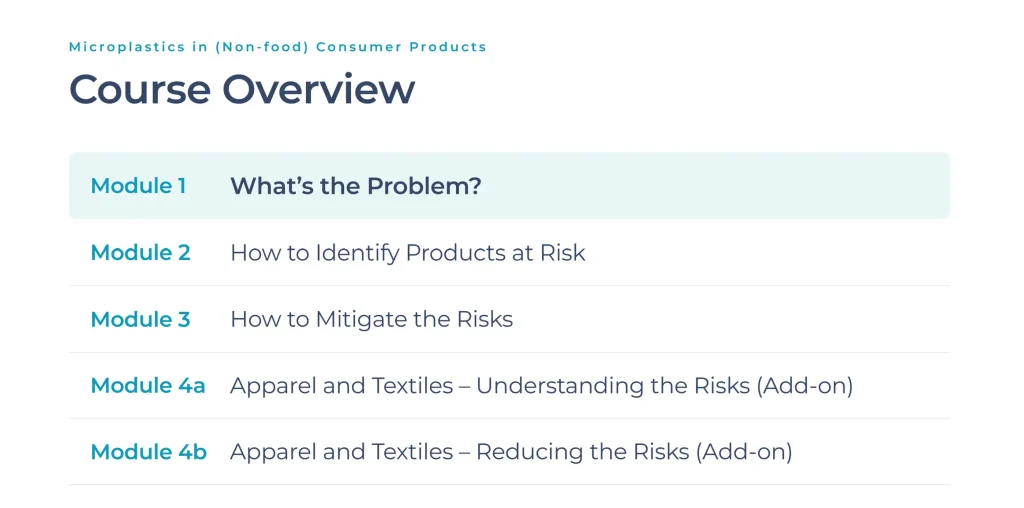
What's Inside The Online Course?
Module 1 — What’s the Problem?
How micro- and nanoplastics form, where they accumulate in non-food goods, and why it’s a growing liability.
Module 2 — How to Identify Products at Risk?
Practical methods to evaluate supply chains, materials and manufacturing for shedding risk.
Module 3 — How to Mitigate the Risks?
Cross-industry solutions for procurement criteria, QA standards and safer materials.
Optional: Textile Industry Add-On (2 Modules)
A deeper dive into synthetic textile shedding and lifecycle mitigation strategies — available for an additional fee.
Each core module includes a short quiz to reinforce what you’ve learned.
Meet Your Instructors

Simona Paganetto
Founder & Managing Director
I'm Plastic Free
An impact-driven entrepreneur with over 20 years in international brand management and product commercialisation for MedTech multinationals. Simona founded I’m Plastic Free to connect businesses and consumers with trusted, research-based solutions to microplastic exposure. She holds a Circular Economy certification and completed executive sustainability training at the Harvard T.H. Chan School of Public Health, and her work has been recognised nationally with a People’s Choice Award at the 2025 Banksia National Sustainability Awards.
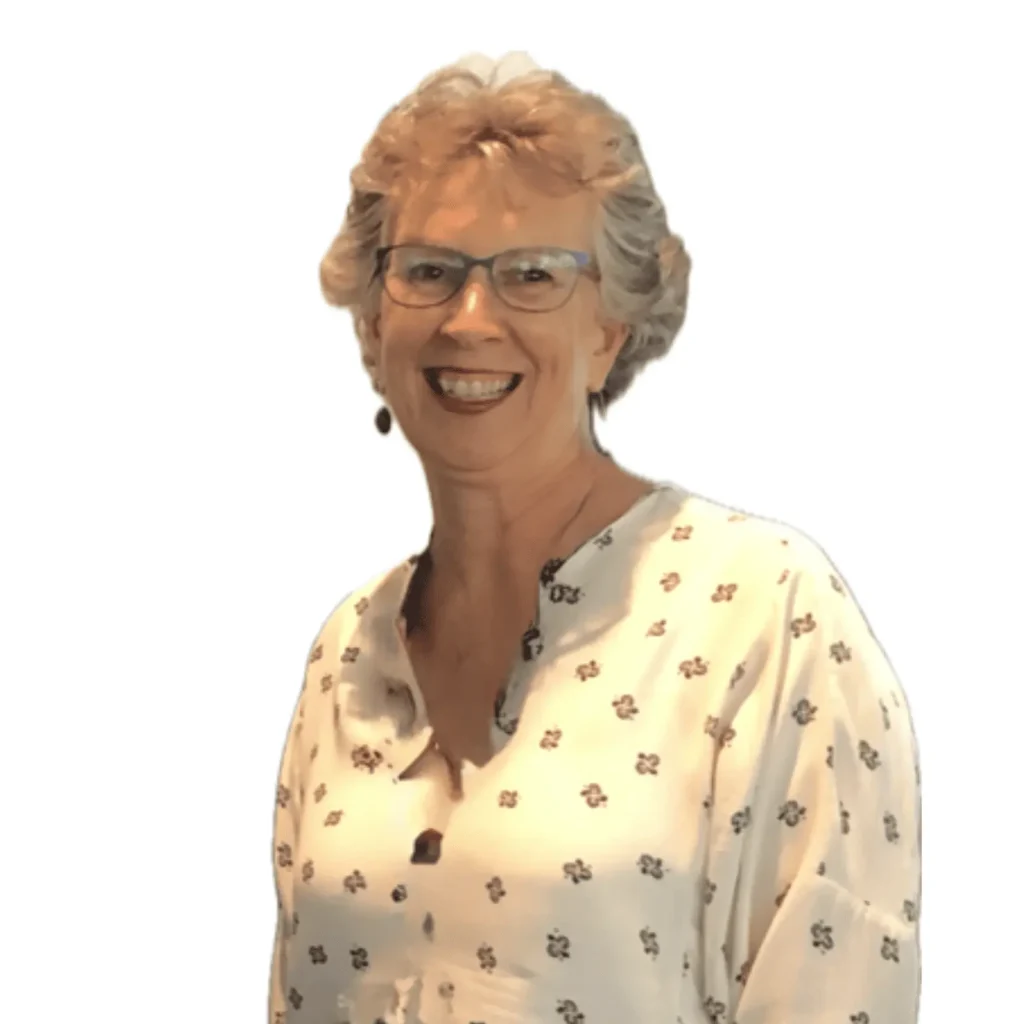
Gail Greatorex
Owner & Principal Consultant
Product Safety Solutions
A product safety authority with over three decades of experience in compliance, risk mitigation and consumer protection, including 25 years leading product safety at the ACCC. Gail’s real-world regulatory expertise and practical approach to hazard management shaped the core frameworks taught throughout this course. Her extensive experience working at the intersection of regulation, industry and consumer protection brings a uniquely practical perspective to identifying and managing emerging product safety risks.
Turn a Hidden Risk into a Competitive Advantage
Microplastic scrutiny in consumer goods is only going to grow. Give your team the world's first practical framework to get ahead of it.
What Past Participants Say

“Before this course, microplastics weren’t even on our supplier scorecard. Now we have specific questions we ask every vendor, and it’s already changed who we choose to work with.”
— Sourcing Manager
“We’d read the headlines about microplastics but had no real framework to act on. This course gave our QA team a checklist we could apply the same week — not just theory.”
— Compliance Manager
“As a small brand, we assumed this kind of risk only applied to big manufacturers. This course showed us exactly where our exposure was — and it was more than we expected.”
— Founder
Frequently Asked Questions
Tiny plastic particles and fibres shed from synthetic materials during manufacturing, use and disposal.
It’s an emerging safety, compliance and reputation risk in non-food consumer goods.
No. The course translates the science into practical steps for procurement, QA, compliance and business teams.
This online course is structured in three core modules plus quizzes to better memorize the content of the modules. It also offers two optional advanced paid modules for organisations in textiles and apparel.
Yes, it is. The core modules apply across all non-food consumer categories.
The textile add-on is for deeper, sector-specific details.
Your team will be able to identify high-risk products and materials, build risk checks into procurement and QA, and apply real mitigation strategies.
The core training modules have a total duration of approximately one hour.
Additionally, three quizzes are included to help you master the key frameworks and content.
Yes, absolutely. You will receive a certificate of completion once you complete the three core modules, and pass the three quizzes with a score of 80% or higher.