5 Non-Toxic, Plastic Free Water Bottles Without Microplastics

We all know how important staying hydrated is for our health, but have you ever thought about what’s actually in your water bottle?
Most of us reach for reusable bottles to avoid waste, but not all of them are created equally. Reusable plastic bottles can leach tiny particles called microplastics into your water, especially when exposed to heat or wear and tear.
Choosing a plastic-free water bottle made from stainless steel, glass or other non-toxic materials is one of the simplest switches you can make to reduce microplastic exposure and plastic waste.
The Environmental Issue with Single-use Plastic Bottles and Even Reusable Plastic Bottles
Single-use plastic bottles are among the top contributors to plastic pollution world-wide. 75% of plastic bottles are not recycled and take over 450 years to decompose (1), releasing microplastics and chemicals into the environment as they break down. Even “reusable” plastic bottles aren’t much better. Over time, wear and tear from heat (i.e. from leaving a bottle in the car), UV exposure, and cleaning can cause micro-cracks that release microplastics into your water bottle.
That means whether you’re sipping from a single-use bottle or refilling a cheap reusable one, you’re still contributing to the same plastic pollution cycle, just at a slower pace. Choosing plastic-free alternatives like stainless steel or glass bottles breaks this loop entirely, offering a healthier and longer-lasting way to hydrate without adding to the waste stream.
How Plastic Bottles Release Microplastics Into Water
Microplastics in bottled water are no longer just a theory, they’re a proven reality. Over time, plastic breaks down. When you wash your bottle, leave it in the sun, or drop it a few times, small cracks and scratches can form and that’s when microplastics start leaching into your drink. A recent 2025 study published in Science of The Total Environment (2) found that single-use plastic water bottles contain thousands to tens of thousands of micro and nanoplastic particles per litre, depending on the packaging type and storage conditions.
But here’s the surprising part, glass bottles aren’t automatically “safe” either. Another 2025 study commissioned by France Food safety Agency ANSES, and published in the Journal of Food Composition and Analysis (3) revealed that drinks stored in glass bottles, including water, sodas, iced teas, wine and beer, often contained even more microplastic particles than those in plastic or aluminum containers.
Researchers traced the contamination not to the glass itself, but to the paint coating on metal bottle caps, which can flake off over time and end up in the liquid. In fact, friction between the bottle caps during storage can create microscopic abrasions, potentially releasing these particles. In some cases, the microplastic particles matched the color and chemical makeup of the cap’s paint. This means that no matter the packaging, every part of the bottle matters.
Until more standards are in place, the safest bet is to use long-lasting, high-quality bottles made from food-grade stainless steel or borosilicate glass, possibly with zero coatings or paint. It’s also safer to use tap water and to filter it to remove microplastics and other contaminants.
Related: Microplastics in Water Bottles – How Dangerous is It?
5 Microplastic Free Reusable Water Bottles That Will Last a Lifetime
At I’m Plastic Free we help you eliminate the issue at the source. For all the reasons outlined above, we provide our readers with alternative solutions that do not release microplastics.
This post contains affiliate links, which means we may receive a small commission, at no cost to you, if you make a purchase through a link. This helps us continue the hard work we put into researching products and solutions.
Please Note: Our health content is for informational purposes only and is not intended as professional medical advice. Consult a medical professional on questions about your health. Please read our disclaimer.
1. Klean Kanteen Reflect Water Bottle with Bamboo Cap
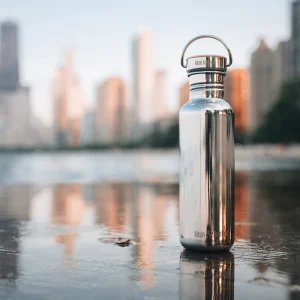
The Klean Kanteen bottle is a timeless classic for anyone looking to ditch plastic for good. It’s made from 18/8 food-grade stainless steel, it’s free from BPA, lead, and other harmful chemicals. It has a natural bamboo cap, and a food-grade silicone ring.
What we love most is its sleek, durable design that resists dents and odours, keeping your water tasting clean and pure. Whether you’re hiking, commuting, or heading to class, this bottle does the job without leaching microplastics or retaining flavours.
Capacity: 27 oz /800 ml
Shop on Amazon
Related: I Tested My Blood for Microplastics: Here’s What I Learned
2. Bambaw Insulated Stainless Steel Water Bottle
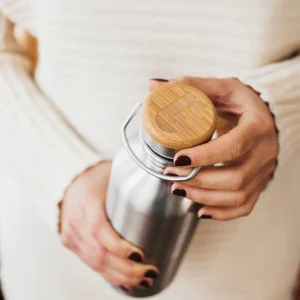
The Bambaw stainless steel bottle combines minimalist design with zero-waste ethics. Crafted from high-grade 18/8 stainless steel, this lightweight and durable bottle is completely BPA-free and built to last a lifetime.
Its wide-mouth opening makes it easy to clean, fill, and even add ice cubes on hot days. The insulated bottle keeps liquid cold for 24 hours, and hot liquids stay hot for 12 hours. The leakproof bamboo lid gives it a natural touch while keeping your drink fresh and toxin-free.
Capacity : 12oz / 350ml, 16oz / 500ml, 24oz / 750ml, and 32 oz/ 1L
Shop on Amazon
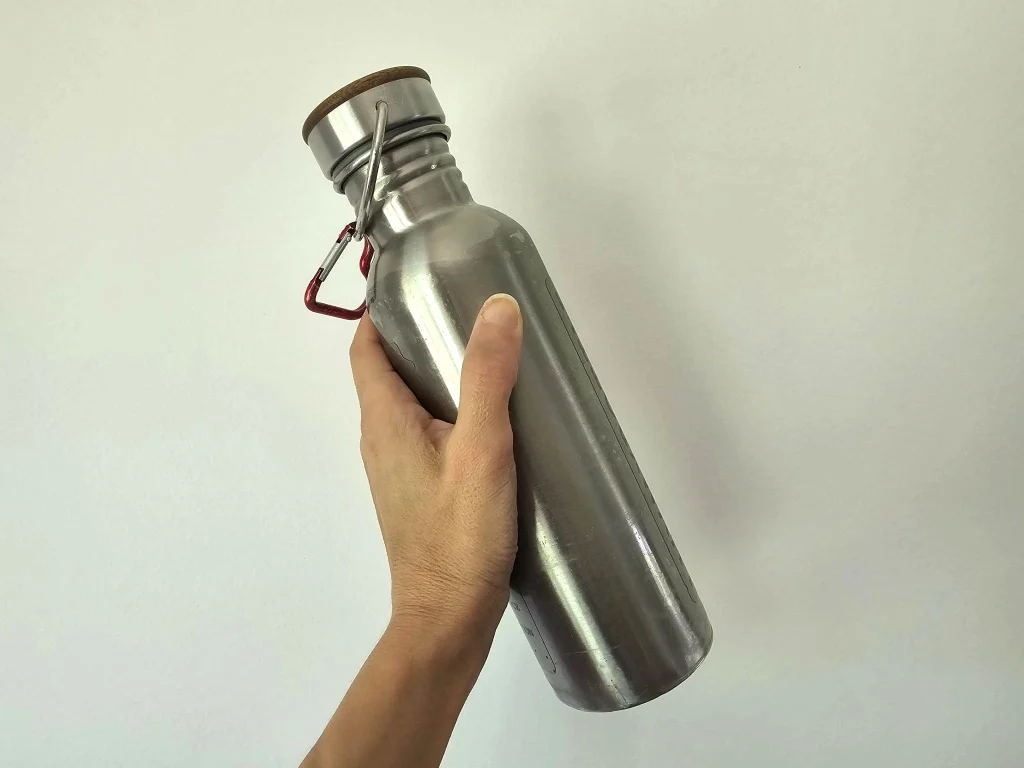
Image credit: I’m Plastic Free testing and using the Bambaw Plastic Free Reusable Water Bottle
Related: Plastic Free Water Filters: Can We Find Water Purifiers without Plastic?
3. Klean Kanteen TK Pro Insulated Thermos (Plastic-free Thermos)
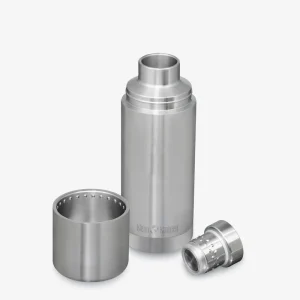
Made from food-grade stainless steel, this bottle is 100% plastic-free inside and out. The double-wall vacuum insulation keeps your drinks hot for up to 28 hours or iced up to 90 hours, making it ideal whether you’re commuting, hiking, or just sitting at your desk. It’s a premium bottle, so it’s heavier than ultra-light plastic bottles.
Capacity : 24 oz / 750 ml
Shop on Amazon
Related: 3 Types of Stylish Plastic Free Reusable Coffee Cups You Can Take Anywhere
4. BLACK + BLUM Stainless Steel Explorer Water

The BLACK + BLUM Explorer Bottle proves that eco-friendly can still be stylish. This double-walled stainless steel bottle keeps your drinks cold for 24 hours or hot for 12, making it perfect for any season. It’s BPA-free, leakproof, and designed with a strong stainless-steel loop cap for easy carrying. The silicone ring in the lid can be removed for cleaning.
Capacity : 650ml or 800ml
Shop on Amazon
Related: 6 Best Non Toxic Lunch Boxes That Don’t Shed Microplastics
5. Stainless Steel Replacement Lid for Your Water Bottles (Instead of Buying Another Bottle!)
Before we recommend another water bottle, we would like to encourage you to review the stainless steel reusable bottles you have in your cupboard, and see if you can replace the plastic lid with some stainless steel lids. Some manufacturer that value circular economy principles introduced stainless steel lids in their portfolio to match their bottles.
Here are the ones we found:
- Original Replacement Lid for Hydro Flask 12-64oz Wide Mouth Bottles: from Amazon (It looks like the original it’s currently not available. Please email the brand to ask to place it back on stock!)
- Non-Original Replacement Lid for Hydro Flask 12-64oz Wide Mouth Bottles (and other brands): from Amazon
- Original Healthy Human Classic Stein Lid Replacement: from Amazon
- Original Klean Kanteen Classic Steel Loop Cap Replacement: from Amazon
Related: 10 Benefits of Drinking Tap Water vs Bottled Water
Q & A
1. Why Should I Invest in a Kigh-quality Reusable Bottle Instead of a Cheap One?
Because quality lasts. A good stainless steel or glass bottle might cost more upfront, but it’ll last for years and save hundreds of single-use bottles from landfill. Plus, it keeps your water tasting pure, no strange plastic aftertaste ever again.
2. Are Stainless Steel and Glass Bottles Really Safer than Plastic Ones?
Yes, stainless steel and glass bottles are completely free from BPA, phthalates, and other chemicals that can leach from plastic, especially when exposed to heat or sunlight. Unlike plastic bottles, they also don’t release microplastics into your water.
Related: Why Should You Avoid Plastic Water Bottles?
Conclusion: Switch to a Non-toxic Reusable Bottle
A plastic-free reusable water bottle might seem like a small switch, but it’s one that protects both your health and the planet.
The latest research shows that microplastics can sneak into our drinks from all kinds of packaging, not just plastic bottles. By choosing non-toxic materials like stainless steel or glass and avoiding painted or coated caps, you’re taking a powerful step toward cleaner hydration.
Do you have any questions or comments? Let us know in the comments section below.
Related: 5 Benefits of Plastic Free Glas Smoothie Bottles
Scientific Research Sources:
(1) https://wwf.org.au/blogs/the-lifecycle-of-plastics/#
(2) https://www.sciencedirect.com/science/article/pii/S0304389425018643
(3) https://www.sciencedirect.com/science/article/pii/S0889157525005344
This article was written by Ella Matthews, and reviewed by I’m Plastic Free Editor, Simona Paganetto
—
Browse the I’m Plastic Free platform to discover non toxic plastic alternatives.