Plastic-free reusable coffee cups are travel mugs made entirely of stainless steel, glass, or ceramic with zero plastic contact points with the hot liquids. Designed to eliminate exposure to toxic microplastics and forever chemicals found in disposable paper cups, these durable, eco-friendly alternatives provide safe, pure-tasting coffee on the go.
Single-use coffee cups are a true environmental disaster, but luckily, plastic free reusable coffee cups exist.
Since the concept of the coffee-to-go was invented, and it became very popular in the US thanks to Starbucks… most of us grew up getting our coffee from a “paper cup”, however we’re not familiar that these cups are not just made of paper… in fact, They’re made of paper and lined with plastic (high density polyethylene or HDPE), otherwise they wouldn’t be able to hold the hot liquid. We have written another separate article that explains in detail how disposable coffee cups are made. They get thrown out in millions every hour or so, and are not easily recyclable.
What are The Waste Issues with Disposable Coffee Cups?
All popular coffee chains use single-use paper cups, and globally, over 500 billion disposable cups are consumed annually, of which between 250 and 300 billion are plastic-lined, according to The Lifecycle Initiative report (1) by United Nations Environment Programme (UNEP).
According to Rethink Disposables, a program by Clean Water Action, in the United States alone, 120 billion single-use coffee cups (2) are used each year. This type of waste stream is, in fact, not recyclable unless it is processed by a specialized recycler because of their plastic-coated paper or foam. This, alone, is a reason to stop using them.
Do Disposable Coffee Cups Shed Microplastics?
The answer is yes. A 2021 study 2021 study (3) published in the Journal of Hazardous Materials analysed hot water (85–90 °C / 185–194°F) kept in a disposable paper cup for 15 minutes. Researchers found staggering quantities of micro- and nano-sized plastic particles released from the cup’s lining:
- Micron-sized microplastics: About 25,000 particles were released per 100 milliliters of liquid.
- Sub-micron / Nano-sized plastics: When looking at particles smaller than 1 micron using advanced microscopy, the number jumped to roughly 10.2 billion sub-micron particles per 100 milliliters.
The study concluded that drinking a few hot beverages a day from standard plastic-lined paper cups results in the ingestion of tens of thousands of micro-sized particles and billions of nanoparticles over time.
Do PLA Biodegradable Coffee Cups Release Microplastics? New 2026 Study from Australia
A 2026 study (4), published in ACS Food Science & technology examined the release of plastic particles from single-use paper cups lined with either conventional polyethylene (PE) or biodegradable polylactic acid (PLA) when exposed to hot water:
- Poly-lactic acid (PLA) lined single-use paper cups: Released approximately 4.3 million nanoparticles per millilitre. By mass, these cups released around 12 times more plastic material than PE-lined cups.
- Polyethylene (PE) lined single-use paper cups: Released approximately 2.7 million nanoparticles per millilitre.
PFAS Also Found in Coffee Paper Cups
Furthermore a November 2022 study by the Australian Packaging Convenant Organisation (APCO) (5) found high levels of polymeric PFAS (per- and polyfluoroalkyl substances) also called forever chemicals in one quarter of the 75 fiber based packaging types they analysed.
Based on this research, we strongly recommend to stay away from single-use food packaging and opt for plastic free reusable coffee cups.
Related: Is Microplastics Leaching into Your Coffee?
3 Types of Stylish Plastic Free Reusable Coffee Cups
Our Rigorous Testing & Evaluation Methodology at I’m Plastic Free
At I’m Plastic Free, we combine over two decades of commercialisation and sustainability expertise with strict, evidence-based product research. When we evaluate “plastic-free” alternatives, we don’t just take manufacturer claims at face value. We evaluate products based on circular economy principles, genuine material breakdown safety, and complete supply chain transparency, scrutinizing internal linings, lid components, adhesives, and exterior coatings. Our goal is to protect consumers from hidden microplastics, toxic PFAS (forever chemicals), and misleading greenwashing so you can make truly safe, sustainable choices.
This post contains affiliate links, which means we may receive a small commission, at no cost to you, if you make a purchase through a link. This helps us continue the hard work we put into researching products and solutions.
Please Note: Our health content is for informational purposes only and is not intended as professional medical advice. Consult a medical professional on questions about your health. Please read our disclaimer.
While we take our best efforts to scout plastic-free products around the world, we are also aware that sometimes we need to make compromises for the functionality of the product based on our brand values. In this article we found a few options that have are made with plastic free, safe materials though sometimes for safety reasons, silicone sleeves are added.
1. Reusable Stainless Steel Coffee Cups, Travel Mugs & Tumblers
A reusable stainless steel coffee cup is made of insulated stainless steel, which ensures that hot liquids remain piping hot while cold beverages remain icy cold. Some are double-walled, ensuring the exterior will feel cool to the touch. Its streamlined form renders it resistant to spills and suitable for rough use and extended transportation.
Plus, it doesn’t absorb or transfer flavor! So no matter what drink you fill this cup with, it will taste exactly how you want it to. Some people might not agree with us on this…
However, not all stainless steel reusable travel cups are built the same. Some have lids made from polypropylene, which we accept as it’s very hard to find 100% plastic free drinkware. The good news is that numerous solutions currently employ stainless steel lids, such as the Klean Kanteen Stainless Steel Thermal Insulated Bottle TK Pro listed below!
Recommended Stainless Steel Coffee Cup Brands:
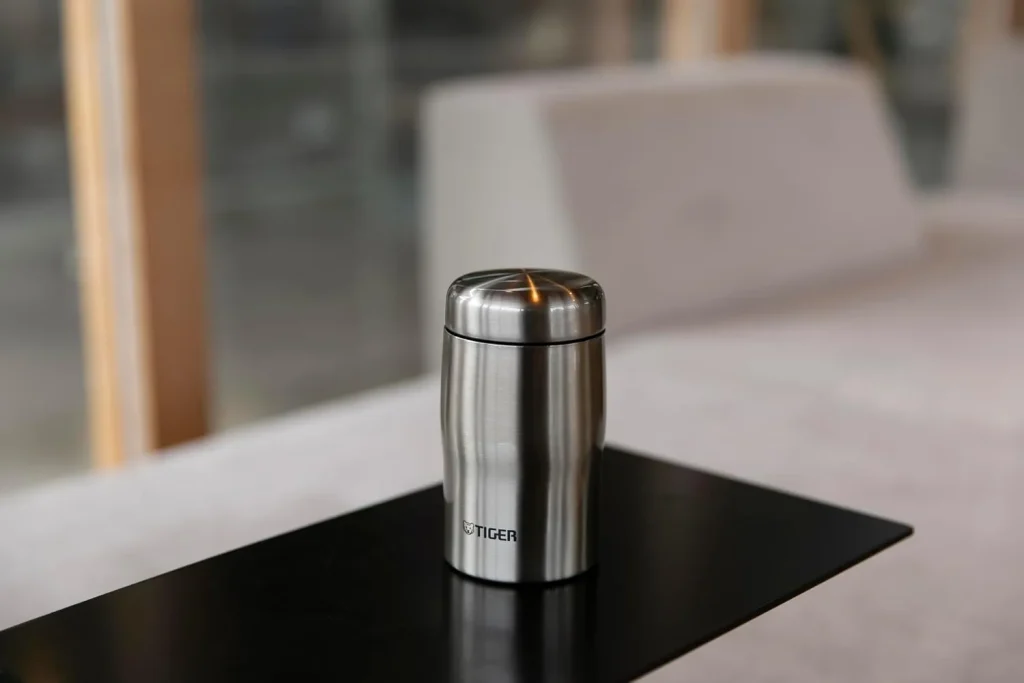
TIGER
- TIGER offers this premium SUS304 (18/8) vacuum insulated stainless steel thermos, coffee cup & water bottles in one, offering excellent durability and corrosion resistance. Every component, including the lid, is made and inspected in Japan to meet high quality standards. Its double-wall vacuum insulation helps maintain hot or cold temperatures for hours, providing reliable performance wherever you go.
- Available in three convenient sizes: 16.2 oz / 500ml, 12.2 oz / 360ml, and 8.1 oz / 240ml from Amazon
- Stainless Steel Double Walled Thermal Coffee Mug with Handle and Lid. It’s not not leak-proof, but great for camping. Available in different sizes from Amazon
Elemental
- Elemental Artisan Insulated Triple Wall Coffee Travel Tumbler with Ceramic Lid: this is another truly plastic free coffee cup as the body is made of insulated stainless steel with copper lining which keeps drinks hot for 6 hours or cold for 18 hours. The lid is made of ceramic for a great mouthfeel and has a silicone plug into the mouth opening. 𝙋𝙡𝙚𝙖𝙨𝙚 𝙣𝙤𝙩𝙚 𝙩𝙝𝙖𝙩 𝙩𝙝𝙚 𝙘𝙚𝙧𝙖𝙢𝙞𝙘 𝙡𝙞𝙙 𝙞𝙨 𝙣𝙤𝙩 𝙡𝙚𝙖𝙠𝙥𝙧𝙤𝙤𝙛, 𝙚𝙫𝙚𝙣 𝙬𝙞𝙩𝙝 𝙩𝙝𝙚 𝙨𝙞𝙡𝙞𝙘𝙤𝙣𝙚 𝙥𝙡𝙪𝙜 𝙘𝙡𝙤𝙨𝙚𝙙, therefore 𝙞𝙩 𝙬𝙞𝙡𝙡 𝙣𝙤𝙩 𝙥𝙧𝙚𝙫𝙚𝙣𝙩 𝙨𝙥𝙞𝙡𝙡𝙨 100%.
- There are two slightly different designs:
YETI
- YETI 30 oz Vacuum Insulated Stainless Steel Tumbler with a magnet in the lid for easy opening, closing, and cleaning, from Amazon (The lid is still plastic though)
Klean Kanteen
- Klean Kanteen TK Pro Brushed Stainless Tumbler (see the picture below): this is one of the two 100% plastic free reusable coffee cup we could find on the market, but unfortunately, it’s not available any longer, what a real shame. It was made of 100% unleaded and 90% recycled steel, even the lid.
- Klean Kanteen insulated coffee cups and smoothie cups from Biome Australia
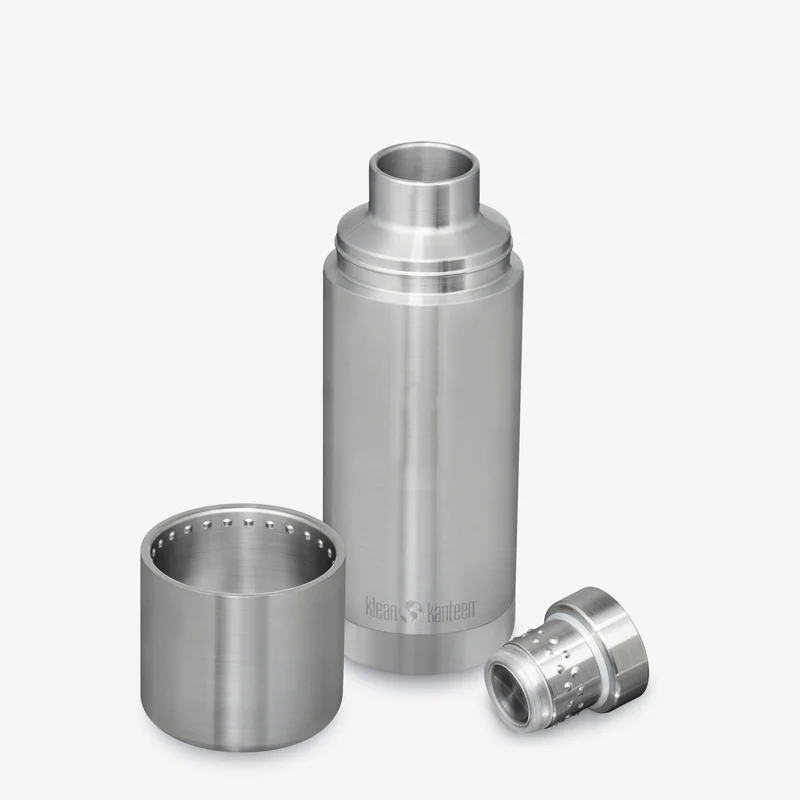 Image Credit: Klean Kanteen
Our Personal Tip: Buy Your Tumbler Only in a Brushed Stainless Steel Finish!
Why? We tried a few tumbers and the powder coated paint on the outside fades and peels and flakes over time making your tumbler look ugly, but most importantly also releasing toxic microplastics into your dishwasher when you wash it and in the environment.
A 2025 University of Queensland study (6) published in ACS ES&T Water found that washing plastic products in a dishwasher releases up to 920,000 micro- and nanoplastic particles into wastewater in a single cycle. If you buy a fully stainless steel, ceramic, or glass product, you have your peace of mind regarding being “dishwasher safe”.
At I’m Plastic Free we stand for “buy once” products, high-quality products that exist for their longevity following the principles of the circular economy.
Related: 13 Non-toxic, Plastic-free Electric Kettles for a Healthy Cup
2. Reusable Glass Coffee Cups with Plastic-free Lids
A reusable glass cup is the perfect way to make a difference in the environment while making your life easier! Its sleeve can be made from cork and rubber, so you can use it repeatedly without worrying about waste or damage. And because these cups are insulated, they’re perfect for keeping drinks hot or cold for hours. Some of them are large enough to be used as smoothie cups.
Plus, the lid has been designed with an innovative spill-proof design that lets you sip without spilling all over yourself or anyone else who happens to be nearby!
Recommended Glass Coffee Cup Brands:
Tupkee
- Tupkee Double Wall Glass Tumbler with Glass Lid – This is one of two borosilicate glass tumblers that I could find which offers a plastic-free coffee sipping experience as your lips won’t touch plastic!
- It’s available in 8 oz and 14 oz from Amazon
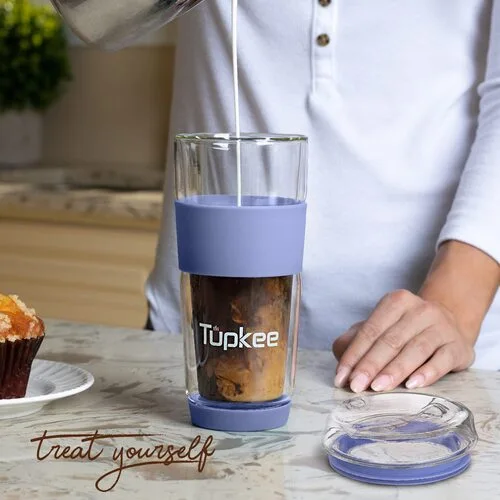
Image Credit: Tupkee
Cicike
- Cicike has developed a 14 oz Double Wall Borosilicate Glass Tumbler with Glass Lid which allows for zero plastic in contac with your coffee – from Amazon
Your Own Mason Jar. Just Buy a Stainless Steel Lid!
- You can create your own unique reusable coffee cup without plastic simply by repurpusing mason jars you already have in your home and by buying just the stainless steel lids that fit their diameter. Here are a few options.
KeepCups
- KeepCups Brew & Cork from Amazon
- KeepCups glass reusable cups from Biome Australia
- Please note their lids are still plastic!
Related: 17 Best Plastic-Free Coffee Makers for Delicious, Non-toxic Coffee
3. Reusable Ceramic Coffee Cups
A reusable ceramic cup is durable and will last a long time, if handled with care, even with frequent use. If you are a true coffee lover, the main advantage of using this type of coffee cup is that ceramic material doesn’t alter the taste of coffee! Another key advantage of this plastic-free reusable coffee cup is that is is dishwasher safe, so cleaning it after each use won’t take much effort. Ceramic cups can last for several years without breaking down or losing their shape or color… Just be careful of not dropping them!
Recommended Ceramic Coffee Cup Brands:
Mora
- Mora Double Wall Ceramic Coffee Travel Mug with Lid – from Amazon
Nova Ceramics
- Nova Ceramics has created a range of top-grade ceramic travel mugs that replicate the coffee shop feel. They keep your drink at the perfect temperature, preserving the pure flavor without any metallic or plastic undertone. They include a silicone lid and a sleeve but these can be removed – from Amazon
Kim Wallace
- Kim Wallace full ceramic coffee cups from Biome Australia
Related: 5 Easy Ways to Transition Your Family to Plastic Free Drinkware
FAQs about Non-toxic Reusable Coffee Cups
– Are Plastic Coffee Cups & Recycled Plastic Coffee Cups Safe?
No, they are not safe. Microplastics have been found to migrate into coffee (or into any hot liquid) from plastic. This is the reason why we recommend, if possible, to avoid this material when in contact with hot liquids or hot food.
– Are Bamboo Coffee Cups Safe?
No, bamboo coffee cups are not made with real bamboo. They are made with bamboo fiber or powder and they are moulded into a cup form using synthetic glue, which is typically a melamine-formaldehyde resin. For these reasons, we don’t recommend these products at I’m Plastic Free.
– Are Plastic-free Single-use Coffee Cups safe?
New cups have come to market that claim to be “plastic-free”. Biodegradable and compostable coffee cups have a coating on them called “water-based dispersion coating”. Don’t be fooled by the term “water” in the phrase Water-based Barrier Coating (WBBC) (7), also called water dispersion barrier or aqueous coating, and used in food packaging to repel the flow of oil, grease and water through the material in order to be “water repellent”. While conventional food packaging lining like PLA or HDPE are sheets of plastic glued to the paper or sprayed onto the paper base to leave a coating, aqueous coating behaves more like a fluid paint that soaks into the paper fibers, therefore becoming impregnated into the pulp of the packaging. However, this coating is made with polymers derived from petrochemicals.
Related: 12 Best Non-Toxic Cookware Brands for a Healthy Kitchen
Final Thoughts on Plastic-free Coffee Cups & Travel Mugs
The time has come to think about a more sustainable, plastic-free future. Thankfully, many forward-thinking companies have already cottoned onto this idea, no longer using plastic cups and containers. In the meantime, these types of stylish, plastic-free reusable coffee cups are a good start! And with how great they look and work, you can use them in any place or setting.
Go forth, find your perfect match, and enjoy your coffee – whether from a cafe’ or from a plastic-free coffee maker – while keeping our planet and ourselves healthy!
References and Scientific Research Studies
(1) United Nations Environment Programme. (2021). Single-use beverage cups and their alternatives: Recommendations from Life Cycle Assessments. UNEP Life Cycle Initiative. https://www.lifecycleinitiative.org/wp-content/uploads/2021/03/UNEP-D002-Beverage-Cups-Report_lowres.pdf
(2) Clean Water Action. (2016). The truth about single-use coffee cups. Clean Water Action & ReTHINK Disposable. https://www.cleanwateraction.org/sites/default/files/CA_ReTh_Infographic_Cups_06.22.16b-1FINAL.pdf
(3) Ranjith, K. S., & Sudhakar, C. (2021). Microplastics release from disposable paper cups into hot water: An unexplored hazard. Journal of Hazardous Materials, 408, 124412. https://www.sciencedirect.com/science/article/abs/pii/S0304389420321087
(4) Shi, K., Okoffo, E. D., Rauert, C., & Thomas, K. V. (2026). Release of nanoplastic and microplastic from polyethylene and polylactic acid lined single use paper cups. ACS Food Science & Technology. https://doi.org/10.1021/acsfoodscitech.6c00541
(5) Australian Packaging Covenant Organisation. (2021). PFAS in fibre-based packaging: Background and considerations for Australian industry. APCO Information Sheet. https://documents.packagingcovenant.org.au/public-documents/PFAS+in+Fibre-Based+Packaging
(6) Okoffo, E. D., Tscharke, B. J., & Thomas, K. V. (2025). Release of micro- and nanosized particles from plastic articles during mechanical dishwashing. ACS ES&T Water, 5(6), 2870–2881. https://doi.org/10.1021/acsestwater.4c00768
(7) Schuman, T., Wikström, M., & Rigdahl, M. (2005). New water-based barrier coatings for paper and paperboard. Surface Coatings International Part B: Coatings Transactions, 88(1), 39–45. https://www.researchgate.net/publication/279759478_New_water-based_barrier_coatings_for_paper_and_paperboard
—
Do you have any questions or comments? Let us know in the comments section below.
Browse the I’m Plastic Free platform to discover non toxic plastic alternatives.