Switch to an eSIM: A Plastic Free Alternative to SIM Cards!
When trying to go plastic free the traditional plastic SIM card, is not exactly what you think to eliminate first, right?
However, as more solutions are available that are lighter on the planet, I’m Plastic Free is here to help, to provide them to you!
Meet the eSIM – a digital, plastic free alternative to the traditional plastic SIM card that’s changing how we connect and therereby reducing our carbon footprint in the process. The “e” in front of SIM stands for “embedded” because it’s inbuilt into your device and allows you to connect with your selected communication network without the need of a physical card.
The Environmental Impact of Traditional SIM Cards
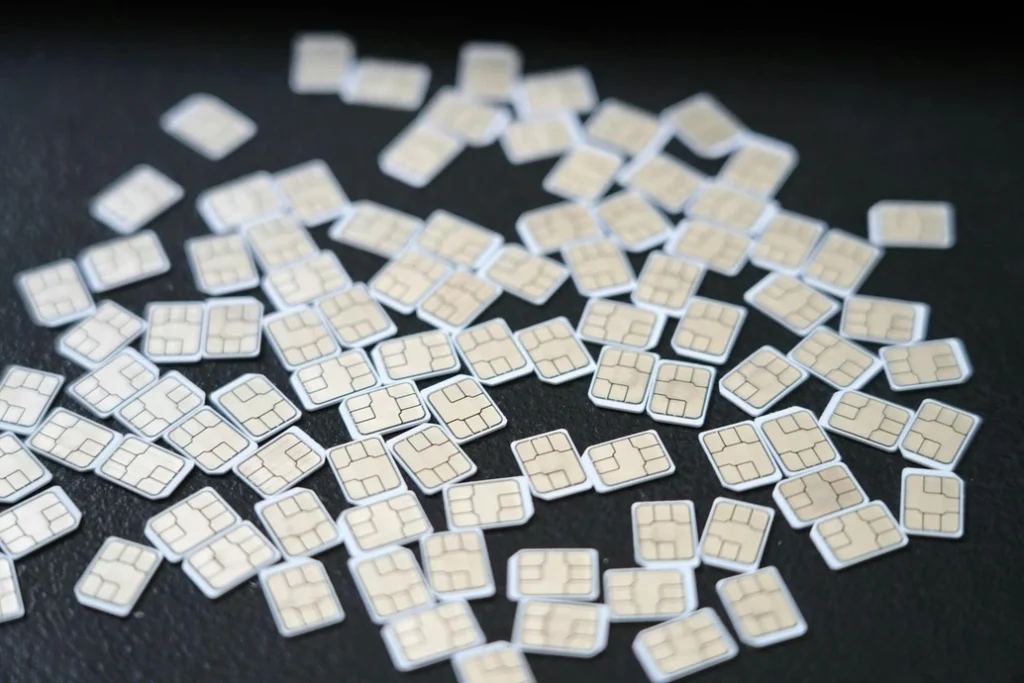
Traditional SIM cards have long been a source of unnecessary plastic waste. Each time you switch mobile network operators or every time you travel internationally, you’re typically handed a credit card-sized piece of plastic that’s used briefly and then discarded straight away into landfill waste. You might think, it’s only one small plastic card with a chip, right?
Well, multiply that one card for billions of people, and multiple times in your life, there you have a lot of plastic waste.
According to Juniper Research, approximately 4.5 billion SIM cards are issued and shipped each year, which accounts for over 18,000 tons of plastic waste and 560,000 tons of carbon dioxide emitted annually. What if the single-use plastic packaging design could be eliminated? Welcome to the plastic free eSIM solution!
Are eSIMs Better for the Environment?
These points below explains why eSIM are better for the environment, though software has its own carbon footprint due to the need to store data in digital data centres. However, these can be powered with renewable energy.
1. No New Plastic Production
SIM cards are usually made with virgin plastic, usually PVC and other polymers. Thales estimates that 20,000 tonnes of plastic is produced every year just to manufactures these cards and that it would be the equivalent of two Eiffel Towers worth of plastic ammassing each year. Recycled SIM cards, like the Eco SIM, have solved this issue, as they are made of 100% post-consumer recycled plastic, however, they still not solve the issue of the carbon footprint during product, and transportation globally.
eSIMs eliminate the need for physical plastic cards entirely. Instead of manufacturing, packaging, and shipping plastic SIM cards around the world, which also has a high carbon footprint, users can simply download their mobile plan digitally.
2. No Mining for Silicon, Gold, Phosphorus Required
Apart from the plastic pollution issue, SIM cards have an electronic chip that is made of silicon other metals including phosphorus and gold. The eSIM solution eliminates the need for mining these raw materials, once again lowering the carbon footprint compared to the physical product.
3. Reduced Transportation Emissions
Traditional SIM cards require complex global logistics, and typically transported by air. eSIMs completely remove this transportation carbon footprint, significantly cutting down on carbon emissions. No weight, no transport, no emissions.
4. Lower Energy Consumption
“Producing” eSIMs requires less energy compared to manufacturing physical SIM cards. Additionally, eSIMs have a longer lifespan because as a sotftware, they can be reprogrammed multiple times.
Photo Credit: David Barber via Pexels
eSIM as a Plastic Free Alternative to SIM Cards – Examples
-
Saily – eSIM Plans for International Travels
Saily provides affordable eSIM plans for international travels. Their website is very easy to use, you choose a destination globally, then pick a data plan for your trip, then you download the App and set-up your eSIM following the instructions, all without worrying about physical plastic cards that create waste etc. Your eSIM plan automatically activates when you arrive at your destination or 30 days after purchase.
Related: 3 Types of Stylish Plastic Free Reusable Coffee Cups You Can Take Anywhere
What are other Advantages of an eSIM?
While the environmental benefits are compelling, eSIMs also offer remarkable convenience in other areas:
– Quick Activation: Set up your mobile plan in minutes, without having to wait days for the physical card, its packaging, and its advertising brochure to arrive. This step not only saves plastic, but also associated plastic free packaging like cardboard and paper.
– No Physical Handling: No more struggling with tiny SIM card sizes, no need to look for your glasses first and then a needle when trying to open that tiny hole that opens up the SIM card area containing the microchip.
– Flexibility: Another advantage is that you can easily switch between mobile operators digitally without physically having to change anything.
– Travel-Friendly: Keep your home number while travelling and using local data plans. We travelled to India in 2023 and we met someone from Switzerland that had bought an eSIM plan. While this is not a way to “disconnect” while on holidays, having a local data plan is very practical when travelling in a country where you don’t speak the local language as you don’t have to wait for the hotel or restaurant WiFi to be online.
Related: 10 Ways to Say No to Plastic in Your Everyday Life
Conclusion: Make the Switch to a eSIM and Ditch the Plastic!
Making the switch to eSIM is becoming increasingly simple. Most phones produced after 2020 are eSIM compatible, and many mobile providers now offer easy digital activation processes.
One important point to consider is that eSIM is not yet available for customers who wish to keep their number when switching from another provider, so I guess that is a drawback at this point, but this technology can still be used when travelling for example.
By choosing eSIM as a plastic free alternative to SIM cards, you’re not just upgrading your mobile technology – you’re making a conscious choice to reduce electronic waste, plastic waste and support a more sustainable future. It’s a small change that can make a significant impact on our planet’s health.
The future of mobile connectivity is here, and it’s digital, convenient, and plastic-free!