

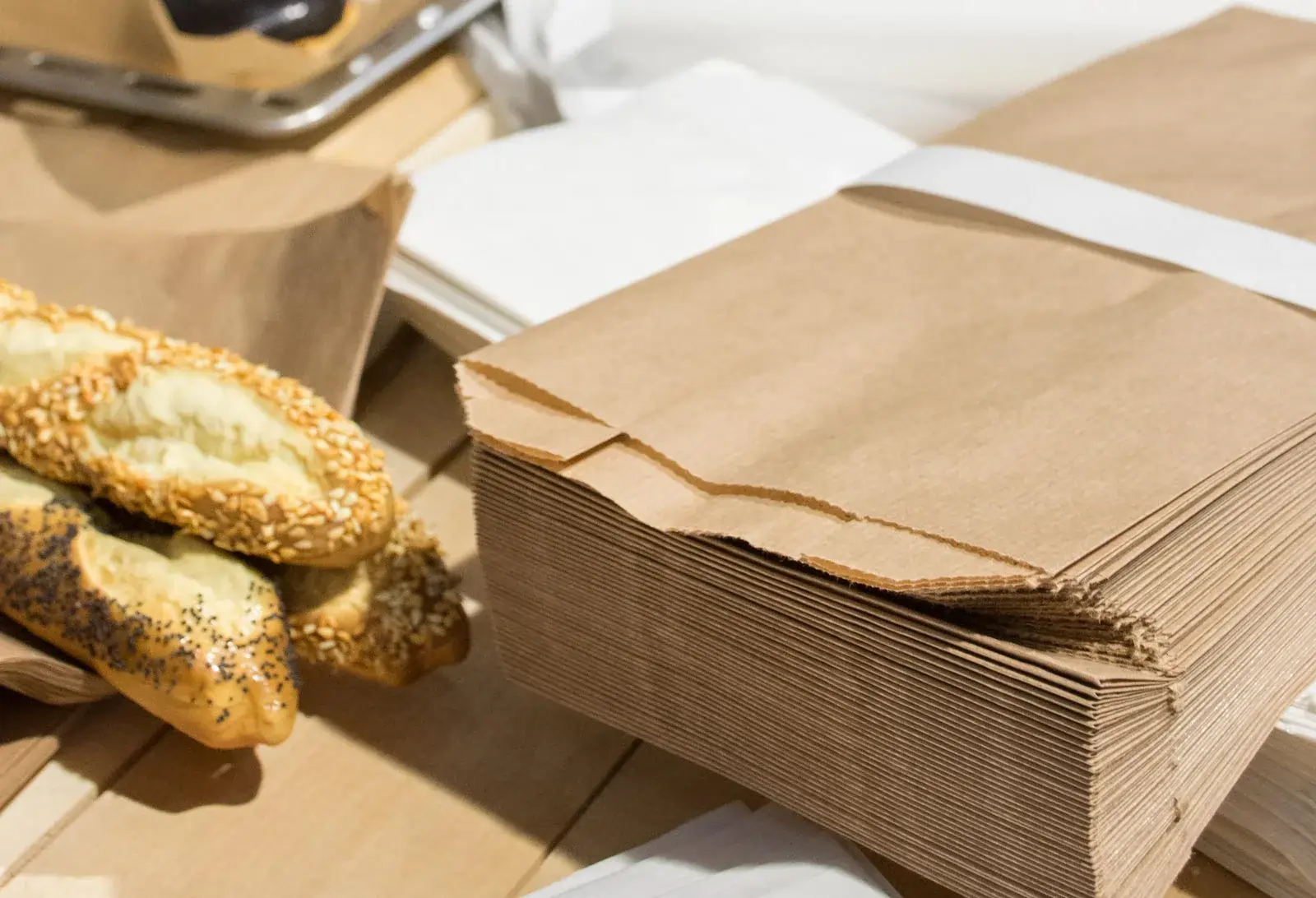
Across bakeries, cafés, florists, specialist food shops, and online shops, these packaging papers demonstrate that function, hygiene, and presentation can align with familiar recycling systems. The key is to match each paper grade to its real performance requirement: cushioning, grease resistance, heat tolerance, visual presentation, or branding. The following sections highlight 10 paper alternatives to plastic packaging, presented in well-defined, practical ways that businesses can adopt immediately.
1. Swap Plastic “Filler” Wraps for Kraft Rolls and Sheets
A large share of unnecessary plastic enters packaging workflows simply because bubble wrap, lightweight film, or oversized pouches are within reach. A versatile kraft roll placed at the packing table can replace most of these ad-hoc choices. Kraft paper can be torn or cut to size, crumpled for cushioning, layered for impact protection, and then recycled with cardboard. Its robustness and simplicity help prevent automatic reliance on plastic.
Brown and white kraft grades come in multiple strengths, allowing one material to serve as void fill, surface wrap, or an outer layer for ecommerce shipments. Converters provide both rolls and pre-cut sheets, making it easy to match formats to workflow speed. Lighter variants can replace newsprint-style fillers, while heavier ones serve as protective wrap for books, apparel boxes, or hardware. Because kraft paper can be printed with clean one- or two-colour flexographics without altering recyclability, businesses can add discreet branding or handling printing directly to the paper rather than applying plastic labels.
2. Use Sulfite Paper for Dry and Low-fat Foods
Sulfite paper — smooth, white, and made from high-cellulose sulfite pulp — has long been a standard material for food packaging. It lines bakery boxes, forms bread bags, protects fragile baked goods, and serves as general-purpose wrapping for items handed over the counter. The paper folds neatly, prints cleanly, and contains no plastic layers, making it easy to recycle.
While sulfite paper is not designed for long exposure to high grease levels, it performs extremely well for dry foods, pastries, flowers, craft items, and gifts. Businesses often choose weights between 25 and 90 g/m², allowing the same grade to function as a lightweight interleaving sheet or a stiffer wrapping sheet. The smooth surface supports detailed logos and other brand elements, enabling packaging to remain visually consistent across product categories. Because it contains only wood fiber and no coatings, sulfite paper sorts cleanly into existing paper and cardboard recycling systems, helping maintain uncomplicated end-of-life handling.
Related: 7 Creative Ways to Embrace Biodegradable Alternatives to Plastic that Make a Difference
3. Replace Non-stick Plastics with PFAS-free Baking Paper
Silicone-coated, PFAS-free baking paper offers a reliable alternative to many plastic-based non-stick liners. Modern baking sheets are heat-resistant up to 446 °F/230 °C, suitable for ovens, microwaves, and contact grills. Their silicone layer is derived from quartz- and sand-based materials, and when combined with a strong base paper, it creates a repeat-use surface ideal for low-mess baking such as cookies, pastries, and confections.
A key practical advantage is reusability: high-quality sheets can be used several times before disposal, reducing both material consumption and cost. Ready-cut sheets that match standard tray sizes help professional kitchens avoid waste and maintain workflow efficiency. When specified as PFAS-free and suitable for industrial composting, used baking sheets be thrown into biowaste streams along with food scraps, reducing the need for plastic-coated or foil-based liners. This makes the baking paper a functional, high-performance substitute for several common, single-use plastic formats in commercial kitchens.
4. Wrap with Naturally Grease-resistant Papers where Plastic used to be Default
Many everyday food items do not require a non-stick surface — they simply need grease to stay contained. Greaseproof and parchment-type papers offer this function through mechanical refining and fiber compaction rather than plastic or fluorinated coatings. This natural grease resistance makes them effective for sandwiches, sliced meats, cheeses, pastries, and takeout items intended for same-day consumption.
These papers are not meant for prolonged moisture exposure or steamy environments, but they are ideal for “wrap-hand over-consume soon” scenarios. Because the grease barrier is created within the fiber matrix itself, the paper remains PFAS-free and avoids the complications of multi-material structures. In addition to food wrapping, these sheets also serve non-food purposes such as tracing, craft work, or pattern making — subtle examples of how one fiber-based material can eliminate multiple plastic products in daily operations.
Related: Plastic-Free Blister Pack: A Sustainable Packaging Solution
5. Print the Branding on Paper, not on Plastic
A significant portion of plastic packaging exists to carry branding, rather than to provide structural protection. Laminated sleeves, plastic-coated takeout bags, and composite pouches often exist primarily for visual appeal. Flexographic printing changes this dynamic by enabling businesses to place branding directly onto paper substrates such as kraft, sulfite, and greaseproof sheets using water-based inks.
This approach keeps the entire package within one fiber-based material system, avoiding plastic windows, laminates, or labels requiring separation. Flexographic printing works well on both smooth and textured papers and supports efficient long-run production. When inks comply with the Swiss Ordinance on food-contact materials and are mixed with precise computer-assisted systems, color consistency improves without generating unnecessary ink waste. Brands can therefore unify their visual identity across wraps, bags, and interleaving sheets — all without introducing additional plastic layers.
6. Use Dyed and Design Papers where Plastic is only Visual
In many retail and floral settings, plastic film is chosen for its appearance rather than its function. Shiny, decorative, or transparent plastics have traditionally been used to create a sense of finish. Lightweight dyed and patterned papers can achieve comparable visual effects in most applications while remaining fully fiber-based and recyclable.
Design papers at around 40 g/m² offer sufficient strength for wrapping flowers, gifts, clothing, or small ecommerce items while remaining easy to fold and shape. Water-based printing supports seasonal collections — pastels for spring, deeper colors for fall, and specialized motifs for holidays. Since these papers contain no plastic, they move easily into paper recycling streams or can be reused by the recipient. Only in cases where full transparency or waterproofing is essential does plastic remain necessary, and even then, paper can often complement or reduce the overall amount used.
Related: How to Make the Switch to Plastic Free Packaging
7. Choose Food-grade Paper Bags for Hot, Fresh Products
Freshly baked bread and hot pastries require breathable packaging. Paper bags made from food-grade fiber allow moisture to escape while maintaining structure, helping crusts stay crisp rather than becoming soggy inside a sealed plastic pouch. This simple difference in moisture behavior makes paper bags the preferred choice in bakeries, cafés, and market stalls.
Paper bags — flat or SOS-style — range from small snack formats to large bags capable of holding multiple loaves. Produced from wood-based fiber without plastic handles or windows, they typically fit into standard cardboard recycling systems. Clear, one-color prints can be added without compromising breathability or folding performance. Because these bags offer both practicality and familiarity for consumers, they provide one of the easiest transitions away from plastic in everyday food retail.
8. Make Takeaway and Fast-food Wraps Fiber-based by Default
Modern fiber-based wraps for takeaway foods are designed to stay flat, resist rolling, and maintain integrity even when exposed to moisture from hot fillings. Burger sleeves, deli sheets, pizza-box liners, and meat or fish paper come in fully plastic-free versions and printed with water-based inks suitable for food contact.
These materials comply with hygiene regulations for direct food contact and support safe labeling where required. Greaseproof grades serve burgers and grilled foods, while uncoated paper suits dry snacks and baked goods. When combined with a sturdy paper bag or tray, they provide a fiber-only handling system for fast service environments. For cafés and food trucks, switching to paper-based wraps is often one of the most immediate, low-risk ways to reduce plastic footprint without adjusting kitchen workflows.
Related: 7 Plastic Free Packaging Ideas to Help Your Business Reduce Waste
9. Replace Branded Plastic Carriers with Strong Paper Bags
A well-designed paper carrier can replace many plastic carry bags when its strength, volume, and handle type match the intended load. Retail and food-service operators now have access to paper bags in a wide range of colors and formats, enabling brand visibility without plastic laminates. Flat paper handles withstand significant weight, and the overall structure communicates both product quality and thoughtful material selection.
Because these bags are made entirely from fiber-based materials, the mixed-material recycling issues common with plastic-handled carriers are no longer issues. After use, they can be reused at home or placed into cardboard recycling, keeping disposal straightforward. Combined with simple flexographic printing, paper carriers serve as effective moving advertisements while avoiding additional plastic entering circulation.
10. Design the Package with the Packaging Manufacturer, Not After the Fact
One of the most effective ways to reduce plastic is to address material selection early in the design process. When packaging specifications are decided before default plastic solutions take hold, businesses can choose appropriate paper grades for strength, grease resistance, and heat performance. Equally, printing choices can reinforce this approach by applying branding directly to paper rather than through plastic overlays or adhesive labels.
Packaging specialists increasingly help businesses understand which applications require greaseproof paper, when uncoated kraft is sufficient, and when baking paper is preferable to parchment. They also advise on batch sizes, print formats, and delivery schedules, so companies avoid excess ordering or storing unnecessary materials. When design, printing, and logistics are aligned from the start, businesses often find that a simpler, fully fiber-based configuration provides the required performance while significantly reducing plastic use.
Related: Sustainable Packaging Materials to Use Instead of Shrink Film
From Decisions to Practice: Carccu as One Applied Example of Paper Packaging Alternatives
The shift away from unnecessary plastic ultimately comes down to circular principles and practical decisions about materials, printing, and production. Carccu®, a Finnish printing house located in the Rautavesi national landscape in Sastamala, applies these principles across its work by producing food packaging papers, baking papers, greaseproof papers, gift and flower wraps, and paper bags for both local and international customers. Its raw materials come from major paper suppliers, with fiber flows documented through the FSC® Chain of Custody (CoC) and PEFC Chain of Custody (CoC) certification systems.
Carccu’s print its paper with flexographic presses using water-based inks that comply with the Swiss Ordinance on food-contact materials, supporting clear branding on kraft, sulfite, greaseproof, and similar substrates. Carccu’s PFAS-free baking paper and greaseproof parchment paper illustrate how fluorine-free, fiber-based solutions can be manufactured at scale for bakeries, kitchens, and retailers. Carccu’s production operates under the ISO 14001 Environmental Management System and ISO 9001 Quality Management System frameworks, combining process control with detailed management of energy use and material flows. Side streams — from paper offcuts to ink residues — are directed towards recycling or reuse, and facilities operate with fossil-free electricity and energy-efficient lighting.
For users of packaging, from cafés to florists and specialist food shops, these elements show how paper-based products can replace a significant range of everyday plastics. The example also illustrates that effective substitution is not about broad slogans but about documented sourcing, controlled processes, and materials chosen for their specific technical fit.





Add a comment