Cutting boards are a kitchen staple used every day for vegetables, fruits, bread and meat. However, many cutting boards are an overlooked source of microplastics and other unwanted chemicals. What many people don’t realize is that over time, the surface of cutting boards get scratched, scarred and worn down, which can create and release tiny fragments of plastic directly into your food. Choosing a non-toxic and plastic free chopping board alternative will protect your health and the environment.
What are the Health Issues With Plastic Cutting Boards?
Plastic cutting boards don’t just wear down; they slowly turn into microplastics every time you chop. Once they become too scratched or scarred to use, cutting boards usually end up in landfill or incinerators, where they contribute even more to plastic pollution over time.
A 2023 study in Environmental Science and Technology Journal (1) found that everyday use of plastic cutting boards made from polyethylene (PE) and polypropylene (PP) can add to a per-person annual microplastic exposure between 7.4-50.7g of PE and 49.5g of PP chopping boards. The study further estimated that a person could be exposed to 14.5 to 71.9 million polyethylene microplastics annually, and to 79.4 million polypropylene microplastics from chopping boards made with these materials.
It has been identified as a substantial source of microplastics in human food, which requires careful attention, since micro- and nanoplastics have been linked to endocrine disruption, reduced fertility (2), cardiovascular diseases (3) etc.
A systematic review of peer-reviewed studies (2016-2024), published in 2025 in the Journal of the Academy of Nutrition and Dietetics (4) examined plastic cutting boards as a major contributor to microplastic ingestion in household and commercial food service settings, including restaurants, cafeterias, and institutional kitchens. Studies presented laboratory findings using Fourier-transform infrared spectroscopy, Raman imaging, and scanning electron microscopy. They confirmed that slicing and chopping on plastic boards result in microplastic shedding. The review concluded that continued use of plastic cutting boards in commercial kitchens is a public health risk, and urged immediate action to replace plastic cutting boards in restaurants, schools, and healthcare food services with wood and bamboo alternatives. It also reiterated that industry-wide policy reforms and food safety education are critical to protecting consumers from chronic microplastic ingestion and ensuring a safer food supply.
How Do Plastic Cutting Boards Shed Microplastics?
Every time a knife moves across a plastic board, the blade scrapes off tiny pieces of plastic you can’t see. These particles are more likely to form where the surface is already scratched.
The Environmental Science and Technology Journal study (1) found that chopping and cutting firm foods, like carrots, produces more microplastics than gentle cutting because of the applied pressure. The same research suggests that cutting boards made from PP can release more microplastic particles than PE boards, which means that common solid and “sturdy” plastic boards may be worse in terms of shedding plastic.
Microplastic exposure from cutting boards is not the only concern; the plastic particles can carry additives and contaminants on their surface. These include plasticizers such as phthalates, Bisphenol-A and polyethylene terephthalate, which can migrate from food contact materials (FCM) into food itself, as demonstrated by the migration testing of different studies (5).
Related: Is it Harmful to Store Food in Plastic Containers?
What Toxic Chemicals are Used in Cutting Boards?
Different types of cutting boards bring different chemical concerns, which depend on the base material, glues, finishes and coatings. Below is a list of chemicals used in cutting boards:
- Petrochemical Resins – Engineered boards (including some bamboo boards) often use melamine‑ or phenol‑formaldehyde resins (6), which can slowly release formaldehyde and melamine, especially with heat, and acidic foods.
- Mineral Oil Made From Petroleum – Many “Butcher Blocks” and board oils are food-grade mineral oils made from petroleum, which, if refined properly, do not contain polycyclic aromatic hydrocarbons (PAHs). However, the effects of mineral paraffin on humans remain understudied, as analyzed by MADE SAFE (7)
- BPA and Other Bisphenols – Some plastic boards and coatings (especially older polycarbonate) can contain BPA or substitutes like BPS/BPF (8), which are endocrine‑disrupting chemicals linked to reproductive and metabolic effects.
- Phthalates – These plasticizers can migrate into foods (5) and are associated with reproductive and developmental toxicity; they contribute to overall exposure from plastic food‑contact items, even in rigid boards.
- Forever Chemicals (PFAS) – Used to make surfaces non‑stick and stain‑resistant; PFAS are linked to immune, thyroid, cholesterol, kidney disease and cancer risks (6), and may be present in any “ultra non‑stick” or highly stain‑repellent board unless clearly stated PFAS‑free.
Related: The Best Non-Toxic Small Kitchen Appliances That Don’t Shed Microplastics
What are the Cutting Board Materials to Avoid and Why?
Based on the findings and studies listed above, some cutting board materials are best avoided because they can shed microplastics or release extra chemicals into your food over time. Here’s a clear list of what to steer clear of:
- Rigid Plastic – Mostly made of High-Density Polyethylene (HDPE), followed closely by polypropylene (PP), and Polyethelene (PE).
- Flexible Plastic – Mostly sold in colorful or clear sets and made of polypropylene (PP), Thermoplastic Polyurethane (TPU) etc.
- Synthetic Rubber – Often made with Thermoplastic Elastomer (TPE) plastic in Japan and very popular in this country, as they are designed to be extremely easy on high-HRC (hard) Japanese steel knives.
- Silicone – Silicone flexible cutting mats are sold as non-stick and heat-resistant. We are not a fan of this material because silicone is not inert.
- Composite wood, engineered wood, wood fiber – Such boards are made from wood fibres bound with food-grade resin. The resin is synthetic glue.
- Paper composite – (e.g., Richlite): These boards are made of layers of paper soaked in phenolic resin and pressed under heat to create a solid, durable surface. While they feel like wood, they are technically synthetic resin-bound products.
- Bamboo or Wood Pieces Glued Together – Cheap bamboo or wood cutting boards are not made of one piece but glued together, and again, the glue is the issue.
- Vintage Melamine – They look cure as they have nice motives and some are collectibles and rare items, but they are built with a combination of melamine and formaldehyde. When the material is exposed to high temperatures (above 160°F or 71°C) or acidic foods (like tomato sauce or citrus), it can break down and release these chemicals into food.
Related: 13 Non Toxic, Plastic Free Electric Kettles for a Healthy Cup
What are Non-toxic Materials for Cutting Boards?
Choosing a healthy cutting board can be tricky. Below is a list of non-toxic materials to look for, as well as their pros and cons.
Solid Medium-hard Wood (Walnut, Maple, Cherry, Beech, Acacia, Teak or Camphor Laurel)
Pros
- Gentle on knives and naturally “self-healing,” as small cuts in the surface can heal over time
- Wood fibres are biodegradable and reduce the risk of bacteria when boards are cleaned and dried properly
Cons
- Needs occasional oiling to prevent cracking, depending on the thickness of the wood
- Cheaper boards may be made from small pieces glued together, so it is important to check before purchasing
Bamboo
Pros
- Renewable resource that is natural, solid, and water resistant
- A solid, one-piece bamboo board without resin is a great plastic-free choice
Cons
- Many cheap bamboo boards are made from thin strips glued together, often with chemicals that can release melamine and formaldehyde. Ask the manufacturer!
- Bamboo can be quite hard, so it may wear down knife edges
Titanium
Pros
- Titanium has been used for decades in the medical device industry, such as in orthopedic implants, due to its non-porosity, strength, light weight, and high biocompatibility.
- It’s therefore a very hygienic and safe material.
- As a non-porous material, nothing sticks to it, making it very easy to clean and to wash in a dishwasher. No scrubbing, no soaking needed.
- The board will last forever
Cons
- It is not gentle on knives and can blunt them if you are not careful. You might have to sharpen your knives more frequently.
- It has a high carbon footprint as producing it is extremely energy-intensive due to its high melting point (1,668 °C).
Tempered Glass
Pros
- Glass is an inert and non-porous material. It doesn’t harbour odors or stains.
- It’s, therefore, very hygienic and very easy to clean, even in the dishwasher
- It’s also very stylish in the kitchen!
Cons
- Glass is an extremely hard material, so it quickly dulls knives.
- It’s also prone to breaking in the kitchen, potentially also damaging your kitchen bench if it is made of a natural stone.

Related: We tested 11 Non-toxic Cookware Brands: These Have No Synthetic Coatings (2026 Guide)
6 Best Microplastic Free Cutting Boards
At I’m Plastic Free we help you eliminate the issue at the source. For all the reasons outlined above, we provide our readers with alternative solutions that reduce your exposure to microplastics.
This post contains affiliate links, which means we may receive a small commission, at no cost to you, if you make a purchase through a link. This helps us continue the hard work we put into researching products and solutions.
Please Note: Our health content is for informational purposes only and is not intended as professional medical advice. Consult a medical professional on questions about your health. Please read our disclaimer.
1. Black Walnut Wood Cutting Board / Butcher’s Block by Virginia Boys Kitchens
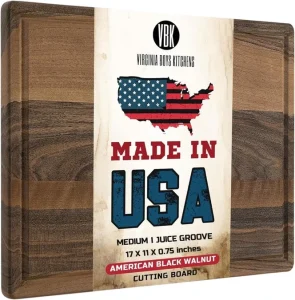
This solid black walnut wood is a great choice for your kitchen. It is beautiful, durable, and plastic-free. It is made from responsibly sourced walnut wood, which is gentle on knife edges. The board is pre‑seasoned with natural oils (no synthetic coatings), so you get a smooth, ready‑to‑use surface that won’t shed microplastics into your food.
Sizes:
- Small: 12 x 8 x 0.75 inches (30cm x 20cm)
- Medium: 17 x 11 x 0.75 inches (28cm x 43cm)
- Large: 20 x 15 x 1 inches (50.08cm x 38cm)
- Extra Large: 24 x 18 x 1 inches (60cm x 45cm)
Made in: USA.
Shop from Amazon USA – Canada – UK
Related: 8 Best Non-toxic Lunch Boxes That Don’t Shed Microplastics
2. Mevell Reversible Wooden Cutting Board With Juice Grooves
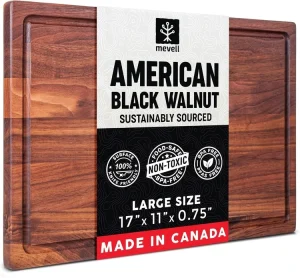
Mevell’s reversible board gives you two cutting surfaces in one, so you can dedicate one side to raw meat and the other to bread, fruit, or vegetables. The built-in juice groove helps catch liquids from roasts, tomatoes or juicy fruit, keeping your bench cleaner and reducing the risk of cross‑contamination. It’s made from quality hardwood (no plastic, no composite fillers), finished with food‑safe oil, and is thick enough to resist warping with proper care. This is a practical, everyday workhorse for home cooks who want to avoid plastic but still need something sturdy and easy to maintain.
Sizes:
- Large: 17 x 11 x 0.75 inches (28cm x 43cm)
- Extra Large: 20 x 13 x 2 inches ( 50cm x 33cm)
Made in: Canada.
Related: 8 Plastic Free Blender Brands for a Truly Non-Toxic Kitchen
3. Taima Grade 1 Pure Titanium Cutting Board
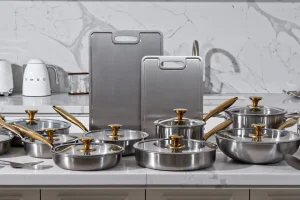
Taima has created a board made with Grade 1 / TA1 Titanium (99.89% lab-graded material). Many “titanium cutting boards” on the market, including on Amazon, aren’t made with pure titanium, but with a mix of several materials, including industrial steel alloys, so we wanted to make sure that we recommend an authentic, lab tested option. As proof of their material, TAIMA sent us two independent 3rd party lab tests by SGS: the food contact safety and the material testing.
This food contact safety report confirmed that the cutting board is safe for food contact by passing strict German (LFGB), EU food safety standards, and U.S. FDA standards. Tests showed that the board does not alter the taste or smell of food and does not release any harmful heavy metals, like lead, into your meals.
The material certification report verified that the board is made of 99.89% pure titanium, specifically the high-quality “TA1” grade. Scientific analysis proved that all other trace elements are well below safe limits, ensuring the material is authentic and of professional quality.
We tested this cutting board ourselves, and it works really well in our “plastic free kitchen“. We also love its updated design. The juice grove, all along the board, helps retain any fluid from food on the board, instead of spilling it on the kitchen bench. Plus, we LOVE that this brand offers a life guarantee on the boards!
Sizes:
- Small: 12 x 8” (30 x 20 cm)
- Medium: 14 x 10” (36 x 25 cm)
- Large: 18 x 12” (46 x 30 cm). The most popular size.
Made in: China to leverage the country’s position as the global leader in titanium production. Designed in the US, California.
Shop Taima Titanium – 15% off with code “PLASTICFREE”
Credit: Video by I’m Plastic Free / Simona Paganetto testing the TAIMA Titanium cutting board in size M (10″ x 14″ / 25cm x 36cm)
4. Ziruma FSC Certified Acacia Wood Cutting Board
This Ziruma board is made from FSC‑certified acacia, a dense, durable hardwood with a warm, natural grain. The brand highlights that the board is finished with a blend of beeswax and organic coconut oil, rather than mineral oil, which is ideal if you’re trying to avoid petroleum‑based finishes.
The board is thick and solid, providing a stable chopping surface, and it can also be used as a serving platter for bread, antipasto or cheese. Because it’s one solid piece of wood, there are no glues or hidden composite layers that could bring extra chemicals into your kitchen.
Size: 16 x 11 x 1 inches (40cm x 28cm)
Made in: South America
Shop from Amazon USA – Canada – UK – Australia
5. Hacaroa 4 Pack Tempered Glass Cutting Board with Rubber Feet (Non Slip Chopping Board)
We added one tempered glass cutting board because it is very hygienic and very easy to clean, though not recommended for the dishwasher. The stylish Hacaroa non-slip clear cutting boards are made of hard tempered glass with a thickness of 0.2 inches. They are durable, resistant to shatter, heat, and stains.
Sizes: 4-pack consisting of 2x large boards 15.7 x 11.8 inches, and 2 small boards 11.8 x 7.9 inches.
Made in: China
Shop from Amazon USA – Canada – UK
Related: Why You Should Switch To Plastic-Free Microwave Food Covers
6. Solid Wood Cutting Boards, Cheese Boards, Bread Boards, and Herb Boards from Biome Australia
Biome Australia stocks different brands of high-quality wooden chopping boards and cheese boards made of one solid piece of salvaged camphor laurel timber, and finished with grapeseed oil (no glue). We LOVE the boards that are shaped as the silhouette of the Australian Map, as they also make great souvenirs!
Other products are bread boards, and herb boards made of white oak. They also stock a great range of wood care products like chopping board oil, liquid beeswax, food-safe wax, Australian orange oil, pure hemp oil, etc.
Sizes: vary by brand.
Made in: Australia
Related: 17 Best Plastic Free Coffee Makers By Style For Delicious, Non-Toxic Coffee
Q&As about Toxin Free Cutting Boards
– Why Should I Worry About Microplastics and Other Toxic Chemicals in Cutting Boards?
Microplastics and toxic chemicals from cutting boards can leach into your food, potentially affecting your health over time. Choosing safer, non-toxic materials helps reduce this exposure and keeps your meals cleaner and healthier.
– Are BPA-free Plastic Cutting Boards Made of Food-grade Material Ok to Use?
No, they aren’t…. Don’t be fooled by BPA-free claims. To address the concern over using BPA, many companies switched to using Bisphenol S (BPS) and other bisphenols instead.
– Are Bamboo Cutting Boards Toxic?
It depends. Bamboo cutting boards are generally safe if they are made with one-single piece of bamboo. However, if they are made with multiple bamboo strips glueed together, potential toxicity comes from the adhesives which often containing formaldehyde. The same is true for cheap wooden boards.
Our Personal Tip
After washing your chopping board thoroughly, pour boiling water over it. It will help kill any germs or bacteria remaining on its surface. We’ve used this method for years and never had any issues with our wooden boards.
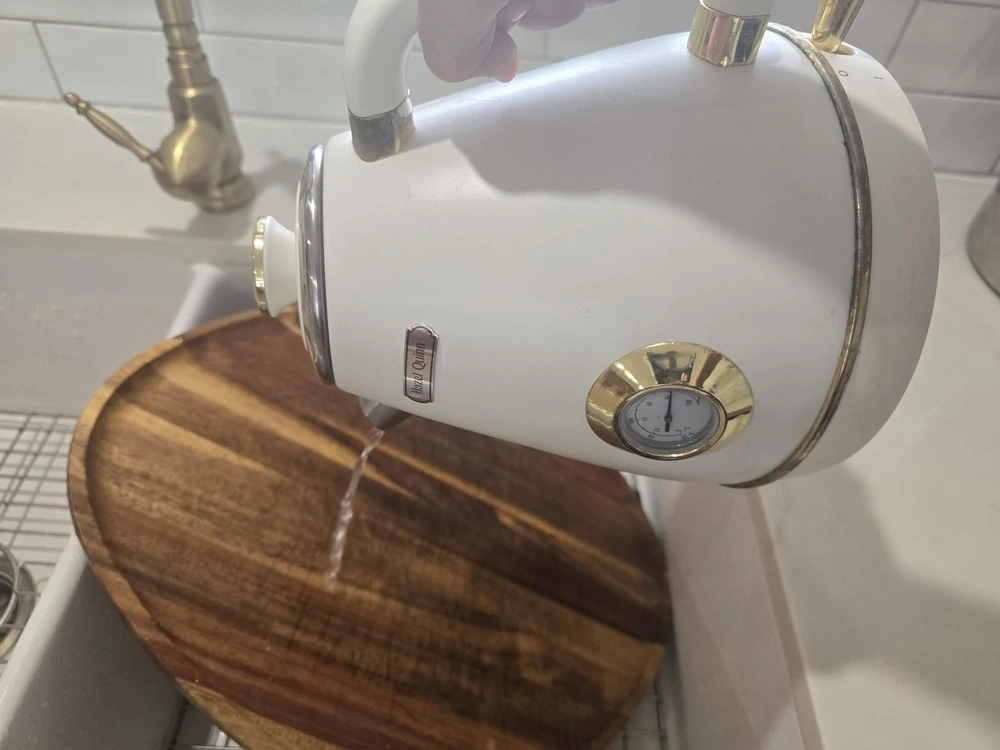
Image Credit: I’m Plastic Free’s founder Simona Paganetto pouring boiling water over a wooden cutting board with an Hazel Quinn electric kettle that has a plastic free interior.
Related: Plastic Free Thermomix Accessories for Non-toxic Cooking
Conclusion
Food preparation is a fundamental part of cooking, and the tools you use matter. Choosing a microplastic-free cutting board helps reduce plastic exposure, supports long-term health, and keeps your kitchen safer with every meal you prepare.
References and Scientific Literature Sources:
(1) https://pubs.acs.org/doi/10.1021/acs.est.3c00924
(2) https://pmc.ncbi.nlm.nih.gov/articles/PMC12249724/
(3) https://pubmed.ncbi.nlm.nih.gov/39240674/
(4) https://www.jandonline.org/article/S2212-2672(25)00435-6/fulltext
(5) https://www.sciencedirect.com/science/article/pii/S0304389423007057
(6) https://pmc.ncbi.nlm.nih.gov/articles/PMC10892781/
(7) https://madesafe.org/blogs/viewpoint/chemical-profile-mineral-oil-petroleum-jelly
(8) https://www.sciencefocus.com/science/kitchenware-hidden-risk-health
(9) https://pmc.ncbi.nlm.nih.gov/articles/PMC7906952/
This article was written by Ella Matthews, and reviewed by I’m Plastic Free Editor, Simona Paganetto
—
Browse our platform for non-toxic plastic alternatives: I’m Plastic Free