

By now, it’s common knowledge that microplastics are everywhere and have been found in human stool (1), blood, placenta (2), breast milk (3), lung tissue (4), and even in our brains (5).
In 2024, during my three-month online Executive Education for Sustainability Leadership by the Department of Environmental Health at the Harvard T.H. Chan School of Public Health, someone asked me the question if there were any ways to help remove microplastics from the body.
Back then, I had heard of sauna, as a way to expel toxins through sweat (not the physical particles!), but it’s only within the last two years that other methods have gained popularity, like microplastic binding supplements and therapeutic apheresis, commonly called “blood filtration”, a medical procedure where blood is removed, filtered through a specialized machine, and returned to the body. This medical technology can physically remove microplastics and nanoplastics from human blood, but it is very expensive for the average person (over USD $10,000) and, honestly, also a bit scary in my opinion. Plus, reducing microplastic exposure and helping remove the particles from our body is going to be a constant effort rather than a one-off experiment!
How Does Sifts Microplastic Binding Supplement Work?
This post contains affiliate links, which means we may receive a small commission, at no cost to you, if you make a purchase through a link. This helps us continue the hard work we put into researching products and solutions to plastic/ microplastic pollution.
Please note: Our health content is for informational purposes only and is not intended as professional medical advice. Consult a medical professional on questions about your health. Please read our disclaimer.
I was quite pleased when I received the opportunity to try and test the Sifts microplastic binding supplement.
“The first thing I did was to scrutinize their website for the product ingredients and the scientific literature behind the main ingredients.”
Only after taking these steps, I decided to test the product. So, what is Sifts, and what does it claim to do?
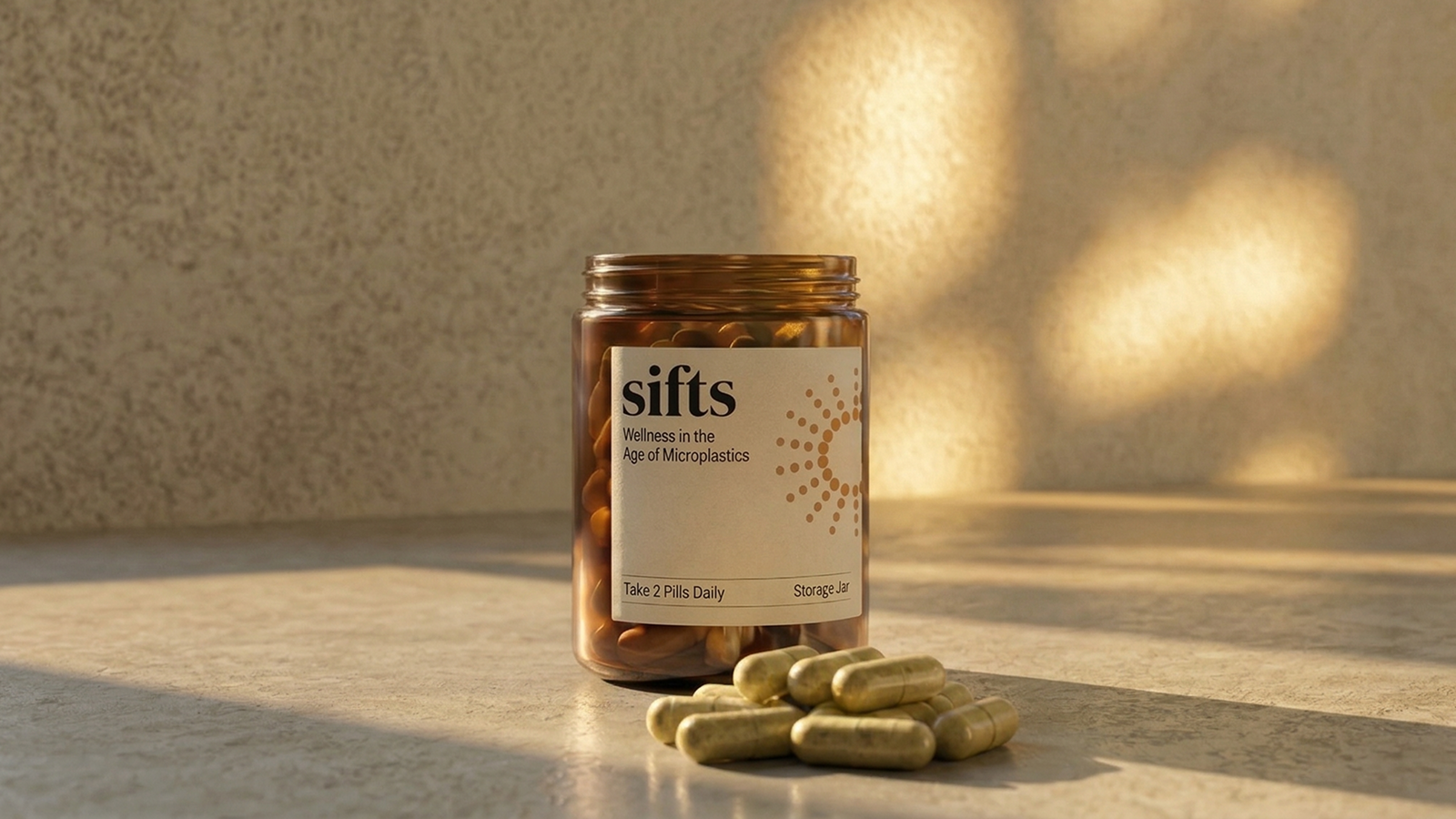
Sifts has developed a daily supplement designed to interact with microplastics during digestion and support your body’s natural elimination processes. It works in the gut by using natural fibers to “bind and pass” particles consumed from food, water, and air through normal digestion.
Manufacturing Quality & US Safety Standards
Because the US supplement market is heavily self-regulated, I checked Sifts’ compliance standards before trying it. For US consumers looking for strict quality control, the manufacturing setup hits three critical benchmarks:
- FDA-Audited Facility: While the FDA does not “approve” dietary supplements before they hit the market, Sifts is manufactured in a US facility that undergoes direct FDA audits and inspections for compliance.
- Current Good Manufacturing Practices (cGMP): The brand utilizes a cGMP certified (6) facility. This means the production adheres to strict federal 21 CFR Part 111 regulations, ensuring exact product identity, purity, strength, and composition from batch to batch.
- Rigorous 3rd-Party Testing: Every production run is independently tested by an outside lab to verify the formula is free of heavy metals, microbial contaminants, and residual industrial plasticizers or phthalates.
Video Credit: I’m Plastic Free – Simona Paganetto testing and reviewing the Sifts microplastic support capsules.
Sifts Microplastics Exposure Support Supplement: Clinically Studied Ingredients
The company uses a “binder blend” of chitosan and apple pectin, to bind and glide the particles while increasing the intestinal viscosity. (Positively charged particles interact electrostatically with microplastic particles, supporting their excretion through natural digestion.) Then it also uses a “gut-health blend” of baobab fruit extract and slippery elm extract, which are traditionally used in naturopathy to soothe the intestinal lining. Further ingredients used are magnesium glycinate and glycine. All these ingredients have been well clinically studied, and the peer-reviewed research is available on the Sift’s website.
The manufacturer mentions that it can temporarily cause bloating or changes in bowel movements, particularly if your body isn’t used to a high-fiber intake. I have started using it and haven’t experienced any of these symptoms yet, maybe because I have a high-fiber diet. I’ll update this article in about one month when I finish the first packet. See the full list of ingredients.
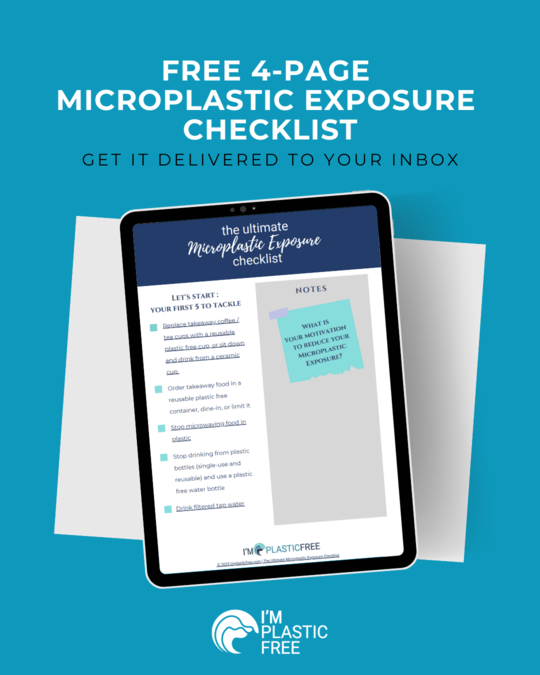
Related: How to Avoid Microplastics: The Ultimate Guide & Checklist
Does Chitosan Actually Bind and Remove Microplastics?
One of the main ingredients in the formulation is chitosan, a clinically studied dietary fiber that has been shown to interact with particles like microplastics in the gut supporting the body’s natural elimination process. It is derived from the shells of crustaceans like shrimp and crab. Therefore, if you are allergic to shellfish, you should stay away from this product!
Interestingly enough, I knew chitosan very well from my time as a Product Manager for Biomaterials in the dental industry more than a decade ago. One of the products in my portfolio was a well-studied dental dressing (7) used in controlling tooth post-extraction bleeding due to its coagulant properties.
Sifts cited on their website a small 2024 human crossover study (8) which found that taking a single 0.8 g dose of chitosan with a standardized meal increased microplastic excretion in stool by roughly 47%, rising from 654 ± 104 to 965 ± 165 particles per 5 g of stool within 12 hours.
Additionally, a recent animal study (9) showed that dietary chitosan significantly enhanced the fecal elimination of ingested polyethylene microplastics over a short period, thereby lowering the microplastic load in the gut.
Related: Watched The Plastic Detox? Your Guide to Reducing Microplastics Exposure
My 30-Day Sifts Testing Protocol
As someone with a background in dental biomaterials, I don’t take supplement claims lightly. I have been tracking my digestive response to Sifts over a 30-day period.
- Day 1-5: I took 1 tablet instead of the recommended dose of 2 because I wanted to gradually introduce this supplement into my diet without creating any “bloating discomfort”. This strategy proved effective, as I didn’t experience any bloating at all.
- Day 6-30: I took 2 tablets every day as per the manufacturer’s recommendation and after a few weeks I noticed that the supplement helped with stool regularity and gut health in general. However, I have also been drinking plenty of water during this time, and eating a high-fiber diet as per my usual habits.
Related: Microplastics in Food: The Latest Research
Sustainability: Sift’s Packaging
Sifts offers refillable glass jars for the first purchase and refill pouches for subsequent purchases. As I’m trying to have a lower carbon footprint, I just received the refill pouch in plastic-free packaging, which is a fully sealed paper bag. I have plenty of glass jars at home, so I can place the capsules in my own jar without having to ship glass around. It’s great to see an innovative company designing a consumable product with circular principles in mind.
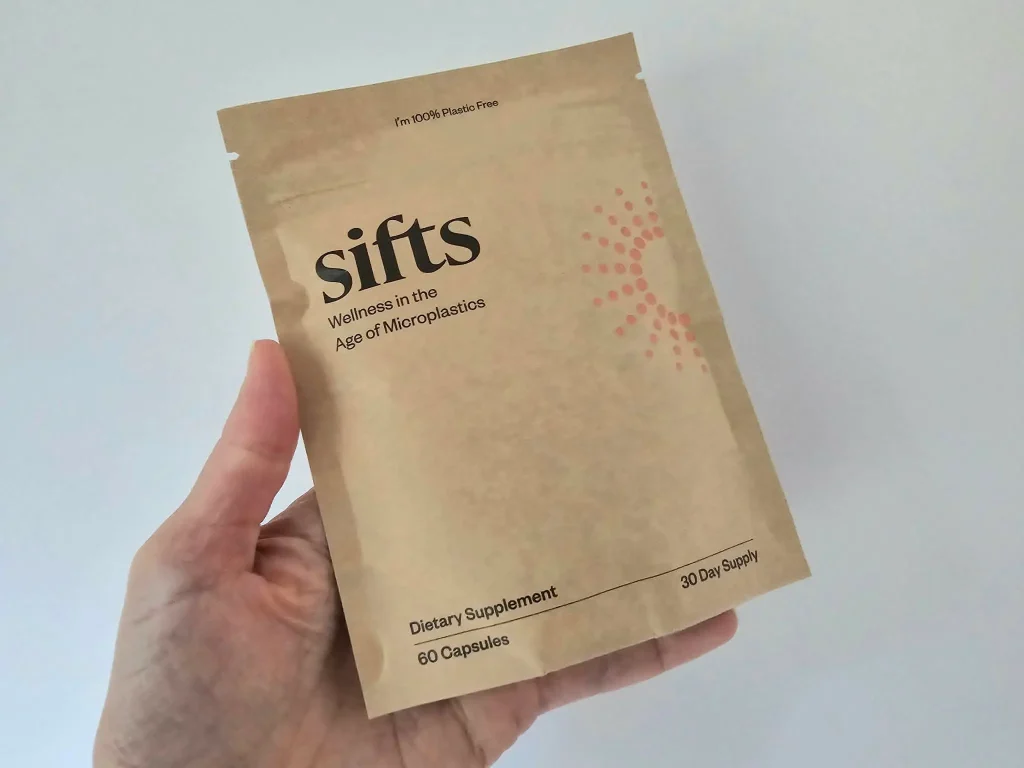
Image Credit: I’m Plastic Free / Simona Paganetto holding the Sifts refill pouch.
Related: How to Avoid Microplastics in Food: 10 Practical Tips for a Healthier Diet
The Verdict: Is a Microplastic Detox Supplement Worth It?
There are quite a few microplastic supplements coming onto the market right now. The global dietary supplements market is estimated at USD 219 billion this year and is expected to grow to USD 431 billion by 2034 (10). As everyone on earth is affected by microplastics, you can imagine how lucrative this market is. For these reasons, it is important to choose well, and to select only products that have ingredients that have been backed by scientific research, like the Sifts microplastics binding supplement.
References and Scientific Literature Sources:
(1) https://pubmed.ncbi.nlm.nih.gov/31476765/
(2) https://academic.oup.com/toxsci/article/199/1/81/7609801
(3) https://pubmed.ncbi.nlm.nih.gov/39064070/
(4) https://pmc.ncbi.nlm.nih.gov/articles/PMC10826726/
(5) https://pmc.ncbi.nlm.nih.gov/articles/PMC11100893/
(6) https://www.fda.gov/drugs/pharmaceutical-quality-resources/facts-about-current-good-manufacturing-practice-cgmp
(7) https://pmc.ncbi.nlm.nih.gov/articles/PMC3413624/
(8) https://pubmed.ncbi.nlm.nih.gov/40646942/
(9) https://pubmed.ncbi.nlm.nih.gov/40268980/
(10) https://finance.yahoo.com/news/dietary-supplements-market-size-expected-140100330.html
Disclaimer:
The statements in this article have not been evaluated by the Food and Drug Administration. Products discussed are not intended to diagnose, treat, cure, or prevent any disease.
This article was written and reviewed by I’m Plastic Free’s editor, Simona Paganetto.
About the Author: Simona Paganetto is an environmental health advocate and the founder of I’m Plastic Free. She holds a certification in Sustainability Leadership from the Harvard T.H. Chan School of Public Health and spent over a decade in the medical device industry, including positions like Product Manager for Biomaterials in the dental industry.





Add a comment