Plastic free wet wipes really do exist, but honestly, I didn’t even know that wipes were made with plastic initially. We all use wet wipes because they’re easy and practical. I used them all the time, without questioning what they’re actually made of. They feel soft and gentle, so you automatically think they’re harmless. But the truth is that standard wet wipes contain plastic.
I never thought that inside them there could be tiny plastic fibers. When you think about how many wipes we use every day, it really adds up. And when I think about it, when we were kids, wet wipes didn’t even exist. So what did people use back then? We simply used a cotton cloth and washed it… That’s why I now think that plastic-free wet wipes should always be the second option, not the first.
At home, a simple cotton cloth and water can do the job. Wipes are useful in certain situations, like traveling and when on-the-go. Once I realized this, I started being more careful about which ones I buy and how often I use them.
How Big is the Market for Wet Wipes?
The global market for wet wipes is valued at around USD 30 billion (1), and global consumption at 1.7 million tons/year according to market reports (2). Other sources, like a 2025 material flow analysis on wet wipes published in the Journal of Industrial and Engineering Chemistry, cites a production of 1,237,390 tonnes/year (3) just based on domestic data (South Korea).
How are Wet Wipes Used in Daily Life?
Wet wipes are primary use for four purposes in daily life: personal hygiene, household cleaning, industrial cleaning, and in the medical sector. COVID-19 significantly increased our reliance on wipes. We now find them in supermarkets to sanitize trolleys and in fitness centers to sanitize gym equipment after each use.
For the purpose of this article, we’ll focus on brands that focus on personal use and cleaning.
Wet Wipes Used for Personal Hygiene
- Facial Wipes
- Feminine Wipes
- Baby Wipes
- Antibacerial Wipes
- Moisturizing Wipes
- Make-up Removal Wipes
Wet Wipes Used for Household Cleaning
- Cleaning Wipes
- Oil / grease Removing Wipes (i.e. BBQ Cleaning)
- Disinfecting Wipes
Wet Wipes Used for Industrial Cleaning
- Heavy Duty Wipes
- Spill Clean-up Wipes
- Lint-free Wipes
- Clean Room Wipes
Wet Wipes Used for in the Medical Field
- Antiseptic Wipes
- Wound Cleansing Wipes
- Pre-moistened Wipes (i.e. to sanitize medical equipment and/or cleanse the skin).
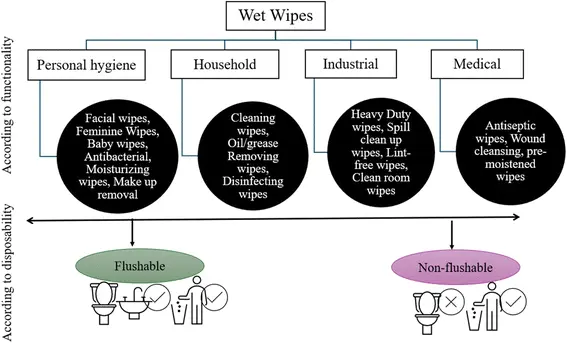
Image credit: Royal Society of Chemistry. Environmental Challenges of Disposable Wipes: Causes, Impacts, and Sustainable Solutions (2025).
What Materials are Wipes Made of?
Wipes can be made of synthetic fibers, natural or plant-based, or semi-natural fibers. They’re usually wet in the consumer market and contain preservatives and synthetic fragrances.
– Synthetic Fibers (Non-Biodegradable)
Polyester (PET) and polypropylene (PP) are the most common materials in conventional wipes, including many baby wipes and household cleaners
– Natural/ “Semi-Natural” Plant-Based Fibers (Biodegradable)
Cotton, bamboo, or regenerated cellulose, which includes viscose and lyocell materials, made from wood pulp, often blended with plastic fibers.
– Blended Fibers (Non-Biodegradable)
Many wipes are a blend (i.e. 50% Polyester/50% Viscose) to combine the strength of synthetics with the softness and absorbency of natural fibers.
I have to admit, when buying them, I really cared about how nice they smelled… It made them feel soft and pleasant on my skin. I even always chose wipes that were mostly water-based, thinking that would be better for my skin, until I realized that the issue was the plastic inside them. It doesn’t really break down. Instead, it slowly turns into tiny plastic pieces. Over time, these small particles can end up in rivers, in the soil, and even in our food chain.
A 2022 research study published in Environmental Science and Pollution Research International shows that nonwoven materials, including those used in wet wipes, shed microfibers into aquatic and air environments. The study found that microfiber release is influenced by the fibre composition and bonding techniques (4) with products containing fewer natural fibers generating more microfibers in water.
What are the Environmental Issues With Synthetic Wet Wipes?
Many of us use wet wipes every day without thinking much about the impact. I used to throw wet wipes in the toilet all the time… The packaging said “flushable”, so I never thought twice about it. It was just easier and cleaner at the moment. But then I found out that a lot of these “flushable” wipes are not plastic-free and still contain polyester or polypropylene plastic fibers, which do not break down. When you flush them, they can get stuck in the pipes and slowly pile up, causing blockages in the sewage system.
Another important issue that is often overlooked is the packaging… Even if wet wipes are compostable, they are still packaged in plastic to retain the moisture, which adds to plastic waste.
How do Synthetic Wipes Shed Microplastics?
When we use wet wipes to clean our face or wipe a surface,we usually don’t think about what happens next. As we rub them on the skin or on a table, the material slowly wears down. Because many wipes contain plastic fibres, tiny particles can start to come off during this process. Later, when the wipes are thrown away or flushed, those small plastic pieces can enter the wastewater system. From there, they can spread into the environment, like our waterways, and become part of the plastic pollution problem.
According to a 2021 study published in Water Research (5), synthetic wet wipes made of polyester (PET) release up to 6.5 microplastic particles per liter in untreated wastewater. Polypropylene (PP) fibers release around 0.03 particles per liter. This study indicates that wet wipes often dominate plastic debris in untreated wastewater, highlighting their role in ongoing microplastic pollution.
How are Wet Wipes Regulated in the US and Globally?
While international markets are moving toward outright bans, the United States is tackling the environmental impact of synthetic wipes through strict state-level labeling and flushability standards to protect wastewater infrastructure.
- California (AB 818): This legislation (6) mandates strict “Do Not Flush” labeling on non-flushable wipes, requiring manufacturers to display prominent warnings to prevent microplastic shedding and massive sewage blockages.
- Washington & Oregon: Both states have implemented rigorous flushability standards and independent labeling requirements, setting the benchmark for how wet wipes must be formulated and marketed across the US.
- United Kingdom: The United Kingdom is leading the regulatory push against plastic wet wipes (7), with Wales introducing the first supply ban in December 2026, followed by the rest of the UK in 2027.
- European Union: The European Union continues to tighten restrictions on plastic-containing wipes under its Single-Use Plastics Directive (8), with countries such as Spain introducing tougher disposal rules and shifting clean-up costs to manufacturers (9).
7 Best Plastic-free Wet Wipes that are 100% Biodegradable and Compostable
At I’m Plastic Free we help you eliminate the issue at the source. For all the reasons outlined above, we provide our readers with alternative solutions that do not release microplastics. This article lists sustainable wipes that are nonwoven, and manufactured in a way that allows them to degrade quickly in the environment.
This post contains affiliate links, which means we may receive a small commission, at no cost to you, if you make a purchase through a link. This helps us continue the hard work we put into researching products and solutions.
Please Note: Our health content is for informational purposes only and is not intended as professional medical advice. Consult a medical professional on questions about your health. Please read our disclaimer.
1. SuperBee Reusable Kitchen Paper Towel Roll – A Sustainable Alternative to Wet Wipes
As a first choice, we’d like to recommend an alternative to wet wipes! This eco kitchen towel roll is a perfect way to reduce waste at home and it’s very practical too. They’re made from 100% organic cotton, which makes them soft and easy to use. It’s very simple! You just wash them and use them again, which means no waste. Each pack includes 6 reusable cloths.
Before first use, it’s recommended to wash them to improve absorbency. You can wash them in your washing machine at up to 60°C and let them air dry (ideally in the sunlight).
Material: 100% GOTS-certified cotton + Absorbent toweling
Size: Each cloth is 26×26 cm with corner snaps
Made in: Thailand, by a B Corp certified social enterprise
Shop from SuperBee USA/Worldwide
Shop from Amazon USA
Shop from SuperBee Australia
Related: Plastic Free Laundry Detergent: We Tested 9 Non Toxic Options
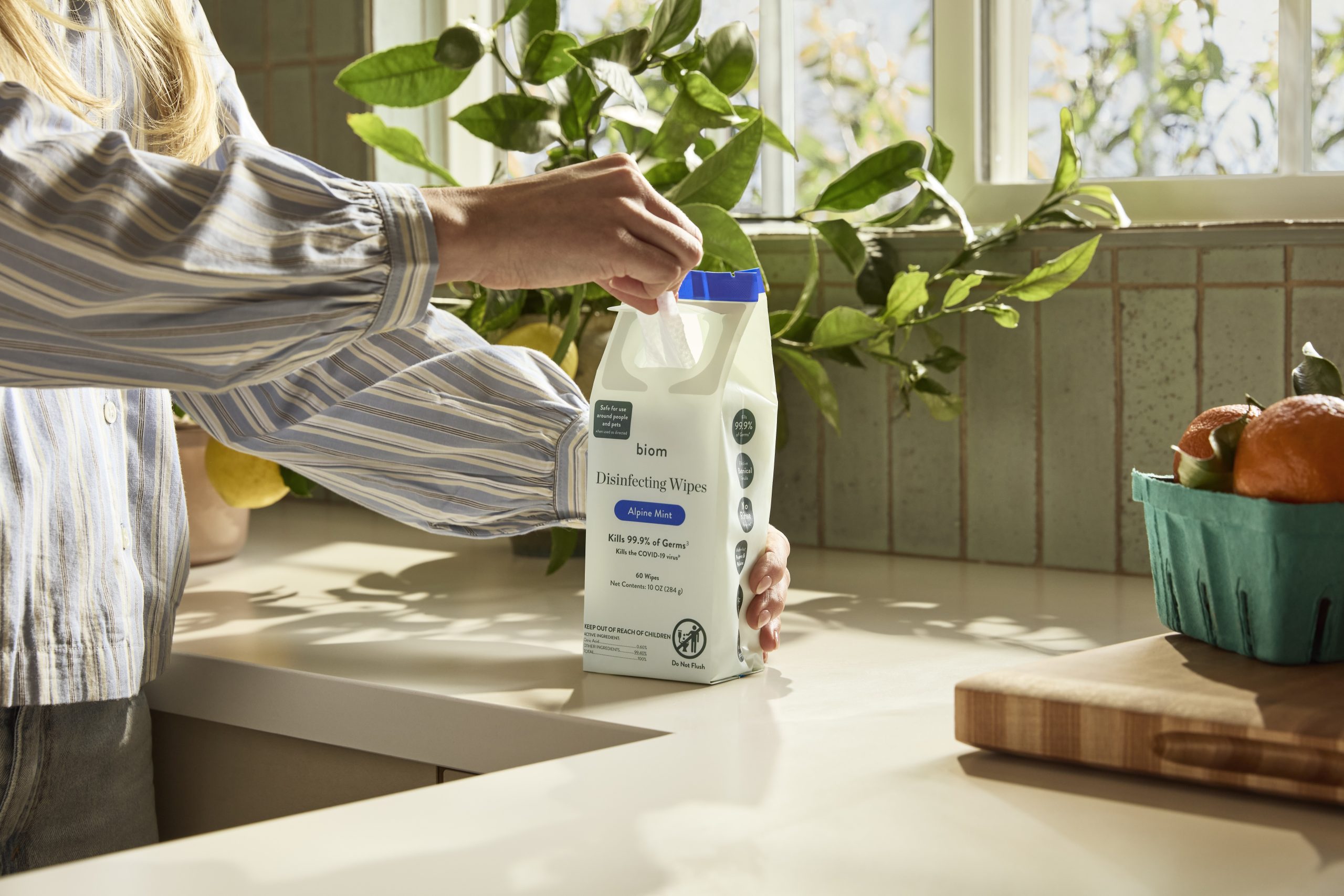
2. BIOM 100% Plant-based Wet Wipes, Non-Toxic
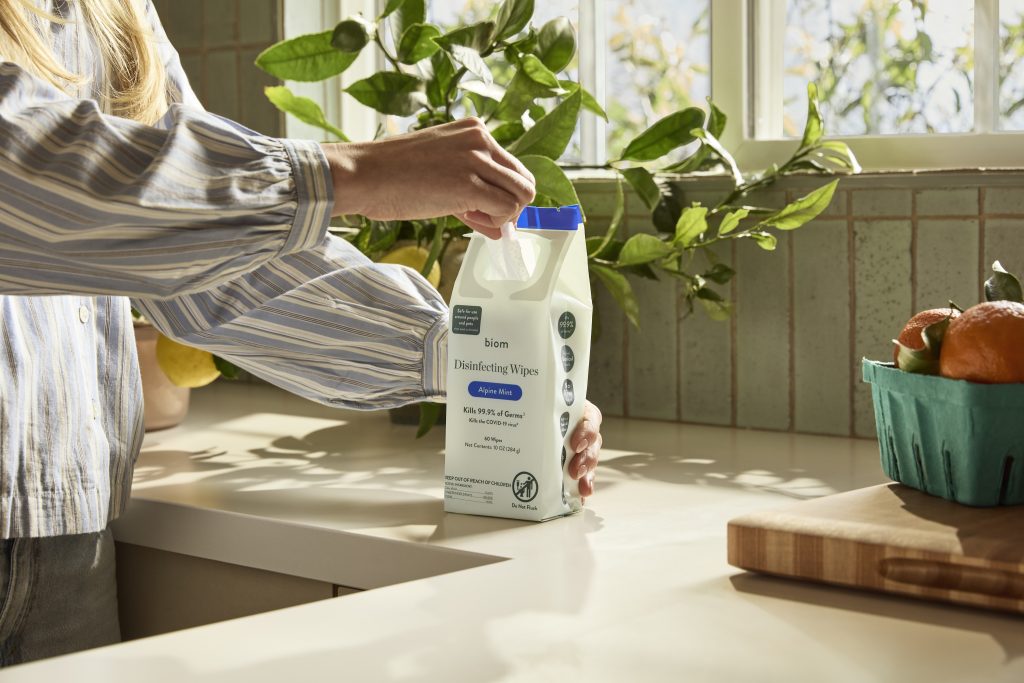
BIOM wet wipes have been formulated by doctors to promote health and clean-up the wipes industry. They are made from 100% plant based materials, made from sustainably grown wood fiber, 65% fruit-derived alcohol, moisturized with aloe, and scented with plant-derived essential oils. They do not contain microplastics, synthetic fragrances, nor Quats! (See our FAQs below to know what these are).
They also designed a patented refillable wipes dispenser with a special spout that provides a clean tear each and every time it’s used. This dispenser is made of plastic though, and if you want to completely avoid plastic, you can choose to buy only the refill packs.
Ingredients: Purified Water, Citric Acid, Sodium Citrate, Decyl Glucoside, Sodium Lauryl Glucose Carboxylate, Lauryl Glucoside, Glycerin.
Size: 50-60 wipes per pack.
Made in: All BIOM wipes are made responsibly in the United Kingdom and the United States.
Shop from BIOM
Shop from Amazon USA
Related: We Tested 11 Types of Plastic Free Sponges (Plant-based and/or Eco-friendly)
3. WaterWipes Wipes for Sensitive Skin
WaterWipes are recognised worldwide for their minimalist formula, containing 99.9% purified water and just a drop of fruit extract. The are made from 100% viscose (regenerated cellulose), with no plastic in the wipe material. They have no artificial fragrances or perfumes, no alcohol or soap, no parabens or phthalates. They are also OEKO-TEX STANDARD 100 certified, and approved by Allergy UK and the National Eczema Association. They d have an overall EWG rating of 1 (Low Hazard), which is the best possible numeric score given by the Environmental Working Group.
Ingredients: Just 99.9% ultra-purified water (through a 7-step process) and a drop of fruit and berry extract.
Size: 60 count per packaging. They can be bought in bulk (boxes).
Made in: Drogheda, Ireland.
Shop from Amazon USA – Canada – UK – Australia
Related: Plastic Free Dish Soap: 8 Best Eco-Friendly Brands for Non-Toxic Dishwashing
4. Healthybaby Premium Water Wipes – 100% Water-based
Parents, especially new ones, are extra careful about picking the best products for their babies… Healthybaby premium water wipes are another eco-friendly option for everyday use. They are EWG VERIFIED® and chlorine-free, so you can trust they’re safe and clean!
These wipes are made of 100% water and a few natural plant extracts, which makes them a perfect choice for parents who carefully choose products for their little ones. These wipes are a good second option when you need something quick.
Ingredients: Water, Aloe barbadensis leaf juice, Chamomilla recutita, Lonicera Caprifolium, Flower extract, Lonicera japonica flower extract, Glycerin, Tocopherol (vitamin E), Gluconic acid, Sodium benzoate, Citric acid.
Size: 64 wipes (1 pack), 256 (4 pack), 512 (8 pack).
Made in: USA
Shop from Amazon USA – Canada
5. Caboo Tree Free Flushable Bamboo Wipes & Baby Wipes
If you’re looking for a more eco-friendly wipes option, Caboo wet wipes can be a better alternative to regular ones ! What makes them different is that they are made from bamboo pulp-based viscose instead of plastic fibers or wood pulp. The formula is mostly naturally derived ingredients (around 99%), and they don’t contain harsh chemicals, BPA, parabens or added synthetic fragrances, which makes them safe for sensitive skin.
These wipes are MADE SAFE® certified and flushable according to INDA/EDANA flushability standards. (Please see the FAQ below on flushable wipes).
Flushable Bamboo Wipes Ingredients: Aqua, Glycerin, Geogard ultra (gluconolactone/sodium benzoate), Sodium citrate, Citric acid, Aloe barbadensis leaf juice, Tocopherol (vitamin E).
Flushable Bamboo Wipes Size: 8 travel packs x 18 wipes (144 total).
Baby Wipes Ingredients: Organic Bamboo Spunlace, Purified Water, Aloe Barbadensis Leaf Extract, Chamomilla Recutita Flower Extract, Glycerin, Polysorbate 20, Citric Acid, Lonicera Japonica Flower Extract, Lithospermum Erythrorhizon Root Extract, Caprylyl Glycol, Phenoxyethanol, Potassium Sorbate, Vitamin E, Aloe Fragrance.
Baby Wipes Size: 3x 72 count (216 total)
Made in: Canada
Shop Flushable Bamboo Wipes from Amazon USA – Canada – UK
Shop Flushable Baby Wipes from Amazon USA – Canada – UK
6. CleanLIFE Biodegradable & Flushable Wipes
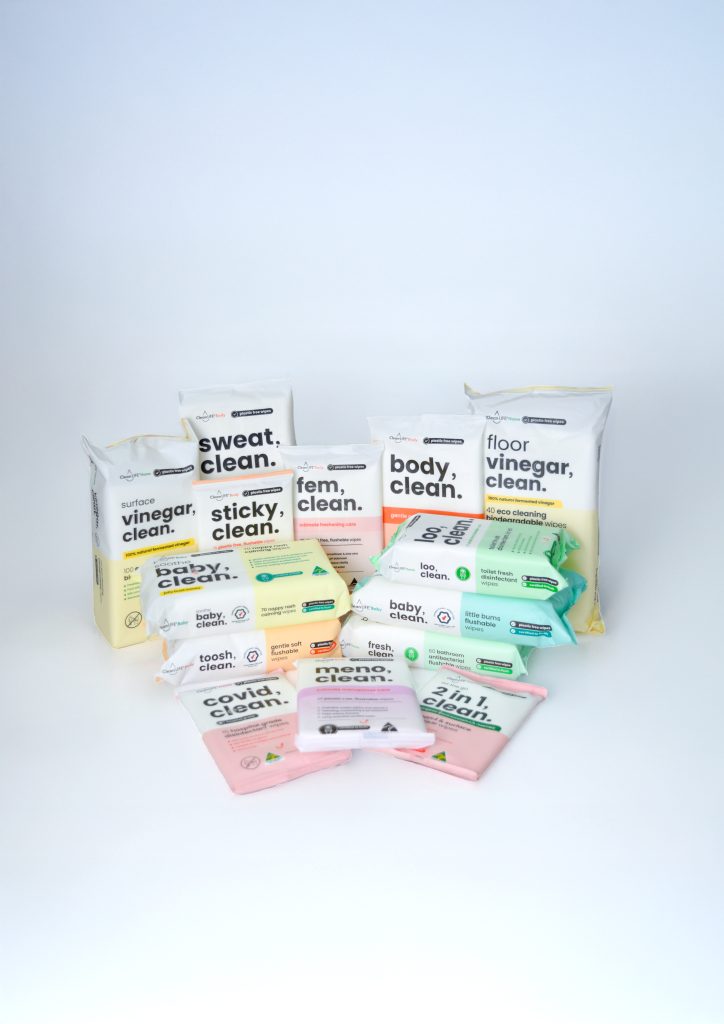
CleanLIFE wet wipes are made of 100% plant-based fibers and water with ingredients that are safe and gentle for sensitive skin. They are a good alternative to regular wet wipes and perfect for anyone with delicate skin.
All CleanLIFE flushable products have been certified to the AS/NZS 5328 Global Mark standard. They also meet the EN13432 (EU) and ASTSMD6400 (USA) standards for industrial composting. Thet are continuing to test for the Australian Standard 4736-2006 and for home composting.
Ingredients: Water, 100% Plant-based fibres, Aloe vera extract, Caprylyl Glycol, Tocopherol (Vitamin E), Polysorbate 20, Edetate sodium, Methylpropanediol, Benzoic acid.
Ingredients depend on the type of wipes.
Size: 40 or 60 wipes per pack
Made in: Australia
Shop from Amazon Australia
7. Great Aussie Wipes – Australian Made Plastic Free Wipes

Great Aussie wipes are plant-based, plastic-free wet wipes made in Australia. They are biodegradable and designed to break down more naturally than regular plastic wipes. These wipes are a good, eco-friendly alternative, when you need to get things done quickly, but it’s important not to overuse them and to use them wisely. Wet wipes should be used only as a backup, when you really need them.
Ingredients: Plant-based fibres, Water, Aloe vera, Glycerin, Tocopherol (vitamin E), Mild cleansing agents. Ingredients depend on the type of wipes.
Size: 60 or 80 wipes per pack.
Made in: Australia
Shop from Amazon Australia
Q&As about Plastic Free Wet Wipes
– Are Wet Wipes Made of Plastic?
Yes. Up to 80% of conventional wet wipes contain synthetic plastic fibers like polyester (PET) and polypropylene (PP), which do not biodegrade and shed microplastics into wastewater systems.
– What are the Best Plastic-free Alternatives to Wet Wipes?
The most sustainable alternative is a reusable 100% organic cotton cloth with water. For single-use needs, choose 100% bamboo, organic cotton, or wood-pulp viscose wipes certified compostable by USDA or EWG.
– Are Flushable Wet Wipes Safe?
Have you ever noticed the word “flushable” when you buy wet wipes? A lot of wet wipes are labeled “flushable”, and it makes us feel like we’re making a smart choice, but the reality is different!
Recent research from 2026 indicates that many wipes marketed as biodegradable and flushable are made from a mix of cellulose and low-degradable synthetic fibres. As a result, they do not fully degrade in wastewater systems and can release persistent microfibers into the environment. Up to 50% (3) of these wipes contain microplastic fibers and contribute to ongoing sewer and microplastic pollution. Be careful about the brand you chose, and make sure they are certified.
– What are Quats in Cleaning Products, including Wet Wipes?
“Quats” or (quaternary ammonium compounds) are chemicals that are often used in cleaning products, especially in disinfecting wet wipes. People use them because they are effective at “killing” bacteria and viruses and very practical…However some studies show that they may not be completely safe…If people use them often, they can cause skin irritation, breathing problems and other health issues.
Because of this some companies like Biom decide not to use quats. Instead, they use other ingredients that are much safer.
A 2024 study showed that QUATS, which are often used in wet wipes, can have negative effects as skin irritation and respiratory problems (9).
– Are Wet Wipes Safe for Removing Makeup?
Honestly, all of us, or at least most of us, have done this. When we come home late after a night out, the easiest thing is to remove our makeup with wet wipes. After that, our skin often feels sticky, and many times we may even feel a slight stinging. But we usually don’t think about whether this is actually good or the right thing to do, especially in our teenage years…
This stinging feeling we often ignore can be a sign that wet wipes contain ingredients that may irritate the skin and can be linked to allergic reactions, especially on the face. Over time, special wet wipes designed specifically for the face and makeup removal were introduced. However, even these wipes do not fully cleanse the skin (10), research shows that while they can remove some oil and dirt, their effectiveness can vary depending on the area of the face, meaning some residue may still remain.
Based on these findings, wet wipes are okay to use once in a while, when you’re really tired or in a hurry, but for daily use, it’s better to wash your face with a cleanser.
– Can you Rehydrate Wet Wipes that have dried out?
Not really… Once they dry out, all the ingredients are gone. So if you add water, you’re just making them wet again, not effective… If you want them to last longer, just make sure you close the pack properly, and don’t leave it somewhere too hot or in direct sunlight.
– Are Wet Wipes Healthy to Use?
They are ok to use, but not too often. Wet wipes can affect your skin microbiome.
– How do you Dispose of Wet Wipes?
Unless it is 100% flushable and 100% plastic-free, wipes need to be discarded into a garbage bin instead of being disposed of in the sink or toilet. Please do not trust the disposal instructions on the wipes packaging, as clogging of sewage lines and accumulation of plastics are becoming quite common.
Our Personal Tip: Don’t Use Wet Wipes Unless You Have To!
Before single-use wipes were created, people used reusable cloths, and this is what we recommend using at home. Just use wipes for babies, or if you’re out and about. This will tremendously lower the waste you create, and you’ll save money too.
Conclusion
If you care about the environment and low-waste living, wet wipes should not be your first choice. Reusable cotton cloths are a better and a more sustainable option for everyday use. Plastic free wipes can be a helpful backup when needed, but they should be used carefully and responsibly. Small changes start with us, and even simple everyday choices can make a difference.
References and Scientific Literature Sources:
(1) Grand View Research. (2023). Wet Wipes Market Size, Share & Trends Report, 2023-2030. Grand View Research. https://www.grandviewresearch.com/industry-analysis/wet-wipes-market-report
(2) Nelson, J. (2024). The Future of Global Nonwoven Wipes to 2029. Nonwovens Industry. https://www.nonwovens-industry.com/the-future-of-global-nonwoven-wipes-to-2029/
(3) Park, H., Park, J., Hyun, M., & Kim, Y. (2026). Material flow analysis for five types of wet wipes and their contribution to microplastic emissions. Journal of Industrial and Engineering Chemistry, 153, 423–429. https://doi.org/10.1016/j.jiec.2025.05.063
(4) Kwon, S., Zambrano, M. C., Venditti, R. A., Frazier, R., Zambrano, F., Gonzalez, R. W., & Pawlak, J. J. (2022). Microfiber shedding from nonwoven materials including wipes and meltblown nonwovens in air and water environments. Environmental Science and Pollution Research, 29, 60584-60599. https://pubmed.ncbi.nlm.nih.gov/35420340/
(5) Lee, J., Jeong, S., & Chae, K.-J. (2021). Discharge of microplastics fibres from wet wipes in aquatic and solid environments under different release conditions. Science of The Total Environment, 784, 147144. https://pubmed.ncbi.nlm.nih.gov/33905932/
(6) Solid waste: premoistened nonwoven disposable wipes, A.B. 818, California State Assembly, 2021-2022 Reg. Sess. (2021). https://leginfo.legislature.ca.gov/faces/billStatusClient.xhtml?bill_id=202120220AB818
(7) UK Government. (n.d.). Plastic wet wipes ban: guidance for businesses. GOV.UK. https://www.gov.uk/guidance/plastic-wet-wipes-ban
(8) European Commission. (n.d.). Single-use plastics. European Commission. https://environment.ec.europa.eu/topics/plastics/single-use-plastics_en
(9) Jones, S. (2025). Spain aims to ban flushing of wet wipes, with manufacturers paying for cleanup. The Guardian. https://www.theguardian.com/environment/2025/may/28/spain-to-ban-flushing-of-wet-wipes-with-manufacturers-paying-clean-up-costs
(10) Bobic, L., Harbolic, A., & Warner, G. R. (2024). Reproductive & developmental toxicity of quaternary ammonium compounds. Biology of Reproduction, 111(4), 742–756. https://doi.org/10.1093/biolre/ioae107
(11) Journal of Society of Cosmetic Chemists of Japan. (2014). Effects of the Application of Facial Cleansing Wipes on Male Skin. Journal of Society of Cosmetic Chemists of Japan, 48(4), 306. https://www.jstage.jst.go.jp/article/sccj/48/4/48_306/_article/-char/en/
This article was written by Natalija Miloradovska Mafilovska and reviewed by I’m Plastic Free Editor, Simona Paganetto.
Natalija Miloradovska Mafilovska is a Medical Doctor and Specialist in Public Health – Hygiene and Environmental Health, based in North Macedonia. She completed her specialization at the Institute of Public Health in Skopje, Ss. Cyril and Methodius University. Her interest lies in environmental plastic pollution, with a particular emphasis on the emerging human health and ecological impacts of microplastics.
—
Browse our platform for non-toxic plastic alternatives: I’m Plastic Free or browse plastic-free cleaning brands.