

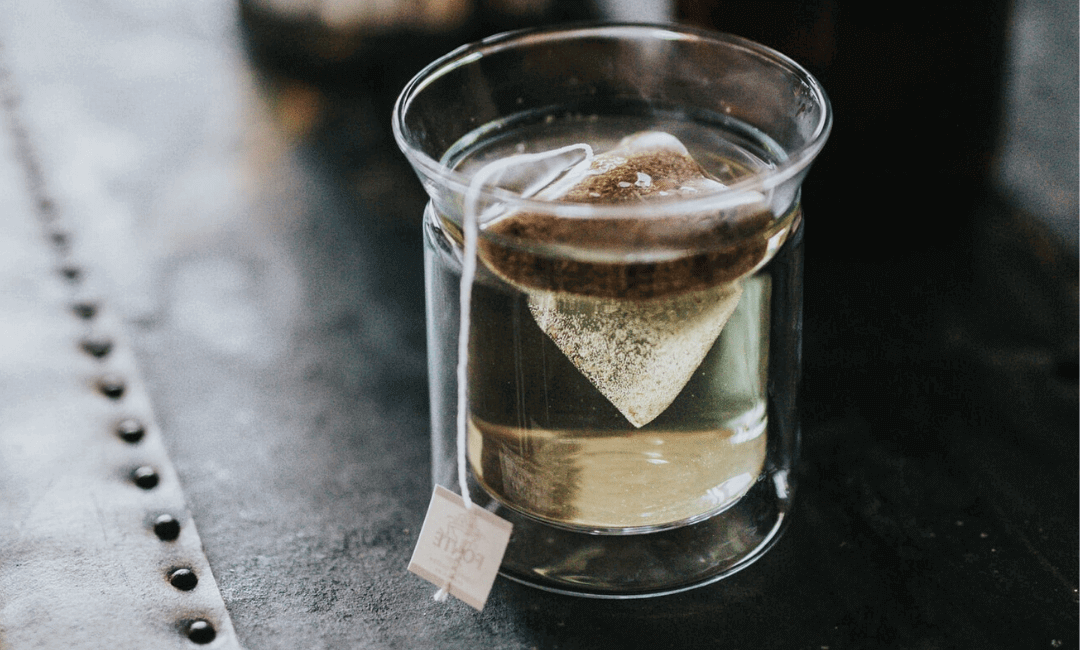
Plastic free tea bags? Yes, you heard that right…
Your cup of tea might contain 11 billion microplastic particles and this is due to the way the tea bag is engineered.
It all started with a 2019 Canadian study at McGill University (1) published in the Environmental Science & Technology Journal, which stated that steeping a plastic tea bag at a brewing temperature of 95°C releases around 11.6 billion microplastics and 3.1 billion nanoplastics into a single cup. Microplastics are tiny pieces of plastic between 100 nanometres and 5 millimeters in size. Compared to salt, for example, which has been also found to contain microplastics, each cup contains thousands of times the greater mass of plastic, at 16 micrograms per cup.
Health Risks Posed by Microplastics in Tea Bags
Researchers are studying the health risks posed by ingesting microplastics from tea bags and several studies are being published on this topic.
A 2023 study in the Journal of Environmental Science and Research Pollution International (2) investigated 45 teabag samples of different Persian and German brands. The results were an abundance of microplastics and phthalates.
Another study published in March 2023 in the International Journal of Surgery (3) cites a wide variety of health conditions, including endocrine disruption, reproductive toxicity, cancer risk, problems with metabolism and nutrition, and interference with neurodevelopment, as concerns related to microplastic exposure, particularly to those heated during processing, like tea bags used in million cups of tea over a lifetime.
A more recent study published in November 2024 in the Chemosphere Journal (4) analysed three empty tea bags purchased online from Amazon and Aliexpress as well as from a supermarket. The bags contained different materials: Sample 1 contained nylon-6, Sample 2 contained polypropylene (PP)/ Polyethylene terephthalate (PET), and Sample 3 contained cellulose. Researchers found that the tea bags made with PP (used to heat seal the bags and keep them sealed while in hot water) released about 1.2 billion small pieces of plastic per milliliter of tea, while bags made with nylon-6 released 8.2 million nano-range (extremely tiny) plastic particles per milliliter, and those made with cellulose released 135 million particles per milliliter.
How are Tea Bags Manufactured?
Let’s go one step back and understand how tea bags are made and why they might contain plastic:
How a teabag is made | Inside the Factory
Ever wondered how a teabag is made? ☕️
Posted by BBC Two on Tuesday, 18 July 2017
Are you shocked? Yes, we were too. We couldn’t believe that incorporating plastic in tea bags wasn’t tested for migration into the hot water before engineering them, without even mentioning the fact that they are of course not biodegradable and compostable, which leads to plastic pollution.
So, Why is There Plastic in Tea Bags?
Many traditional tea bags contain plastic as this is used to heat seal the filter bag and to prevent it from falling apart. It can be:
- inside the paper filter bags (i.e. thermal paper) and/or
- in the glue used to heat seal the bags, mostly in the form of polypropylene (PP).
Both of these materials can migrate into hot water. Most tea manufacturers that used to use plastic in the filter bags are now transitioning to polylactic acid (PLA) based material. Please read our FAQ on PLA at the end of this article.
Related: The Hidden Ingredient in Salt: 3 Microplastic Free Salt Brands You Can Trust
List of 100% Plastic Free Teabags, Free of PLA, Free of Glue
Of the full-list below, we put together the list of tea brands that do not use any plastic in manufacturing their tea bags and closing them together. These brands have stated that they do not use neither polylactic-acic (PLA) bioplastics, nor any glue, as the bags are sealed without glue or folded and then stitched together.
-
Bromley
-
Clipper (Only the string & tag tea bags)
-
Equal Exchange
-
Hampstead Tea
-
Higher Living (Australia)
-
Nature’s Cuppa (Australia)
-
Pukka Herbs
-
Rooted Teas (Third-party lab tested)
-
Stash Tea
-
The Republic of Tea
-
Traditional Medicinals
-
Twinings (Apart from the Cold In’fuse Range)
-
Uncle Lee Tea
-
Yogi Tea
Related: 4 Microplastic Free Salt Brands for Non Toxic Cooking
List of Plastic Free Tea Bags, and Tea Bags Using Plastic by Brand
Here is an updated guide to some of the most available and favorite plastic free tea brands in the USA / Canada, the UK, Australia, and other English-speaking countries.
This post contains affiliate links, which means we may receive a small commission, at no cost to you, if you make a purchase through a link. This helps us continue the very hard work we put into researching products and solutions. It took us weeks to compile this overview.
Please Note: Our health content is for informational purposes only and is not intended as professional medical advice. Consult a medical professional on questions about your health. Please read our disclaimer.
While we make our best efforts to scout completely plastic-free tea bags around the world, we have to rely on the information provided to us by tea manufacturers via their website (we link to the source) or upon our direct request. We disclose their answers and list the tea brands in alphabetical order to make it easier for you to find them. We also list some varieties made with plastic as we received many questions about some specific product ranges, and we don’t have the resources to answer them individually.
1) Barry’s Tea
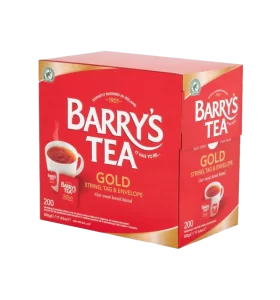
Barry’s Tea states that after significant investment in the redesign and development of their machinery, 100% of the black tea range, produced in Cork and available in shops is biodegradable. Since the end of September 2021 all of the Fruit, Herbal, and Green teas are now available in biodegradable tea bags. According to the manufacturer, you can put the tea bags in your food waste bin at home for industrial composting. The manufacturer confirmed that their tea bags have a special blend of biodegradable thermoplastic fibers (PLA), abaca, and selected cellulosic fibers.
Plant-based Bioplastics / PLA: Yes
Fossil-fuel Plasticizers: No
Source: website’s sustainability page and direct communication.
Shop on Amazon: USA – Canada – UK – Australia
2) Bromley
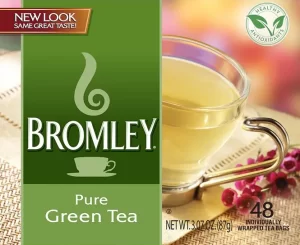
Response by the manufacturer: “Our teabag paper is made from wood pulp. They are heat sealed together without using glue. They do not contain any plastics of any kind and are totally compostable.”
Source: 2023 e-mail correspondence.
Plant-based Bioplastics / PLA: No
Fossil-fuel Plasticizers: No
Shop on Amazon: USA – Canada
3) Bigelow Tea
Direct response from this tea brand: “The tea bag paper we use does not contain any nano/micro plastics. We are proud to produce over 2.2 billion tea bags annually in our three manufacturing facilities in the United States of America. Over 90% of those tea bags use, what is called in the industry, non-heat seal paper. Non-Heat Seal paper is made of wood pulp and abaca fiber. We use non-heat seal paper for all of our tea boxes that contain 18, 20, 28, 60, 80 and 100 tea bags. The remaining tea bags which we manufacture (i.e., 40 count) use a heat seal paper. Heat seal paper is made of wood pulp and plant- based PLA derived from non-gmo corn and sugar cane.”
Source: January 2025 correspondence via Facebook Messenger.
Plant-based Bioplastics / PLA: Yes
Fossil-fuel Plasticizers: No
Shop on Amazon: USA
Related: How to Avoid Microplastics: The Ultimate Guide & CheckList.
4) Bushells
Their tea bag paper is made from manila hemp, cellulose and thermoplastic fibers, as such they are not compostable or recyclable.
Source: e-mail. The company didn’t reply to our request for an update.
Plant-based Bioplastics / PLA: Yes
Fossil-fuel Plasticizers: Yes
5) Celestial Seasonings
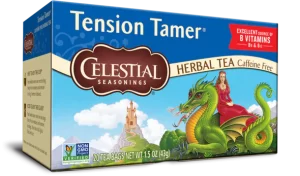
Their pillow tea bags (i.e. tea bags without strings, tags, staples, or foil envelopes) have food-grade polypropylene (PP) plastic fibers, are manufactured through a totally chlorine-free (TCF) whitening process, meaning that no dioxin is released into the environment. Plus, they never contain starch or gluten.
On the other hand, their TeaWell products, their food-service style products, and their certified organic Canadian teas use tea bag paper that does not contain any plastic fibers and has a string, tag, staple, and individual wrapper.
Information Source: May 2023 response via Facebook messenger.
Plant-based Bioplastics / PLA: n.a.
Fossil-fuel Plasticizers: Yes
Shop on Amazon: USA – Canada – UK – Australia
Related: 13 Best Plastic-free Electric Kettles for a Heathy Cup
6) Clipper
Clipper’s tea bags are all unbleached and compostable. They have two types:
- the pillow tea bags are sealed with PLA bio-material from non-GM plant material,
- the string & tag bags are made with paper and a wood cellulose based binder. The string is 100% organic certified cotton. The tag is made of paper.
Information Source: their sustainability page on their website.
Plant-based Bioplastics / PLA: Yes
Fossil-fuel Plasticizers: No
Shop on Amazon: USA – UK – Canada – Australia
7) Dilmah
The tagless tea bags are made from biodegradable PLA material and are also called “pot bags”.
Their pyramid style Exceptional Tea Selection range are also made with biodegradable PLA material.
Their standard teabags (non-pyramid bags that have a string, a tag, and often an envelope) i.e. Dilmah Premium Tea Selection, Ceylon Green Tea and Infusions are composed mostly of natural cellulose fibers which contain no plastic coating such as epichlorohydrin and do not use chemical paper bleaching. Currently, these tagless teabags which do not use a staple or string to seal their tea bag contain 2% of polypropylene (PP) fibers used only for the heat seal that joins the bag together.
Information Source: FAQ N.4 on their website (they removed it!) and their 2022 sustainability report (which breaks down the packaging and material information of all tea formats in their product portfolio).
Plant-based Bioplastics / PLA: Yes
Fossil-fuel Plasticizers: Yes
Shop on Amazon: Canada – UK – Australia
8) Equal Exchange Fairly Traded
Equal Exchange’s tea bags are unbleached abaca with organic cotton strings and tags made from paper printed with vegetable-based ink. They are a fair-trade organization with very high ethical standards.
Information Source: From one of our readers and their website.
Plant-based Bioplastics / PLA: No
Fossil-fuel Plasticizers: No
Shop on Amazon: USA – Canada – UK – Australia
Related: Plastic-free Chewing Gums: Do They Exist?
9) Hampstead Tea
Hampstead Tea bags contain only the following: unbleached paper, made from plant-based wood pulp, an organic cotton string, and organic tea leaves. They were the first tea company in the UK to use the stitch method on their tea bags, as opposed to using plastic based glues or heat seal filter paper.
Their loose tea range use Nature Flex as packaging, a new GMO-free, home compostable material that feels and looks like plastic, but it is actually made of renewable wood pulp.
Information Source: from their website
Plant-based Bioplastics / PLA: No
Fossil-fuel Plasticizers: No
Shop on Amazon: Canada – UK
10) Harney & Sons
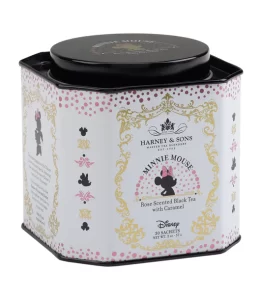
From the manufacturer Harney & Son: “Our paper tea bags are compostable, oxygen bleached with a method that does not produce dioxins, there is no epichlorohydrin, PET, or PLA in our paper tea bags. We offer a variety of certified organic teas in them. The tea bags are fastened with a knot in the string, there is no glue or staple on the tea bag, and they are a great choice if you have any concerns about plastics.”
About their sachet fabric tea bags: “We are excited to announce that we started producing sachet fabric from compostable sugarcane in 2021, and have now achieved 90% sugarcane material use on our product lines. We have been using the new material in production alongside our BPA free food grade nylon. Please note that the new material is industrial compostable and any nanoparticles created during steeping are digested by the body. The sugarcane does not produce any increase in the glycemic content of our teas.”
Information Source: April 2023 e-mail and website article.(It has been removed since!)
Plant-based Bioplastics / PLA: Yes.
Fossil-fuel Plasticizers: Yes
Shop Harney & Sons on Amazon: USA – Canada – UK – Australia
11) Higher Living Organic Tea Australia
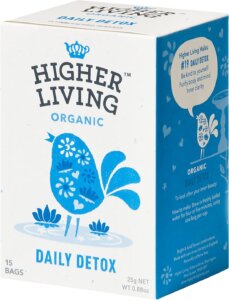
Higher Living has created compostable, plastic-free tea bags made out of unbleached paper with an organic cotton string stitched into the paper to form the bag, with no plastic. The envelopes and the boxes are recyclable.
Information Source: 2023 response via e-mail
Plant-based Bioplastics / PLA: No
Fossil-fuel Plasticizers: No
Shop on Amazon: Australia
12) Ito En
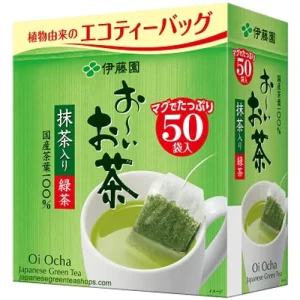
Oi Ocha Green Tea Tea Bags: Just paper, no glue.
Oi Ocha Hoji Tea Bags: Just paper, no glue.
Matcha Green Tea Traditional: BPA-free PET or nylon mesh that meets FDA regulatory requirements for hot beverage contact applications. And food grade glue is used to attach the teabag and the string.
Information Source: April 2023 response via e-mail.
Plant-based Bioplastics / PLA: Yes, in some of their products
Fossil-fuel Plasticizers: Yes, in some of their products
Shop on Amazon: USA – Canada – UK – Australia
Related: Microplastics in Food: The Latest Research.
13) Lidl UK – Deluxe Tea
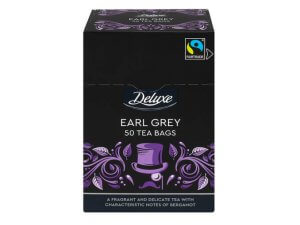
We enquired via email with Lidl Great Britain about their Deluxe Earl Grey tea bags and they replied after verifying with the supplier saying that they offer biodegradable tea bags made of cellulose fibers (from softwood pulp & abaca) + polylactic acid (PLA).
Information Source: June 2023 response via e-mail.
Plant-based Bioplastics / PLA: Yes
Fossil-fuel Plasticizers: No
14) Lidl USA
We enquired via email about the following product ranges: The Organic Tea Range / The Irish Breakfast Tea / The Preferred Selection Range. They replied that according to their supplier, the tea bags are made with filter paper and comprise a blend of cellulose fibers (wood pulp), Abaca, and a very small amount of acrylic binder (to prevent microwave bursting) and PAE (Poly-Amide-Epichlorohydrin) as a wet strength plastic resin (so the paper doesn’t fall apart in water).
Information Source: April 2023 response via e-mail.
Plant-based Bioplastics / PLA: Yes
Fossil-fuel Plasticizers: Yes
15) Lipton
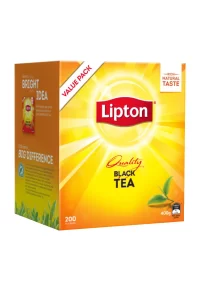
Their Quality Black and Intense Quality Black Tea traditional tea bags are made from Manilla hemp and cellulose fibers. They are compostable tea bags, but not recyclable. Please note: we received an email in July 2023 from one of our readers who stated receiving a different answer from the manufacturer and that their tea bags are lined with polyethylene (PE). This shows a lack of transparency and we couldn’t find any source of information on their website apart from the Cold Brew Tea Bags.
Lipton Green Decaf, Chai and Herbal traditional tea bags are made from manilla hemp, cellulose and thermoplastic fibers. They are not compostable or recyclable.
Lipton Cold Brew Tea Bags are made of plant-based biodegradable PLA material.
Information Source: April 2023 response via e-mail.
Plant-based Bioplastics / PLA: Yes
Fossil-fuel Plasticizers: Yes
Shop on Amazon: USA – Canada – UK – Australia
16) Lyons
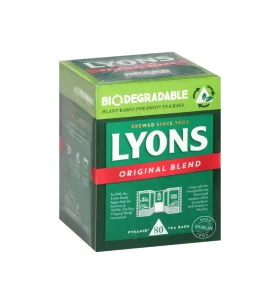
The company that makes tea bags in the UK, has phased out plastics entirely from their tea range and has transitioned to biodegradable and compostable plant-based tea bags.
The Lyons biodegradable teabags are now all plant-based and made of a blend of natural fibers, including abaca, cellulose fibers, and a small amount of plastic fibers. They do not use PLA in their teabags. The thermoplastic fibers used in their teabags are necessary to seal the tea bag and prevent the tea leaves from escaping. However, they say that the amount used is minimal, making up less than 5% of the teabag paper. In their words: “Our commitment to sustainability is paramount, and we are constantly seeking ways to minimize our impact on the environment. Our biodegradable teabags are designed to break down naturally in composting conditions, leaving no harmful residues. We have also eliminated the use of staples and glue in our teabags to make them even more eco-friendly.”
Information Source: May 2023 response via e-mail and their website. (The page has been removed!)
Plant-based Bioplastics / PLA: No
Fossil-fuel Plasticizers: Yes
Shop on Amazon: USA – Canada – UK
17) Madame Flavour Australia
Madama Flavour is an Australian family tea business with French and Kiwi roots.
The pyramid bags are made from Soilon and have a silky finish, no staple. Soilon is a PLA corn-starch derived material sourced from Japan and is fully biodegradable according to their statement. The tags are attached to the pyramid material by ultrasonic heat, with no glue involved. Source: Madame Flavour website.
Information Source: their FAQ section on their website.
Plant-based Bioplastics / PLA: Yes
Fossil-fuel Plasticizers: No
18) Madura Australia
In July 2021 they transitioned to 100% natural plant-based PLA tea bag paper and tea bag componentry. The fully sustainable and renewable fibres are made from a selected blend of high-quality Manila hemp, cellulose and biopolymer made from natural plant material. The transition occurred on across all 50’s & 100’s tea bag packets, as well as 20’s & 80’s enveloped tea bag packets.
The Leaf Infuser (pyramid) teabags have for a long time been made exclusively from 100% natural plant-based PLA tea bag paper and are compostable. They do, however, recommend that you place these teabags out in your green bin as they break down best under commercial waste conditions.
Information Source: FAQ on their website.
Plant-based Bioplastics / PLA: Yes
Fossil-fuel Plasticizers: No
Shop on Amazon: Australia
19) Nature’s Cuppa Organic Tea
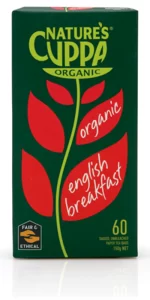
The manufacturer – EatRite Australasia Pty Ltd – who is based in Australia responded that their tea bags are made with unbleached paper (made from a tree grown especially for tea bag paper mainly in the northern part of Europe), and no polymers, nor plasticizers. Nature’s Cuppa is also certified organic by the National Association of Sustainable Agriculture Australia (NASAA) and NOP (USDA) Regulation certified by Control Union Certification, which wouldn’t be achievable if they included plastic according to the manufacturer. The tea bags are closed with a metal staple.
Information Source: April 2023 response via e-mail.
Plant-based Bioplastics / PLA: No
Fossil-fuel Plasticizers: No
Shop on Amazon: Australia
20) Nerada Australia
Their filter paper is manufactured using a blend of high-quality manila hemp, which contains a tiny percentage (less than 2%) of food-grade synthetic fibers.
Information Source: FAQ from their website.
Plant-based Bioplastics / PLA: Yes
Fossil-fuel Plasticizers: Yes
Shop on Amazon: Australia
21) Prince of Peace
This is their response: “Our tea bags are made from bleach-free filtration paper and sealed with an eco-friendly, non-toxic glue. They do not contain any plastic materials.” We asked to specify if the glue is made with synthetic polymers, but we didn’t receive a response.
Information Source: e-mail response from October 2025.
Plant-based Bioplastics / PLA: No
Fossil-fuel Plasticizers: No
Shop on Amazon: USA – Canada – UK
22) Pukka
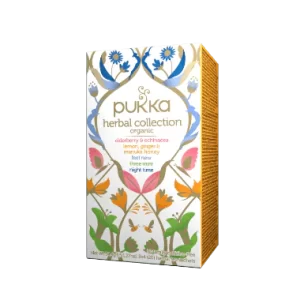
Pukka is famous for their herbal tea. Their tea bag paper is made of a special blend of natural abaca (a type of banana), wood pulps, and plant cellulose fibers. They use a simple stitch of organic cotton and a unique folding process. They don’t need to use polypropylene to hold their Pukka herbs tea bags together and these are therefore free from plastic and home compostable under a UK certification. (We think it’s under the European standard NF T 51-800 though their website doesn’t mention this).
They were the first company to ever use 100% organic, non-GMO cotton tea bag strings to hold the teabags together without the need for a metal staple or polypropylene (PP). Please note: in April 2024, Pukka lost its B Corp certification due to its integration into the larger Lipton Teas and Infusions business.
Information Source: FAQ on their website.
Plant-based Bioplastics / PLA: No
Fossil-fuel Plasticizers: No
Shop on Amazon: USA – Canada – UK – Australia
23) Rooted Teas
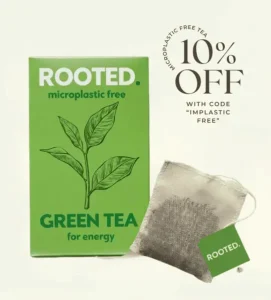
Rooted Teas is a lab-certified microplastic free tea company whose tea bags are made from 100% unbleached cotton. Unlike conventional heat-sealed tea bags, Rooted uses a unique stitched design with no plastics, glues, or additives. Each tea bag is filled with 100% organic whole-leaf tea with no filler leaves, creating a smooth and refreshing taste experience. Rooted Teas has received positive customer feedback for both its clean ingredients and flavor quality.
Information Source: their website, as well as the 3rd party lab test received by the founder.
Plant-based Bioplastics / PLA: No
Fossil-fuel Plasticizers: No
Shop Rooted Teas – (10% off with code IMPLASTICFREE)
24) Qi Tea Australia and New Zealand
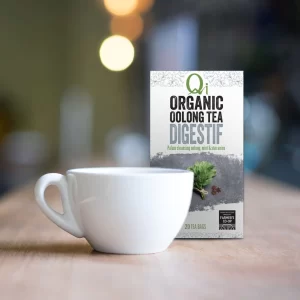
According to the manufacturer, Qi Tea’s tea bags are plastic-free and biodegradable. The tea bag paper has a high percentage of plant-fibers, is natural in colour (not white like in mainstream brands), because it is not bleached and is free from glue and aluminum staples.
The packaging is recyclable and compostable (uses veggie inks). The wrapper outside the box of tea is made of compostable plant-based cellophane. Qi Teas are independently certified organic by the international accreditation body Ecocert, as well as the Soil Association in the UK.
Information Source: response via Facebook messenger (updated 2025) and their website.
Plant-based Bioplastics / PLA: yes
Fossil-fuel Plasticizers: No
Shop on Amazon: UK – Australia
25) Stash Tea
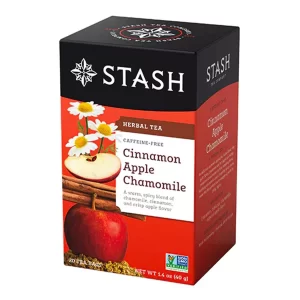
The filter paper used for Stash Tea bags is made from 100% cellulose fibers (wood). Stash tea bag filter paper is machine folded and pressed, therefore no glue is needed or used. According to the manufcturer, the teabags are completely compostable and do not contain any plastic. They also state that test results concluded that chlorine dioxide is not present in their tea bag filter paper. The filter paper is not coated with the compound epichlorohydrin, and does not contain any free epichlorohydrin.
Information Source: via their FAQ section on their website.
Plant-based Bioplastics / PLA: No
Fossil-fuel Plasticizers: No
Shop Stash Tea on Amazon: USA – Canada
26) Teapigs
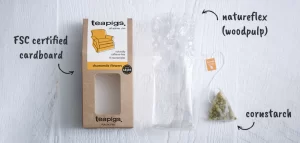
Teapigs tea bags (tea temples) are made from corn starch and paper. They break down in industrial composting within 12 weeks. The inner bag looks like plastic, but is made from wood pulp and can be home composted. The cardboard is FSC certified paper board and printed with vegetable ink, therefore it is recyclable.
Information Source: via their website – (The linked page has been removed!)
Plant-based Bioplastics / PLA: Yes
Fossil-fuel Plasticizers: No
Shop on Amazon: USA – Canada – UK – Australia
27) Tetley
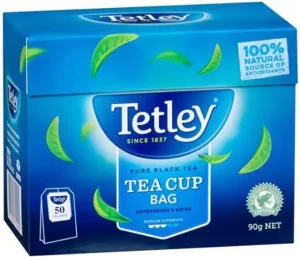
String and Tag tea bags: used in Tetley Black and Tetley Green Tea (excluding All Rounder): “Our string and tag bags are made from a natural fiber woven paper – (mostly Abaca fiber and short wood fibers). Although not specifically tested by us for biodegradability / compostability, used tea bags can be home composted, but we would recommend removing the aluminum staple if present. Our Tea Bags utilizes a staple to hold it together as it is made from an aluminum alloy which is used primarily in food production due to its absence of toxicity. Using a staple instead of adhesive also allows us to not have any plastic in the bag composition. (Source: we received a response from Tetley Tea Australia in April 2023).
Tetley Round Tagless tea bags – used in Tetley All Rounder: Their All Rounder tagless tea bags are comprised primarily (75%) from cellulose fibers (plant matter), the remaining 25% have been successfully transitioned from food safe plastic (polypopylene PP) to plant-based bioplastic (polylactic acid PLA). This bio-plastic is important for heat-sealing the teabags, so the tea does not escape in your cuppa. (Updated November 2025)
Information Source: response via e-mail, and the 2024 sustainability report on their website.
Plant-based Bioplastics / PLA: Yes, in some product ranges
Fossil-fuel Plasticizers: Yes
Shop the Tetley Black and Tetley Green Tea on Amazon: USA – Canada – UK – Australia
28) The Republic of Tea
The Republic of Tea’s signature round tea bags are made from unbleached tea paper, free of excess wrapping, strings, tags and staples. The unbleached tea paper is free of chemicals and no chlorine-containing compounds are used in the paper. The tea bags have no glue, are gluten-free, and kosher certified. The Embassies premium Steep Sacks Individual filters are made from unbleached paper for full-leaf tea.
Information Source: via their website.
Plant-based Bioplastics / PLA: No
Fossil-fuel Plasticizers: No
Shop on Amazon USA – Canada
29) Traditional Medicinals
Traditional Medicinals’ tea bags are 100% plastic free. They are made from sustainably harvested abaca leaf fibers and wood pulp into a double-chamber design that ensures better herbal extraction without any need for chemical sealants. All this is Non-GMO Project Verified.
The string is made from non-GMO Project Verified cotton.
The tag is made from FSC-certified paper.
Information Source: via their website.
Plant-based Bioplastics / PLA: No
Fossil-fuel Plasticizers: No
Shop on Amazon USA – Canada
30) Twinings
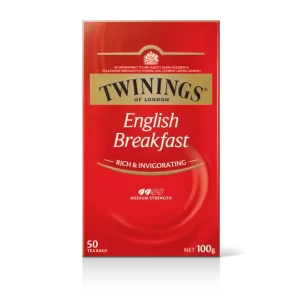
Twinings have moved away from cellulose and thermoplastic fibers over the past years. Their teabags are now made from tea paper, which consists of wood pulp and abaca, both plant-based natural fiber materials, and sealed by being folded and held together with a cotton string. Due to the folding design of the tea bags, they are not heat-sealed and therefore do not contain any PLA. They are also third party certified as suitable for home composting.
In Australia, since March 2024, they have been certified as home compostable to standard AS 5810 and industrially compostable to standard AS 4736.
The material of their Cold In’fuse range used in their pyramid Infuser tea bags is PLA (source 2019 Facebook message), but it looks like this product range is about to be discontinued.
Information Source: July 2025 e-mail response from sent by a reader, and their USA website. The Australian website states the same.
Plant-based Bioplastics / PLA: Generally no. Yes, only in the Cold In’fuse product range.
Fossil-fuel Plasticizers: No
Shop on Amazon: USA – Canada – UK – Australia
31) Uncle Lee Tea
One of our readers has enquired with the company. Their response: “All of our teabags are certified safe under European certification, moreover the teabags are made out of abaca fibers and soft wood pulp fibers. These fibers are natural fibers taken from trees and essentially made into natural paper, thus creating the teabag. No plastics or glue are involved in the manufacturing process.”
Information Source: January 2025, from a reader’s comment.
Plant-based Bioplastics / PLA: No
Fossil-fuel Plasticizers: No
Shop on Amazon: USA – Canada – UK – Australia
32) Vahdam
We received this response via e-mail: “Please note that the tea bags you currently received are made of food-grade nylon mesh. We had adopted these to be able to deliver garden fresh teas to our consumers across ~138 counties. However, our R&D and packaging team has been toiling incessantly to come up with more sustainable packaging. We are happy to share with you that we have started shipping out our new plant-based teabags and you should be able to order them by the end of 2022, or mid-2023 depending on the geography.”
Information Source: April 2023 response e-mail. We’ve requested an update, but received no response.
Plant-based Bioplastics / PLA: Yes
Fossil-fuel Plasticizers: Yes
33) Yorkshire Tea
Yorkshire Tea replied that most of their tea bags have been plant-based for some time now, and to refer to the dedicated section on their website.
Information Source: January 2025 correspondence via Facebook messenger.
Plant-based Bioplastics / PLA: Yes
Fossil-fuel Plasticizers: No
34) Yogi Tea
Yogi tea has a dedicated website to the material of their tea bags. The teabag is made of abaca plant fibres. The string attached to it is made from certified organic cotton and the label on the other end of the string is made from FSC®-certified paper. The manufacturer confirmed that they moved away from staples, and that their tea bags are home compostable in the organic waste. The bag is held together through the string, no glue required. Customer service responded that they using a specific knot technology for their teabags.
Please note: one reader e-mailed us an image of a Yogi Tea bag with a staple. It must be one of their older tea bags.
Information Source: their website, plus a February 2025 Facebook message.
Plant-based Bioplastics / PLA: No
Fossil-fuel Plasticizers: No
Shop on Amazon USA – Canada – UK – Australia
Related: How to Avoid Microplastics in Food: 10 Practical Tips for a Healthier Diet
FAQ
What is PLA Bio-Plastic or Polylactic Acid?
PLA stands for poly-lactic acid and it is a vegetable-based bioplastic material, that commonly uses cornstarch, cassava sugar cane as raw material, but remember much of the corn supply is genetically modified! The good news is that it is not fossil fuel based (it’s no petroleum based).
Does PLA Bioplastic Release Microplastics?
Here is where it gets complicated and researchers are currently still studying this matter. Originally PLA bioplastics have been introduced onto the market as a safer alternative to standard plastic does not create persistent microplastics in the environment. However, in some latest studies, i.e. like the one published in December 2024 in Environmental Pollution Journal (5) researchers are now studying the toxicological implications of PLA’s biodegradation. Some studies, like the one published in April 2024 in the Science of the Total Environment Journal (6), state that further in vitro and in vivo studies are required to confirm the potential health risks associated with exposure to PLAs.
A July 2024 study, also in the Science of the Total Environment Journal (7) was conducted on three different types of cellulose/PLA tea bags and demonstrated very clearly, that there were manufacturer-specific differences between the tea bag brands, field decomposition and most importantly, altered reproductive output in the analyzed earthworm. The study also cites evidence from previous studies of incomplete degradation of PLA following processing in commercial and domestic facilities, leading to the transfer of PLA microplastics to the environment in compost.
Last but not least, a 2023 study published in the Journal of Hazardous Materials (8) found that polylactic acid bioplastic teabags release nanoplastic particles when steeped, and these particles can disrupt the gut barrier function by harming intestinal epithelial cells in an in vitro model.
Are Plant Based Bio-Plastic Tea Bags made with PLA Compostable?
Of course, 100% paper bags can be composted in your backyard compost or placed in your FOGO (Food Organics and Garden Organics) bin. However, PLA tea bags will not necessarily biodegrade in your backyard compost, unless you live in the tropics with a very hot and humid climate. If your climate is not warm enough, it will be harder for PLA to break down within the time frame specified by global ‘Compostable’ labeling standards. PLA has been designed to break down in industrial and municipal composting facilities, in certain controlled environments (i.e. controlled humidity and temperature), of which there are only a few in Australia, as an example. Always ask your Council if tea bags are accepted in your FOGO bin. We have read that most Councils don’t accept them for fear of contamination with fossil-fuel based plastic tea bags.
A July 2024 study (7) published in The Science of the Total Environment Journal, and mentioned earlier in this article, examined how polylactic acid (PLA) bioplastic teabags deteriorate in environmental conditions and revealed that their breakdown negatively impacts earthworms, causing harm to their health, growth, reproduction, and burrowing behavior. These findings highlight unintended ecological risks from biodegradable PLA products once released into soil ecosystems .
Further Tip: Try to Tear Your Tea Bag!
Usually, pyramid tea bags are made of plastic. If you try to tear them, you can easily understand if this is the case or not. If the bag doesn’t tear at all, it means it is nylon or propylene, and this is particularly true for pyramid tea bags containing plastic. This video shows this clearly.
Conclusion: Choose Loose Leaf Tea if Possible, with Non Toxic Tea Infusers
If you are looking for tea bags without plastic, you need to consider each brand and each product line, hence why we hope that our guide to eco-friendly tea bags was useful to enjoy every cup of tea.
For your health and the environment, of course, the best way to drink tea free of microplastic as a regular tea drinker is to switch to loose tea. Even Rare Tea Company suggests that even biodegradable tea bags aren’t good for you, and that you should opt for loose leaf tea instead:
- opt for loose leaf tea
- use reusable stainless steel tea strainers, like this stainless steel tea steeper
- or snap tea ball strainers – heart shaped tea infusers
- unbeached reusable cotton tea bags
- glass tea infusers
- last but not least, you can buy disposable tea filter bags but be careful, if they are not organic and the exact material is not specified, it defeats the purpose of using loose leaf tea.
Harney & Sons, Tetley, Nerada etc. nearly every tea brand offers loose tea. The list of loose tea brands is endless, make the switch today!
Enjoy your cup of tea!
Scientific Research Sources:
(1) Hernandez, L. M., Xu, E. G., Larsson, H. C. E., Tahara, R., Maisuria, V. B., & Tufenkji, N. (2019). Plastic teabags release billions of microparticles and nanoparticles into tea. Environmental Science & Technology, 53(21), 12300–12310.
(2) Kashfi, F. S., Mohammadi, A., Rostami, F., Savari, A., De-la-Torre, G. E., Spitz, J., Saeedi, R., Kalantarhormozi, M., Farhadi, A., & Dobaradaran, S. (2023). Microplastics and phthalate esters release from teabags into tea drink: Occurrence, human exposure, and health risks. Environmental Science and Pollution Research, 30(47), 104209–104222.
(3) Ali, T., et al. (2023). Health risks posed by microplastics in tea bags: Microplastic pollution—a truly global problem. International Journal of Surgery, 109(3), 515–516.
(4) Banaei, G., Abass, D., Tavakolpournegari, A., Martín-Pérez, J., Gutiérrez, J., Peng, G., Reemtsma, T., Marcos, R., Hernández, A., & García-Rodríguez, A. (2024). Teabag-derived micro/nanoplastics (true-to-life MNPLs) as a surrogate for real-life exposure scenarios. Chemosphere, 368, 143736.
(5) Nik Mut, N. N., Na, J., Nam, G., & Jung, J. (2024). The biodegradation of polylactic acid microplastic and their toxic effect after biofouling in activated sludge. Environmental Pollution, 362, 125038.
(6) Alaraby, M., Abass, D., Farre, M., Hernández, A., & Marcos, R. (2024). Are bioplastics safe? Hazardous effects of polylactic acid (PLA) nanoplastics in Drosophila. Science of The Total Environment, 919, 170592.
(7) Courtene-Jones, W., et al. (2024). Deterioration of bio-based polylactic acid plastic teabags under environmental conditions and their associated effects on earthworms. Science of the Total Environment, 934, 172806.
(8) Banaei, G., et al. (2023). The release of polylactic acid nanoplastics (PLA-NPLs) from commercial teabags: Obtention, characterization, and hazard effects of true-to-life PLA-NPLs. Journal of Hazardous Materials.
—
Do you have any question or comment?
Or maybe would you like to give us some more information about other tea brands?
Just write in the section below or email info@implasticfree.com
Browse the Food & Drinks section of our directory for plastic alternatives.





IMPLASTICFREE
January 1, 1970 at 12:00 amThanks Alison, that’s a very good point. When we contacted them, they only mentioned the pyramid bags, didn’t know they also have other tea bags. Thanks for the information, we’ll update our blog post!
Margaret
February 9, 2020 at 6:51 amAre Clipper Tea bags plastic free?
I'M PLASTIC FREE
February 9, 2020 at 9:52 amHi Margaret, we just found this information on their website. Their tea bags are sealed with PLA (poly lactic acid) which is a vegetable based plastic material. I hope this helps. Kind regards, Simona https://www.clipper-teas.com/faq
Gen
April 16, 2024 at 2:38 pmhi, can you please check to see if higher living organic and pukka tea bags are treated with the carcinogenic epichlorohydrin or any PFAS chemicals.
I'm Plastic Free
April 16, 2024 at 5:51 pmHi Gen,
Thanks for your message.
We do our best, however we are a very small team, we’ll try to reach out to the manufacturer but we do not always receive a response.
Kind regards,
Simona
I'm Plastic Free
April 28, 2024 at 10:32 amHi Gen,
Pukka has provided a response (we’ll update the article):
“Hello Simona, we truly appreciate your message and we are so glad that you have chosen Pukka. We want to assure you that our tea bag paper is completely free from any traces of epichlorohydrin. Although it is used in the manufacturing process, our tea bag suppliers regularly conduct checks to ensure its absence. Rest assured, our products comply with all the necessary food regulations in both the EU and the US. Thank you once again for reaching out to us!”
I hope this helps.
Kind regards,
Simona
Nadir Gedik
July 19, 2026 at 5:44 amLipton demlik poşet çay plastik parçaları içeriyormu?
I'm Plastic Free
July 19, 2026 at 12:13 pmHi Nadir,
No, loose leaf tea doesn’t have microplastics.
Kind regards,
Simona
Melissa C
April 22, 2026 at 1:19 amThank you for this project & this invaluable information about a beverage so many of us consume many times a day. As someone who’s always prioritised organic food It’s pretty terrifying to think about all these microplastics entering our bodies. Your blog has already directed me to update my kettle to plastic-free & now I’m re-evaluating my tea (bag) collection. Good to see a few brands I already buy are plastic-free such as Higher Living, but definitely upping my loose leaf options. Can you find any info about Queen Victoria Tea? I’m in Australia. Thank you!
I'm Plastic Free
April 26, 2026 at 6:24 amHi Melissa,
Thank you for your message! We’ve been raising awareness about microplastics since 2018, well before this topic became trendy…
We’re happy to hear that our articles have helped you find products that are safer!
We tried to find more info about Queen Victoria Tea but there’s nothing mentioned on their website, so we sent them an email. If they reply, we’ll respond here!
We’re a bootstrapped social enterprise based on the Sunshine Coast and we’d love if you could mention your expereience above in a brief review. It means the world to pour project! Here is the link: https://g.page/r/Cai0cN6YmcyFEAE/review
Kind regards,
Simona
Greg
January 1, 1970 at 12:00 amWell done. Good info.
IMPLASTICFREE
January 1, 1970 at 12:00 amThank you Greg !
Anonymous Moose
January 1, 1970 at 12:00 amCrap. Just finished a bag of Tazo tea… And it’s not listed on this website. Man, darn these companies touting to be organic and healthy… Yet use plastics in their manufacturing process.
I'M PLASTIC FREE
March 8, 2020 at 5:28 pmHello, thanks for you comment. We are not sure about Tazo. We’ll try to request more information and if they reply, we’ll update our blog article. We cannot listed every brand sold in Australia… so we concentrated on the most popular ones.
Chris
January 1, 1970 at 12:00 amThanks for the info. Any idea where I can get decaffeinated loose leaf tea?
I'M PLASTIC FREE
January 1, 1970 at 12:00 amWe have one Decaf Masala Chai on our platform https://wordpress-801557-2743960.cloudwaysapps.com/product/decaf-masala-chai/
Aimee
July 5, 2023 at 10:41 pmT2 All Day Breakfast
Melissa C
April 22, 2026 at 1:25 amHey Chris, Twinings does a loose leaf decaffeinated EBT. I saw it in Coles tonight!
Karen
January 1, 1970 at 12:00 amHi I was wondering if HT (Harney & sons ) sachets are plastic free. I drink their tea daily. Also if they are not plastic free would it help to cut them open & use the tea as “loose” tea leaves ? Would that cut down on the plastic in my cup ?
I'M PLASTIC FREE
January 1, 1970 at 12:00 amWe have provided the info we had about H&S. I wouldn’t cut the sachets as this would release microplastics.
IMPLASTICFREE
June 4, 2020 at 12:02 pmHi Karen, thanks for your question and sorry about our late reply. We’ll enquire with HT and let you know if their sachet are plastic free. If they aren’t, we would not recommend to cute the sachet open as the effect of cutting through plastic releases a lot of microplastics. There was a recent study on this: https://www.newscientist.com/article/2237900-just-opening-a-plastic-bottle-can-release-thousands-of-microplastics/ I hope it helps!
Yahia Sayed
August 16, 2022 at 7:46 amHello!
Is Lipton pure green tea 100 tea bags plastic free? I just bought them 🙁
Simona Paganetto
August 16, 2022 at 9:43 amHi Yahia, we’ll enquire with the manufacturer and will post here if we receive a response. Thanks, Simona
Eileen
March 18, 2025 at 7:49 amDo you have any information on the bags Republican of Tea uses. When I asked they said no plastic /epichlorohydrin but I still wonder.
I was thinking K could cut the bags, but saw an earlier post the advised not to
I'm Plastic Free
March 20, 2025 at 1:19 pmHello Eileen,
Thanks for your question. I checked their website and the Center for Environmental Health in California also classifies thir tea bags as plastic free.
I’ll update the article.
Kind regards,
Simona
kat
January 1, 1970 at 12:00 amI’ve heard the glue they use to seal the paper tea bags is just as bad as the plastic materials. Do you know if this is true?
I'M PLASTIC FREE
January 1, 1970 at 12:00 amHi Kat, thanks for your question, yes you’re right, I’ve done a little bit of research on this and unfortunately there’s not much information on the web. I’ve read that the glue used might be an acrylic copolymer emulsion, therefore a plastic based glue that bonds the tea bags together. Even though the amount used might be minimal, there might still be some migration in the tea when used with boiling water… therefore we highly recommend to use either paper bags sealed with metal or even better for the environment and absolutely safe, loose tea.
Chris
January 1, 1970 at 12:00 amI can’t seem to find anything out about Laura Secord pyramid tea bags. I’ve been told they’re bad. Any comment on that?
I'M PLASTIC FREE
January 1, 1970 at 12:00 amHi Chris, thanks for your comment. I’ve never heard of that brand before, I’m based in Australia. I googled it but I cannot even find a website for it… I’d ask the retailer where you’re buying it from or check the packaging if you can find the Customer Information phone number. However, from my experience pyramid tea bags are not paper based… Regards, Simona
Jessica
January 1, 1970 at 12:00 amCan you cut the tea bags and combine all the loose leaf and use it in a stainless steel strained? Or do you still get the plastic when heated? I have sooo much tea! And I’m wondering if I have to throw it all away.
I'M PLASTIC FREE
January 1, 1970 at 12:00 amHi Jessica, yes you can! I read that a few microplastic particles might be released when cutting them with the scissors… However, since you’re not immersing them in hot water I believe it’s the safest thing to do. Remove the tea, use it up, don’t let it go to waste and then switch over to loose tea when finished!
Greg
January 1, 1970 at 12:00 amOf course, make sure that those specific tea bags contain plastics first!
Expect to have to contact the manufacturer a couple of times. Their first response is likely to be a bit low-key with the facts. They might use words like “vegan” or “cruelty-free” as red herrings, and will probably end up using words like “plasticiser”, “polymer”, or “hydrocarbon” intead of “plastic”.
P Dhillon
January 1, 1970 at 12:00 amYour information on Tetley bags is incorrect.
Tetley tea bags are 99% plastic free, but still have the 1%. This is on their website…
I'M PLASTIC FREE
January 1, 1970 at 12:00 amHi, no it’s not incorrect. We enquired with Tetley UK and they confirmed that it is correct. I’ll try to attach the correspondence here but not sure if it’ll show up. Regards Tetley UK.jpg
Kayoko Wright
January 1, 1970 at 12:00 amAre Ito en tea bags plastic free?
I'M PLASTIC FREE
January 1, 1970 at 12:00 amHi Kayoko, I’ve asked Ito En, I’ll let you know if they reply! Kind regards, Simona
I'M PLASTIC FREE
January 1, 1970 at 12:00 amHi Kayoko, this is their reply: “Our Matcha Green Tea tea bags are made of food grade PET filter materials (Polyethylene Terephthalate). We are also actively researching for plant-based material options and currently testing its compatibility to hopefully switch to plastic-free materials in the future”.
Our Matcha Green Tea on our marketplace is plastic free and come with compostable packaging.
I hope this helps.
Linda M. Schell
May 9, 2020 at 3:37 amI am trying to find out if the brand Selection Orange Pekoe Black tea, bagged/packaged for Metro stores in Quebec (product from ?), uses any plastic. I found your site and now I am wondering if my plastic coffee purcolator might also present the same problem. Perhaps there is a full list, somewhere, of products containing plastic that we are oblivious to!!
I'M PLASTIC FREE
January 1, 1970 at 12:00 amHi Linda, thanks for your message. Oh I see, in that case you should get in contact with the Metro stores in your area. I’m based in Australia and we do not have this grocery chain here. Yes, unfortunately plastic should not be exposed to very high temperatures, that’s why we also recommend to always check your kettle as boiling water in plastic is no good. A part from microplastics, there is the issue with bisphenols and if a product says BPA free that doesn’t mean, free of other bishenols. We are working on more blog articles to clarify where plastic is hiding too! Regards, Simona
Stuart
May 9, 2020 at 6:08 pmTetley stringed tea bags are plastic free,BUT the box they come in is covered in plastic
I'M PLASTIC FREE
January 1, 1970 at 12:00 amOh yes, they have to see their packaging because of humidity etc. That’s why we recommend, if possible, to buy your loose leaf tea from a bulk store. Regards, Simona
JWShin
June 4, 2020 at 3:13 pmPLA plastics also regarted as a polymerrized plastic. Can biodegradable means not harmful in our body and it can degrade into not hazardous material in body? PLA plastics doesn’t make micro or nano particles in tea infuwsion?
Linda M. Schell
January 1, 1970 at 12:00 amWe are hearing that the increase in IBS, Leaky Gut Syndrome is linked to the amount of plastics and other chemicals in our systems that land there and in our Biome! I’m not a doctor but it makes a lot of sense.
If we are pouring boiling hot water on a tea bag, whose to say it doesn’t break down the plastic, and even change is properties from inert to “nasties”. Same as those “plastic looking” BBQ mats that are now becoming popular
I'M PLASTIC FREE
January 1, 1970 at 12:00 amReally? That’s a very interesting topic, I did some research but couldn’t find anything about it yet… Having gut issues myself this is something I’d love to investigate and write about. I know scientists are investigating the effects of us humans as well as wildlife ingesting microplastics, so it’s just a question of time until we see scientific studies about this topic.
I'M PLASTIC FREE
January 1, 1970 at 12:00 amI forgot to mention that it does make a lot of sense to me too, a well known independent German Institute did some testing on baking mats and other items and they found migration of particles leaking into food when exposed to the high temperatures of the oven. I’ll compile an article about it as soon as possible. Regards, Simona
IMPLASTICFREE
August 4, 2020 at 12:56 pmHello, unfortunately we don’t know the long time effects of ingesting PLA bioplastics micro- or nano particles in our body. We are just providing the information as delivered by tea manufacturers. However, according to this 1995 study issued in the Food and Chemical Toxicology Journal: “PLA is Generally Recognized as Safe (GRAS) when used in contact with food.” Here is the link to the study: https://www.sciencedirect.com/science/article/pii/027869159400145E
Greg
August 4, 2020 at 1:11 pmKeep in mind that despite a chemical being approved for use by FSANZ, that just means that no harm has yet been identified. Such additives don’t provide any nutrition to the organism, but merely extend shelf life, change colour of the product, change the texture, sweetness, or other flavour component more cheaply than by improving a recipe, or superficial property.
Rather than trying to keep track of the ever-changing panorama of additives, I made the simple decision some years ago only to buy and eat foods that were made out of foods.
https://www.choice.com.au/food-and-drink/food-warnings-and-safety/food-additives/articles/food-additives-you-should-avoid#how-additives-are-regulated
IMPLASTICFREE
August 4, 2020 at 1:48 pmHi Greg, thanks for referring to that great article. Absolutely, we don’t advocate to drink tea in PLA tea bags, we actually think it’s safer to drink loose tea in a strainer, at least you know it’s just tea. Thanks again!
Greg
August 4, 2020 at 1:12 pmKeep in mind that despite a chemical being approved for use by FSANZ, that just means that no harm has yet been identified. Such additives don’t provide any nutrition to the organism, but merely extend shelf life, change colour of the product, change the texture, sweetness, or other flavour component more cheaply than by improving a recipe, or other superficial property.
Rather than trying to keep track of the ever-changing panorama of additives, I made the simple decision some years ago only to buy and eat foods that were made out of foods.
https://www.choice.com.au/food-and-drink/food-warnings-and-safety/food-additives/articles/food-additives-you-should-avoid#how-additives-are-regulated
Karen
July 4, 2020 at 1:28 amThank you !
IMPLASTICFREE
August 4, 2020 at 1:30 pmHi Karen, we received a reply by Harney & Sons, so we updated the Blog Post. I hope this helps. Cheers, Simona
tammy
August 7, 2020 at 8:21 ami’m confused, on one part you say ipton – Their Quality Black and Intense traditional tea bags are made from Manilla hemp and cellulose fibres. They are compostable but not recyclable.
and then lower you say that another version is also made with Manilla hemp and cellulose fibres.
but that it is NOT compostable but not recyclable.
which is it??
I'M PLASTIC FREE
August 7, 2020 at 12:20 pmHello Tammy, thanks for your enquiry. The information we provided is correct and we received it directly from Lipton. The difference is in the THERMOPLASTIC fibres that are present in the Lipton Green Decaf, Chai and Herbal traditional tea bags, that’s why these are not compostable or recyclable. Not all of their tea bags are made and sealed in the same way, as they have global operations and manufacturing facilities. I hope this helps. If you want to be 100% sure, we’d recommend to use loose tea. Kind regards, Simona
Rusty
December 8, 2022 at 2:14 pmHere in WA tea bags are collected with compostable food and garden material by council so plastics are being collected and spread around gardens etc. Alarming! Big policy change needed.
I'm Plastic Free
December 8, 2022 at 10:18 pmHello Rusty, oh no, that’s no good if people cannot differentiate between the paper ones and the plastic ones, then yes, there’ll be contamination in the soil. Maybe you can send the link to this article to your Council or whoever is responsible for the green waste collection?
Mohammad sirajun
January 20, 2023 at 1:11 pmHow about harada green tea plastic bags, it’s a japanese brand, is it plastic free?
I'm Plastic Free
January 20, 2023 at 3:02 pmHi Mohammed,
thank you for your question. We’ve enquired with Harada about their tea bags and we’ll update our blog article if they reply.
Jon Morris
January 30, 2023 at 2:55 pmDoes anyone have any information on the teabags that Starbucks / Teavana use? Thanks!
I'm Plastic Free
January 30, 2023 at 4:59 pmHi Jon,
Thanks for your comment. We’ve just enquired with Starbucks / Teavana about their tea bags and we’ll update the blog article if they reply. Kind regards, Simona
I'm Plastic Free
February 10, 2023 at 4:38 pmHi Jon,
We received the following answer from Starbucks about their Teavana tea bags:
• Teavana full leaf tea sachets (bags) are made of food grade, BPA-free, nylon or PET plastic depending on the manufacturer. Teavana tea sachets comply with applicable regulatory requirements for their use.
• Food grade nylon is a material that meets food safety regulatory requirements.
• Full leaf sachets are sold in our retail stores and in the grocery channel.
• These Teavana tea sachets are not compostable or recyclable.
We’ll updated this blog article, asap. I hope this helps.
Kind regards,
Simona
Mary
February 22, 2023 at 2:00 amThis is not accurate about Pukka. Their teabags DO contain plastic, I just confirmed this directly with them. Your article is misleading to people trying to avoid all plastic in their tea bags, and should be corrected in your article
I'm Plastic Free
February 27, 2023 at 9:07 pmHi Mary,
Which Pukka tea bags exactly contain plastic? We have the information directly from their website that their tea bags are plastic free, and we linked to the source in our blog article. Here it is if you’d like to read it: https://www.pukkaherbs.com/uk/en/faq
Kind regards,
Simona
itsG
March 19, 2023 at 10:58 pmWhat about Bromley tea bags?
I'm Plastic Free
April 5, 2023 at 4:04 pmThanks for your question. We’ll enquire with the manufacturer and we’ll update the blog article if they reply.
Kind regards,
Simona
Cathy
April 5, 2023 at 8:32 amAre Vahdam tea bags plastic free? I can’t find any information on the. Thank you.
I'm Plastic Free
April 5, 2023 at 4:00 pmHi Cathy,
Thanks for your question. We’ll enquire with the manufacturer and we’ll update the blog article if they reply.
Kind regards,
Simona
I'm Plastic Free
April 27, 2023 at 12:32 pmHi Cathy, we received the response by Vadham and just updated our blog article. I hope this helps: https://www.implasticfree.com/why-you-should-switch-to-plastic-free-tea-bags/
slava simontov
September 24, 2023 at 8:17 amThe Teavert is the only brand with fully biodegradable, FSC certified white birch veneer, with no glue, no plastic, no PET, PLA, and no epichlorohydrin. All production is done in Seattle, US.
I'm Plastic Free
September 28, 2023 at 3:27 pmThanks for your input. We’ll check that brand out!
J Carter
September 29, 2023 at 7:10 pmI’m wondering why you’re plugging Amazon as a supplier. I was happy to find such a good source of information, until I saw you advertising them.
I'm Plastic Free
October 5, 2023 at 11:47 amHello,
Thank you for your comment.
We don’t just advertise Amazon, we work with several affiliate marketing programs around the world including etsy, Impact, Awin, Ascend, Avant, Share A Sale, Rakuten etc. and we get a commission when a product recommended on our platform sells. That is how we monetise our work. We work tiredlessly to find, research, and analyse plastic-free products around the world. It takes hours and hours of research, contacting the manufacturers, waiting for their responses, follow up if they didn’t reply etc etc. until we have all data we need to publish our blog articles. We also need to make a living and be able to pay the business expenses, our bills and put food on the table. At the moment the I’m Plastic Free project does not even bring a full time income and we are constantly applying to grant funding and other opportunities to be able to continue it.
Why do we do this? Because we are extremely passionate about plastic pollution and fully believe in a regenerative bioeconomy. We beliebe in driving consumer change and we exist to help in this.
We hope that our answer clarifies our intent and if you have any suggestions for funding we would be more than welcome to receive them. Please contact us at info(at)implasticfree.com
Many thanks
Kind regards,
Simona
Denise Clark
December 23, 2024 at 2:43 amThank you for bringing this important information to the publics attention. While I don’t ever shop on Amazon, I do appreciate everyone needs to earn a living. Sadly, most people do shop through Amazon.
Thank you again for your hard work!
I'm Plastic Free
January 5, 2025 at 3:46 pmHi Denise,
Our pleasure, we fully understand and respect your decision. Our research and replying to every message we receive from our readers takes an incredible amount of hours. We do not making a full time living out of this project, but yes the monetisation helps us towards keeping this project, to which we are extremely passionate, alive. Usually we offer the options to purchase the brands we recommend also from the manufacturers directly, but with a low price point item like tea bags, this is financially not viable…
Thank you again for your words of encouragement towards our work.
Kind regards,
Simona
Christine Beller
October 8, 2023 at 9:15 pmIs uncle lee’s organic green tea free of plastics
I'm Plastic Free
October 9, 2023 at 6:14 pmHi Christine,
We haven’t come across that brand yet. We asked the manufacturer and we’ll let you know if they provide a response.
Kind regards,
Simona
Naveed Khan
October 27, 2023 at 8:38 pmwhich company said that their teabags or plastic free, are them sure some teabags are coming with envelope which has to supplies to the Hotel( guest rooms). because they supplying with outer box and envelope. because the envelope are heat seal and paper can not seal.
I'm Plastic Free
November 6, 2023 at 1:58 pmHi Naveed,
We’ve provided all findings of our research in this article and have provided the answers received directly by the tea brands manufacturers. I hope this helps.
Kind regards,
Simona
Anthony Mitchell
November 27, 2023 at 6:46 amHi, Can you find out if Joe’s organic tea in pyramid bags are plastic free please
I'm Plastic Free
December 11, 2023 at 2:36 pmHi Anthony,
Thanks for your question. We’ll check that brand, however if those pyramids are shiny and resistant to tear, then they are made with plastic!
Kind regards,
Simona
Olli
November 25, 2025 at 3:23 amJoe’s Tea Co states:
“Certified by ‘A Plastic Planet’, meaning this product is 100% plant-based and commercially compostable.”
AND
“Pyramid bag, string and tag. Made from sugar cane, cotton and paper. Pop me in your food waste caddy.”
Well, as far as I know, plastic made from natural resources is still…. plastic:
What the y want to say is that they are not made from petrol-derived plastic.
Joe’s Tea bags use a plant-derived plastic that’s more sustainable than oil-based alternatives, and their biodegradability claim holds up for home composting. But calling it “no plastic” stretches the truth—it’s bioplastic, which is plastic, just from sugarcane instead of crude oil.
If microplastic avoidance is your main concern, loose-leaf tea (which Joe’s also offers) is the gold standard—no bags at all.
It is misleading marketing, and we all need to see through that.
I'm Plastic Free
December 1, 2025 at 12:34 pmHi Olli,
Thank you for your comment! Yes, you’re right when they say made of sugar cane, they probably mean, made of PLA bio-plastics (polylactic acid) with sugar cane feedstock. We have cited the studies in our FAQs that state that teabags made of PLA bioplastics still release microplastics. You’re also right, the safest tea choice is organic loose leaf tea.
Thank you for spotting this!
Kind regards,
Simona
Leslie Santos
January 14, 2024 at 6:54 amDoes tazo have micro plastic throughout their whole lines or is it only certain kinds like their passion or “organic refresh mint” ?
I know albertsons has a brand called “organics” and i wish people would test or have research on those off shelves brands. Some arent any cheaper than tazo..so im assuming its low quality. I think itd be best to buy tea brands that say on the box that its unbleached and organic..and plastic free…
I'm Plastic Free
January 17, 2024 at 3:20 pmHi Leslie,
We’re not familiar with Tazo’s products and we couldn’t see a plastic free laundry detergent in their product line. We agree, just because a brand says “organic” on their packaging it doesn’t mean that the detergent is organic or that all igredients are… there is a lot of greenwashing, and it’s important to check the product ingredients!
With our website we are trying to bring together solutions to our eco- and healthconscious customers, while being transparent to what is available on the market.
Kind regards,
Simona
Ria
April 30, 2024 at 9:28 amI just want to say thank you to all the plastic free and pesticide free tea companies. there’s so much poison in our foods so I appreciate companies that care about the consumers health and well-being there’s so many companies out there that just don’t care. it’s all about the money and that’s so sad that’s one of the reasons there’s so much cancer in the world because of companies that just don’t care!🤷
Thank You Again 🙂
I'm Plastic Free
May 1, 2024 at 7:28 amHi Ria,
Thank you so much for your comment, and yes you’re right! The reason there is so much cancer in the world is also linked to so many unregulated toxic chemicals to which we are exposed every day. In plastics there are so many of them… that’s why we created I’m Plastic Free!
If you like what our project stand for, please write a few words here: https://g.page/implasticfree/review?gm
Thank you again, you made our day!
Kind regards,
Simona
alay4d
May 16, 2024 at 2:50 amWow Thanks for this blog post i find it hard to discover great information out there when it comes to this topic appreciate for the thread website
I'm Plastic Free
May 17, 2024 at 11:40 amHi there,
Happy to help with our content and research-based information.
Kind regards,
Simona
Chloe Stam
May 28, 2024 at 10:12 amthe lipton teas in american are not home compostable and “should be disposed of in your regular trash”. I online via their web chat today and the guy said so. I’d add a screenshot if I could :/
I'm Plastic Free
May 29, 2024 at 11:58 amHi Chloe,
Thanks for your comment. Are you referring to the Quality Black and Intense Quality Black Tea?
There are many varieties of Lipton teas…
Kind regards,
Simona
Laura
July 4, 2024 at 2:47 amGreat summary. Thanks for compiling it.
Any guidance on the best ways to lobby these companies to eliminate harmful plastics from their tea bags?
Also two of the biggest brands of tea bags in the US is ‘Mighty Leaf” (Owned by Peet’s) and Teavana (owned by Starbucks). Any info on these?
I'm Plastic Free
July 6, 2024 at 9:23 amHi Laura,
Thanks for your comment! The best way to lobby these companies is to place pressure by contacting them and ask them to find bio-based, bio-benign solutions for their packaging that are not harmful. We’ll try to get in touch with those brands you mentioned and see what they respond.
Kind regards,
Simona
Laura
July 8, 2024 at 7:36 amThanks. I check back here periodically to discover how they respond.
Amy
July 5, 2024 at 10:52 pmI love Hampstead Tea. Their tea bags are stitched so they don’t contain any bioplastics or plastics. You can just compost them once you finish your tea! It’s also 100% organic and I love the taste.
I'm Plastic Free
July 6, 2024 at 9:19 amThanks for your suggestion Amy!
Edie Huddleston
July 19, 2024 at 12:03 amHi, I’m wondering if English Tea Store uses plastic-free teabags. Thank you.
I'm Plastic Free
August 7, 2024 at 7:22 pmHi Edie,
Sorry about my late response. We’ve been busy with Plastic Free July!
I’m not familiar with that brand. Is that a brand or an online store?
Kind regards,
Simona
Raya
July 20, 2024 at 9:51 amIs bowl and basket def black tea plastic free?
I'm Plastic Free
July 26, 2024 at 5:11 pmHi Raya,
Sorry, we do not understand your question. Which brand are you referring to?
Kind regards,
Simona
KS
July 26, 2024 at 11:01 amThanks heaps for the compilation.
Do you know if Queen Victoria tea in Australia is plastic free. no info on their website.
I'm Plastic Free
July 26, 2024 at 5:07 pmHi KS,
Our pleasure, we have been gifted a package of Queen Victoria tea and the bags seem to tear easily but we’d need to confirm with the manufacturer. If we receive an answer we’ll update this blog article.
Kind regards,
Simona
kayla
November 11, 2024 at 5:40 pmhas there been an update? its my favorite tea!
I'm Plastic Free
November 11, 2024 at 9:16 pmHi Kayla,
No unfortunately we didn’t receive a response and you can’t contact the Facebook page.
We’ve just sent another enquiry.
Kind regards,
Simona
I'm Plastic Free
November 17, 2024 at 11:17 amHi Kayla,
We received the following answer from Queen Victoria Tea:
“We are continuously working with our supply chain partners to explore ways to improve the ecological footprint of our packaging, while adhering to our highest standards for product quality.
The tea bags used for QVT are plastic free, compostable and bleach free. Where a staple is present, please remove prior to adding to compost. Our boxes in the tea range are recyclable but the foil envelopes (10’s), cellophane (50’s, 100’s and Loose) are not.”
I hope this helps!
Kind regards,
Simona
Aayush gupta
July 27, 2024 at 1:53 amdo country tea green tea contain micro plastic
I'm Plastic Free
August 7, 2024 at 7:15 pmHi Aayush,
I’m not familiar with that tea brand.
Kind regards,
Simona
Scott
August 4, 2024 at 5:38 pmI emailed, Pukka, Nature’s Cuppa, Qi, and Higher living from this list and asked about their use of plastic/plasticizers. Qi and Higher living ignored me completely, so I won’t be buying their products anymore! A shame because I enjoyed some of their teas, but no response = no trust in them. Pukka confirmed with me they have no plastic, as did Nature’s Cuppa, so those are the only two I’ll be sticking with. I found another brand called Buddha Teas, but I haven’t reached out to them yet.
I'm Plastic Free
August 7, 2024 at 6:46 pmHi Scott,
Thank you so much as well for doing the research! You’re right if they do not reply, there might be a reason for it… sometimes it’s wirth asking twice as emails might land in spam… All the info on this blog article is coming directly from the tea manufacturers or from their website.
I’ve heard about Buddha Teas but haven’t tried them.
Kind regards,
Simona
John Carluccio
August 19, 2024 at 2:16 amThanks for your efforts…How about Trader Joe’s Brand, Organic White Tea in press-ironed-sealed tea bags( no staple or tied knots).
I’ve been cutting open the tea bag and steeping as a loose tea; I’d like to gift a box to someone but hesitate because of the sealed tea bags and risk of microplastics.
John
I'm Plastic Free
August 19, 2024 at 9:47 pmHi John,
Thanks for this message. We couldn’t find any information on the website. We’ll ask the manufacturer and will let you know if they respond.
However, if you’re cutting the bags, I’d recommend to change tea and try to find a version with loose leaves…
Kind regards,
Simona
Darcy
October 5, 2024 at 4:10 amThanks so much for the article! Quick question: do plant-based plastics still leach plastic particles that might contaminate tea or foods? I’m confused if “plant-based plastic” is still plastic, with its risks. Thanks!
I'm Plastic Free
October 6, 2024 at 12:23 pmHi Darcy,
Our pleasure! You bring a very valid question here, thank you! Studies show that bio-based biodegradable plant-based plastics can also be toxic to human health. See this study from 2020 as an example: https://www.sciencedirect.com/science/article/pii/S0160412020320213
his is why I wanted to be fully transparent and show what is the exact composition of the tea bags. To avoid any exposure, switch to loose leaf tea.
I hope this helps!
Kind regards,
Simona
Darcy
November 3, 2024 at 6:01 amThanks so much for your reply—really appreciate it!
Jimmy
October 14, 2024 at 12:27 pmHi, could you please inform me if you have any information on Smith Tea? my son drinks this brand like it’s going out of style and I’m concerned. Would really appreciate any information.
I'm Plastic Free
October 17, 2024 at 8:33 amHi Jimmy,
I found this info on their website.
“Our sachets are created from a plant-based material called Soilon. More specifically, they are made using a Polylactic Acid (PLA) derived from plant materials that is 100% commercially compostable, certified safe by the FDA and are free of microplastics.”
Personally, I still would prefer to use loose leaf tea, instead of tea bags. There are studies that show that PLA still generate microplastics, i.e. https://link.springer.com/article/10.1007/s10311-023-01564-8#
I hope this helps.
Kind regards,
Simona
deano formaro
November 9, 2024 at 3:51 ami can find nothing anywhere in uncle lee,s green organic teas does it have bad stuff in their bags? why is no one testing it? they got it for sale all over the usa
I'm Plastic Free
November 18, 2024 at 9:22 pmHi Deano,
I had contacted that tea manufacturer in 2023, but received no response. I’ve sent them another message via the Facebook page. I’ll let you know if they reply.
Kind regards,
Simona
Dom
December 1, 2024 at 1:51 pmDo Harney & Sons tea sachets contain plastic? I drink their tea daily. Thank you for your work.
I'm Plastic Free
December 2, 2024 at 3:58 pmHi Dom,
We have covered Harney & Sons in this article. They are listed as Number 6)
Thanks for your feedback.
Kind regards,
Simona
Laura
December 24, 2024 at 11:27 pmI did not see anything about Red Rose tea bags. Are they plastic free?
I'm Plastic Free
January 5, 2025 at 3:24 pmHi Laura,
We have asked the manufacturer and they replied that the tea bags are made from a natural abaca fiber which is a natural alternative to using plastic material; their teabags do not contain plastics in the teabag material. Their teabags are not held together with glue, but are pressured sealed, they never did use glue.
I hope this helps. We will update our article asap.
Kind regards,
Simona
Casey
August 13, 2025 at 10:58 pmI read that Red Rose is owned by Lipton, would that play a factor?
I'm Plastic Free
August 19, 2025 at 10:46 amHi Casey,
Thank you for letting us know, we didn’t know. We don’t know if that would play a factor, sorry.
Kind regards,
Simona
Joan
December 28, 2024 at 5:14 amI would love to find out about Yorkshire brand teas. I use Yorkshire Gold, bags and loose tea.
I'm Plastic Free
January 5, 2025 at 3:17 pmHi Joan,
Thank you for your question. We’ve contacted the manufacturer and we’ll update this article if they respond.
Kind regards,
Simona
Rusty
December 29, 2024 at 7:51 amBigelow teas. Does their tea bags contain plastics? Website states they are biodegradable.
I'm Plastic Free
January 5, 2025 at 3:06 pmHi Rusty,
Thanks for your question. We asked the manufacturer and this is what they replied:
“The tea bag paper we use does not contain any nano/micro plastics. We are proud to produce over 2.2 billion tea bags annually in our three manufacturing facilities in the United States of America. Over 90% of those tea bags use, what is called in the industry, non-heat seal paper. Non-Heat Seal paper is made of wood pulp and abaca fiber. We use non-heat seal paper for all of our tea boxes that contain 18, 20, 28, 60, 80 and 100 tea bags. The remaining tea bags which we manufacture (i.e., 40 count) use a heat seal paper. Heat seal paper is made of wood pulp and plant- based PLA derived from non-gmo corn and sugar cane.”
I hope this helps. We will update our research article.
Kind regards,
Simona
N G
December 31, 2024 at 9:35 amWhat about Versana teabags? Are they plastic/chemical free?
I'm Plastic Free
January 5, 2025 at 2:27 pmHi NG,
Thanks for your question. We tried to find a website or Facebook Page for that brand but were unable to, so we can’t answer your question. The best would be to ask the retailer where you purchase that tea from.
Kind regards,
Simona
maria
January 1, 2025 at 10:57 pmcan I remove the tea from plastic bag without getting plastic particles in it , I have many teas in bags and would like to know if they are salvageable ? and how about Buddha teas? thank you
I'm Plastic Free
January 5, 2025 at 2:18 pmHi Maria,
If the tea bags are made of plastic (i.e. nylon) cutting them with a pair of scissors will release some microplastics, but I believe this to be minimal compared the amount that could be release when immerging them in water, therefore I’d go ahead and salvage them!
Regarding Buddha Teas, we’d have to ask the manufacturer and update this list in case they reply.
Kind regards,
Simona
Andrea
January 3, 2025 at 4:29 amJust found this post, super helpful! In case you are looking for other options that are plastic-free: Sugimoto Organic Sencha Tea with Matcha and Genmaicha are both made with compostable tea bags. They are made in Japan, but I can get them in the US by either ordering online or going to my local Japantown (I am in San Francisco). They also have organic tea.
Also, for those of you on the West Coast of the US, Smith Tea (from Portland) is also plastic-free.
I'm Plastic Free
January 5, 2025 at 11:58 amHi Andrea,
We do not accept links in the comments, but thank you very much for your feedback. It will be useful to other readers!
Kind regards,
Simona
Barb P
January 9, 2025 at 2:18 amThank you for this article!! I had not heard about this issue until my husband just shared an article in Food and Wine on the topic. I’ve been using teabags for years (Lipton, Bigelow, Celestial Seasonings, Salada, Republic of Tea, etc.) and thought (naively, as it turns out) that they were all just some sort of paper product. Do you have any info on Republic of Tea? Thanks again for your important work. I’ll be following your site going forward and support you by clicking any affiliate links that meet my needs and will help you keep the lights on!
I'm Plastic Free
January 12, 2025 at 7:55 pmHi Barb,
Thank you very much for your message! Yes, it seems there was a recent study coming out and now more mainstream media are starting to cover these topics. We’ve been covering plastic and microplastic pollution for years and help eco- and health- consciuos consumers lower their plastic waste and microplastic exposure risks.
I just did a quick research on the Republic of Tea website and it seems their tea bags are plastic free.
Thank you so much for supporting our project, it means the world to us! It takesa long time to do the research and we are under-resourced and bootstrapped, so any form of help counts!
Kind regards,
Simona
Steve Kudrick
January 14, 2025 at 7:41 amHere is the recent email response that I received from Salada on the topic…
Thank you for taking the time to contact us here at Salada Tea USA. Please be advised that the tea bags are made from abaca fiber which is an alternative to using polymer material. All materials used in our tea bags meet FDA safety standards.
A recent study focused on plastic pyramid teabags made of synthetic materials like PET and nylon, which make up about 5% of the market. Most tea bags use filter paper made from natural abaca fiber, with a small amount of FDA-approved materials like acrylic binder and PAE for strength. Tagless tea bags may use a small amount of plastic heat-seal fibers, also FDA-approved.
Thanks again for asking, please let us know if you have more questions! Have a wonderful and safe day!
https://www.fda.gov/food/environmental-contaminants-food/microplastics-and-nanoplastics-foods?utm_medium=email&utm_source=govdelivery
Best regards,
Salada – Support Team
I'm Plastic Free
January 19, 2025 at 10:48 amHi Steve,
Thank you so much for following up with Salada and sharing their response. Your help has been very much appreciated. As you can see even if FDA approved, abaca fibers are used with a small amount of acrylic binders and polyamide-amine-epichlorohydrin (PAE) which is a water-soluble polymer used to improve the strength of paper, especially when wet. Overall it’s better than having bags made of PET and nylon, but the “glue” is still a polymer.
Kind regards,
Simona
Barb P
January 9, 2025 at 2:20 amPS: It would be nice if your comments section could allow us to upvote other helpful comments as well as only reply to them. Just a thought.
I'm Plastic Free
January 12, 2025 at 7:56 pmThank you as well for this feedback, we are used to this from social media… I’ll discuss it with our web developer!
Thanks again.
Kind regards,
Simona
Alex K
January 13, 2025 at 12:22 pmIf you cold brew or make sun tea do you still have the microplastics released?
I'm Plastic Free
January 19, 2025 at 10:41 amHi Alex,
Unfortunately I couln’t find any study about using tea bags that contain plastics in cold brew or suntea. However by reading this article and the advice by the Arizona Department of Health Services (google sun tea Department of Health Services Arizona), my suggestion would be not to use tea bags that contain plastcisers and opt for loose leaf tea in stainless steel leaf infusers.
I hope this helps.
Kind regards,
Simona
Kate
January 15, 2025 at 1:18 pmHello, can you please let me know if Trader Joe’s organic green tea is made with the harmful plastic bags? Thank you for sharing this information!
I'm Plastic Free
January 19, 2025 at 11:11 amHi Kate,
Thanks for your message and your kind words. We have enquired with Trader Joe and will let you know if they respond.
Kind regards,
Simona
Andrew Bibeau
January 16, 2025 at 6:29 amUncle Lee Tea Update: I received a response to my inquiry about their teabags. They said: “All of our teabags are certified safe under European certification, moreover the teabags are made out of abaca fibers and soft wood pulp fibers. These fibers are natural fibers taken from trees and essentially made into natural paper, thus creating the teabag. No plastics or glue are involved in the manufacturing process.”
I'm Plastic Free
January 19, 2025 at 11:15 amHi Andrew,
That’s awesome news. Thank you very much for your help in following up with asking for a response! We’ll update this article asap.
Kind regards,
Simona
JAMes
March 24, 2025 at 5:29 pmHI,
In December 2024 that is the same information that Uncle Lee’s Tea sent to me AND they additionally say that there is no use of chemical bleach. So I guess we can assume that it probably means that they use oxygen bleaching
“All of our teabags are certified safe under European certification, moreover the teabags are made out of abaca fibers and soft wood pulp fibers. These fibers are natural fibers taken from trees and essentially made into natural paper, thus creating the teabag. No plastics are involved in the manufacturing process. There are also no adhesive that seal the teabag or use of any chemical bleach.
Submission Date
Dec 1, 2024 10:01 PM”
At least they are consistent with their information
THANK YOU TO THE WRITER/WRITERS OF THIS ARTICLE AND TO ALL who are contributing here
Karen
January 20, 2025 at 5:26 amAre Newmans Tea Bags free of plastics?
I'm Plastic Free
January 21, 2025 at 8:12 amHi Karen,
Thanks for your question. We’ve not come across that brand yet. We’ll try to find their website and ask the manufacturer.
Kind regards,
Simona
R Smith
January 24, 2025 at 3:04 amThanks so much Simona, for all your information and to everyone for all the questions. Having read all of them I will be purchasing loose leaf tea’s going forward until Tea companies start taking our health seriously.
I'm Plastic Free
January 26, 2025 at 9:32 amHello,
Thanks for your comment and for your words of appreciation. I’m very passionate about helping eco- and health conscious individuals reduce plastic waste and microplastic exposure risks. It think you took the best decision!
Kind regards,
Simona
Michael
February 4, 2025 at 7:40 amThanks for all the great information on this webpage. Do you have any information on Japanese tea brands?
Yamamoto brand claims to make their tea bags from 100% wood fibers on their website. Just now I received information from Maeda-en (another popular brand) how their bags are made:
“Our tea bags are made of cellulose, polyamide-amine-epichlorohydrin, and sodium carboxymethyl cellulose (CMC).”
If you have information about these brands, is this information consistent with what you know?
I'm Plastic Free
February 4, 2025 at 8:19 amHi Michael,
Thank you for your comment. Yes, we checked the Yamamoto tea website under their FAQ and they say that their tea bags are made from 100% cellulose fibers (wood) and 100% compostable, without any chlorine dioxide and no glue necessary. The filter paper is not coated with the compound epichlorohydrin, and does not contain any free epichlorohydrin. Regarding Maeda-en, unfortunately, we couldn’t find any information about their tea bags.
I hope this helps.
Kind regards,
Simona
Michael
February 4, 2025 at 5:42 pmHi Simona,
Just to be clear, “epichlorohydrin” sounds like it isn’t healthy for a body. Maeda-en described their compounds as such in an email to me:
“Cellulose is a component of plant cell walls, which is said to be as safe as natural materials.
Polyamide-amine-epichlorohydrin is a type of synthetic resin.
Sodium carboxymethyl cellulose (CMC) is made by plant cellulose, making it a naturally occurring substance that is well-tolerated by human bodies”.
When I search “Polyamide-amine-epichlorohydrin”, I see claims that it is non-toxic but then plastic might be categorized that way today. is there a difference between “epichlorohydrin” and “Polyamide-amine-epichlorohydrin”?
Thanks,
Michael
I'm Plastic Free
February 15, 2025 at 5:41 pmHi Michael,
we are only reporting the information provided by manufacturers, as we are not a healthcare provider, nor scientists. You’re right, studies confirm that “epichlorohydrin” is carcinogenic https://www.ncbi.nlm.nih.gov/books/NBK590766/ Regarding “polyamide-amine-epichlorohydrin” unfortunately we couldn’t find any study about its toxicity…
Kind regards,
Simona
Frances
February 7, 2025 at 3:00 pmHi
I am wondering if Brew La La teas are plastic free? The metal container states non GMO, USDA organic, Biodegradable tea bag. They are packed in Sri Lanka and delicious.
Thank you so much!
Frances
I'm Plastic Free
February 9, 2025 at 1:37 pmHi Frances,
Thank you for your question. I wasn’t aware of this tea brand, but found the info on the FAQs of their website. This is what they say: “All of our tea bags do not contain any plastic, glue, staples, or any adhesive, so that you can experience the cleanest ingredients possible. Our tea bags are made of abaca fibers and do not contain any synthetic fibers; this guarantees that they are fully compostable.”
I hope this helps!
Kind regards,
Simona
Frances
February 10, 2025 at 2:51 pmThank you so much Simona! Brew la la is wonderful tea, so I am so appreciative of your research and glad it seems ok to consume! Thank you also for checking into my other tea questions. Unless I misunderstood, I’m not sure the Tea Now website info rules out plastics. Thank you for checking on them all!
Frances
February 7, 2025 at 3:13 pmHi Simon’s
I am also wondering about the Tea Now brand. It states they our eco friendly, bio degradable, no staple no string or tag.
As well as The Secret Garden organic teas, and Yogi organic non gmo tea brand.
Thanks so much,
Frances
I'm Plastic Free
February 9, 2025 at 1:48 pmHi Frances,
Regarding your other questions:
For Tea Now, this is what their FAQs state: “Our blends are bagged into corn fibre biodegradable teabags.”
For the other two brands you mentioned we couldn’t find any information regarding the tea bags materials on their website.
We’ve contacted them via Facebook and we’ll post here if they respond.
If this was helpful, I hope you’ll consider writing a few words about the I’m Plastic Free project: https://g.page/r/Cai0cN6YmcyFEAI/review
Many thanks.
Kind regards,
Simona
Gregory Traylor
February 14, 2025 at 12:39 pmDoes the “n.a.” for PLA mean that there is no PLA in the product? I ask this because “n.a.” could mean “not applicable” (meaning there is none) or “not available” (meaning that it isn’t known, or a company response wasn’t given).
I'm Plastic Free
February 15, 2025 at 4:39 pmHi Gregory,
Thank you for your question!
It means not available, meaning we couln’t find that information, or the manufacturer didn’t provide a response.
We’ll clarify that at the top of the article.
If this was helpful, I hope you’ll consider writing a few words about the I’m Plastic Free project: https://g.page/r/Cai0cN6YmcyFEAI/review
Many thanks.
Kind regards,
Simona
Krista Grant
February 22, 2025 at 9:25 amTeas are sprayed with pesticides and other toxic chemicals. So it’s best to buy plastic free AND organic. Or just buy organic loose leaf tea!
I'm Plastic Free
February 23, 2025 at 5:58 pmHi Krista,
Thanks for your message. Yes, you’re right, that is a great point! Always buy organic if you can afford it as our food is sprayed with toxic chemicals…
We’ll add this in the article.
Kind regards,
Simona
Nancy
February 23, 2025 at 2:57 amI haven’t seen any questions regarding Traditioal Medicinal teas….do you have any info on this brand regarding plastics?
I'm Plastic Free
February 23, 2025 at 5:45 pmHi Nancy,
Thanks for your question. Unfortunately, we are not familiar with Traditional Medicine teas, hence why we didn’t mention this topic. We guess here as well, the best is to buy loose products instead of pre-packaged.
Kind regards,
Simona
I'm Plastic Free
March 20, 2025 at 2:19 pmHi Nancy,
My apologies I just realised that Traditional Medicinals is a US tea brand (I’m based in Australia…). I thought you were referring to traditional Chinese medicine herbs. Yes, I checked the website of Traditional Medicinals, and I found that their tea bags have no plastic and no glue. I just updated the article.
I hope this helps.
Kind regards,
Simona
Leigh
March 1, 2025 at 11:11 amWhat about Luzianne tea? The box is wrapped in plastic, but the box says the bag is only paper, and there is a staple to hold the string. Do you know anything about this brand?
I'm Plastic Free
March 10, 2025 at 3:07 pmHi Leigh,
Thanks for your question, unfortunately no, we’ve not come across this brand and we couldn’t find clear information online. Are you able to contact the manufacturer?
Let us know if you find out more.
Kind regards,
Simona
Mart
March 18, 2025 at 4:29 amWhat about Traditional Medicinals?
I'm Plastic Free
March 20, 2025 at 1:07 pmHi Mart,
Thanks for your question. We are not familiar with Tradional Medicine brands, however the principle is the same. If possible, buy the ingredients loose and filters the herbs through a stainless steel infuser or cloth bags.
Kind regards,
Simona
I'm Plastic Free
March 20, 2025 at 2:18 pmHi Mart,
My apologies I just realised that Traditional Medicinals is a US tea brand (I’m based in Australia). I thought you were referring to traditional Chinese medicine herbs. Yes, I checked the website of Traditional Medicinals, and I found that their tea bags have no plastic and no glue. I just updated the article.
I hope this helps.
Kind regards,
Simona
JAMes
March 24, 2025 at 6:37 pmYes TRADITIONAL MEDICINALS is a very good brand because of their bags, organic teas/tisanes, AND packaging.
CHOICE ORGANICS AND EQUAL EXCHANGE ARE ALSO AWESOME AS WELL AS SAFE ACCORDING TO THEM
JAMes
March 24, 2025 at 6:44 pmOH AND NUMI TEAS AS WELL
JAMes
March 24, 2025 at 6:20 pmHI,
Here is a reply that I got from FOUR O’CLOCK in Nov 2024
“Our filter paper used in our products is made of vegetable fibers and polypropylene which ensure the heat-sealing of the bags.
No bleach, toxins or plastics are used in any of our products.
Thank you and have a wonderful day,
L’équipe de l’expérience client Four O’Clock |
Four O’Clock Customer Experience Team”
They say that they use polypropylene but then that no plastics are used in any of their products
Which TO ME is contradictory because what I read is that polypropylene is a plastic AND one of the plastics that leaches into teas.
This brand Does have organic teas in bags so I am unsure if those contain polypropylene as well
I'm Plastic Free
March 29, 2025 at 10:10 amHi James,
Thank you for all of your feedback from the tea brands & the kind words about our work!
If you could spend a minute providing some feedback about our work here: https://g.page/r/Cai0cN6YmcyFEAI/review
Tha would be amazing!
PS: Yes PP polypropylene is plastic!
Kind regards,
Simona
Kendra
March 24, 2025 at 10:32 pmI think Yogi tea bags are also plastic free?
I'm Plastic Free
March 29, 2025 at 10:22 amHi Kendra,
Yes, we saw this through another site but haven’t asked the manufacturer yet.
We’ll try to do so and update this list.
Kind regards,
Simona
SH
March 24, 2025 at 11:32 pmI’m confused about Bigelow. Is it safe to drink? I just didn’t see it on the dial list at the bottom of the article.
Also, I love Publix organic green tea! What do you know about their tea bags?
Thanks for all you do!!!!!
I'm Plastic Free
March 29, 2025 at 10:35 amHello SH,
You’re welcome, we try to help as much as we can but we are a very small team…
Regarding Bigelow, it seems some of their tea bags contain plant-based PLA bioplastics and some don’t. We don’t have a clear answer.
Regarding Publix, we’ve never come across this brand yet.
Kind regards,
Simona
Helen
April 2, 2025 at 6:29 amHi Simona – you are doing a great job here!!! We’ve recently discovered T2 teas but were concerned that their teabags had a very ‘nylonish’ feel to them. However their website says that they are 100% biodegradable ‘T2’s tea bags break down naturally and contribute to composting processes without leaving behind harmful residues. Our tea bags are 100% biodegradable and made from plant-based materials, meaning they do not contain any plastic or synthetic materials that would hinder their ability to decompose.’ So I’m guessing it’s plant cellulose that gives the plasticky feel? Anyway, maybe one to add to your listing as a goodie? THanks again for your work. One of these days you’ll not be needed because all teabags will be plastic-free – MAYBE???
I'm Plastic Free
April 20, 2025 at 10:40 amHi Helen,
Thanks for your comment. I’ve just checked their website. They are made with PLA (polylactic acid), which is a bio-plastic, and they say it’s derived from corn starch. Unfortunately it is not correct that it’s 100% plastic free, hence why in our resarch we specificied if the tea bags were made with bio-plastics.
I hope this helps.
Kind regards,
Simona
Helen
April 18, 2025 at 5:26 amI usually buy Thompson’s tea (one of their varieties. I notice on the packaging it does say biodegradable plant based tea bags, I’m not sure about the glue though!
I'm Plastic Free
April 21, 2025 at 10:34 pmHi Helen,
Yes, their tea bags ae made with polylactic acid (PLA) and are not suitable for home composting. See the note in the article about PLA.
Kind regards,
Simona
T
May 1, 2025 at 4:17 amHi, Simona:
What about the Choice Organics (same company as Yogi), Great Value, and Prince of Peace brands?
I'm Plastic Free
May 10, 2025 at 1:46 pmHello,
Thanks for mentioning those brands, we’ll do our research and will update this article.
Kind regards,
Simona
Jacquelyn
October 12, 2025 at 6:17 amDid you ever find out if Prince of Peace teabags have plastic in them?
I'm Plastic Free
October 14, 2025 at 7:13 pmHi Jacquelyn,
we had contacted them, but they never replied. We’ll try to get in touch again.
Kind regards,
Simona
I'm Plastic Free
October 15, 2025 at 6:57 amHi Jacquelyn, I received their response finally. This is what they replied: “Our tea bags are made from bleach-free filtration paper and sealed with an eco-friendly, non-toxic glue. They do not contain any plastic materials.”
Personally, I’m a bit suspicious about tat glue.
If I was able to help, please provide some feedback here https://g.page/r/Cai0cN6YmcyFEBM/review
Many thanks
Kind regards,
Simona
Deb
May 13, 2025 at 3:53 amI use tea from Trader Joe’s. Do we know if they use plastics?
I'm Plastic Free
May 23, 2025 at 7:11 pmHi Deb,
We’ll check with the manufacturer and if they reply we’ll update the list.
Kind regards,
Simona
Angelil
May 16, 2025 at 2:06 pmThis research is done thru interactions with the companies themselves. Where do I begin? This is like asking the fox about the chickens in the hen house. Companies Lie. This is why you Vette products, thru research; that implies objectivity, not profit-hungry greenwashing by having convos with the offenders. That isn’t research, and it isn’t vetting; at best, it is a propaganda collection and a marketing collective. After actual research, I gave up tea cold turkey (and it was harder than I can put into words) like I gave up chocolate after reading the Toxic Chocolate article and discovering the same topic on asyousow.org. The issue isn’t just the tea bags, but the tea itself, how it is grown, and all the bad stuff therein – metals, chemicals, etc. Ultimately, it isn’t worth it to drink it at all. Green tea can be toxic all on its own, too. The best path I can recommend, from trying too many avenues to save my fave tea time, is to just Stop doing tea alrogether. Unless you can find (and vette to absolute purity, both tea and containment – tea is also gassed on entry to the country) actually safe tea, it is just not worth it. If you do, please post it. All I can say is, I hope there is Earl Grey in Heaven 🙏💝🫖, cuz I haven’t found a single viable supplier here.
I'm Plastic Free
May 23, 2025 at 6:04 pmHi Angelil,
Thanks for your comment. We have explained that our list has the information coming from the manufacturers.
We do our best to help, and we agree that the best is to buy organic loose tea leaves.
Kind regards,
Simona
Michelle B
May 21, 2025 at 8:51 pmHello, I think Equal Exchange tea bags might also be free of plastic?
Karen
May 26, 2025 at 3:46 amDoes the Safeway band Signature black tea have microplastics or bioplastics?
I'm Plastic Free
May 31, 2025 at 7:08 pmHi Karen,
Thanks for your question. We couldn’t find any information online.
We’ll try to get in touch with the manufacturer and if they respond, we’ll update this article.
Kind regards,
Simona
Elaine
August 27, 2025 at 12:37 amThank you. I have a question. I have some tea that isn’t in the list. What I’ve been doing is opening the bags up and putting the tea into my glass defuser. Is tea leaf from those tea bags plastic free?
I'm Plastic Free
September 1, 2025 at 11:07 amHi Elaine,
Thanks for your message. It is a great idea to use up first the tea bags you have. I did the same a few years ago, I cut them open and used up the tea leaves. Yes, the leaves are from nature and plastic free, however the best is to buy organic, spray free leaves.
I hope this helped! If you like my project, please express a few words here: https://g.page/r/Cai0cN6YmcyFEBM/review
Many thanks!
Kind regards,
Simona
Elke
September 15, 2025 at 4:18 amYou didn’t list EQUAL EXCHANGE. On their website”Tea bags are unbleached abaca with organic cotton strings and tags made from paper printed with vegetable-based ink.” Also, they are a fair-trade organization with very high ethical standards. And their products are delicious! BTW, I’m just a customer, not affiliated or employed by them.
I'm Plastic Free
September 20, 2025 at 3:16 pmHi Elke,
Thank you. We’ll add them in our next article update.
We are a small team and boottrapped.
Kind regards,
Simona
Abigail
November 14, 2025 at 3:21 amDo you know whether the brand Simple Truth Organic uses tea bags with microplastics?
I'm Plastic Free
November 14, 2025 at 4:55 pmHi Abigail,
Thanks for your question. We’ve not come across that brand yet. Who is the manufacturer?
Kind regards,
Simona
Dan
November 25, 2025 at 1:36 amDo Walmart Great Value Decaffeinated tea bags contain microplastics? They are not heat sealed (opaque, square, folded over with a staple), so I cannot verify from looking.
I'm Plastic Free
November 29, 2025 at 6:36 pmHi Dan,
Thank you for your message. Unfortunately we haven’t come across that brand yet…
Usually if the bags have a staple or if they are folded and stitched together, they are not heat-sealed paper tea bags and should not require plastic material, but we’d have to ask the brand. We are underresourced and unable to continue our research for free…
Kind regards,
Simona
Susan Gebo
December 5, 2025 at 12:16 amThank you so much for this well-researched and very helpful article!
I'm Plastic Free
December 10, 2025 at 4:45 pmHi Susan,
Thank you so much for your feedback. If you could write a few words about our project here: https://g.page/r/Cai0cN6YmcyFEBM/review, it’d make our day!
Many thanks
Kind regards,
Simona
Barbara
December 28, 2025 at 1:29 amDo you know anything about Trader Joe’s Irish Breakfast Black Tea? I haven’t been able to find any information on that particular tea. Thanks for an informative website!
I'm Plastic Free
January 4, 2026 at 9:05 amHi Barbara,
Thanks for your question! We couldn’t find any precise information either about Trader Joe’s Irish Breakfast Black Tea unforunately. If we do, we’ll update this article.
Thank you so much for your kind comments about our website! We place a lot of efforts in keeping it updated, while AI is taking our content and not always providing the source. We’d immensely appreciate if you could write a few words about I’m Plastic Free here: https://g.page/r/Cai0cN6YmcyFEBM/review
Kind regards,
Simona
Lynette
December 30, 2025 at 11:22 amI use “Just Rooibos” brand. On the box they specify ‘Oxygen bleached tea bags’, but nothing about plastics. The bags are untagged.
Is there any difference between the shelf life of tea bags versus loose leaf tea; ie., does one stay fresher longer than the other? I am an infrequent tea drinker (mostly drink coffee), so tea hangs around in my kitchen for quite a while.
I have relatives who use coffee bags. What is the situation with plastics here?
I'm Plastic Free
January 4, 2026 at 9:13 amHi Lynette,
Sometime the “plastic” is in the “heat seal filter paper” in the form of glue, so yes coffee bags are also affected. This is why we recommend loose leaf tea of coffee. Regarding the shelf life, I don’t think there is any difference between tea bags versus loose tea, they both need to be placed in an airtight container to avoid the humidity.
I hope this helps!
We place a lot of efforts in keeping it updated, while AI is taking our content and not always providing the source. We’d immensely appreciate if you could write a few words about I’m Plastic Free here: https://g.page/r/Cai0cN6YmcyFEBM/review
Kind regards,
Simona
Erwin Galan
March 26, 2026 at 5:49 amSimona,
Your profoundly thorough and well-researched article on plastic in tea bags is such a gift to the health of the world. How can we support your work? Literally, I want to “pay” you for this.
Thank you!
I'm Plastic Free
March 26, 2026 at 5:48 pmHi Erwin,
Thank you so much for your kind words, you don’t know how much they mean to us!
We are a tiny team just me with a few freelancers, and it’s really hard work to do the reaserch and keep it up to date!
So, thank you!
Kind regards,
Simona
gordon coolidge
May 14, 2026 at 3:19 amyes i am quite confused about barry tea what.s cold and fuse mean ? can a have a reply as sooon as possible yours sincerly
I'm Plastic Free
May 15, 2026 at 10:49 amHi Gordon,
Sorry, we are not sure if we understood your question. Barry’s Tea offers a line of fruit, herbal, and wellness infusions that can be enjoyed both hot and cold. That is what is meant with “cold infusion”.
Kind regards,
Simona
Add a comment