We Tested 11 Types of Plastic Free Sponges (Plant-based and/or Eco-friendly)

Are you still washing your dishes with plastic sponges?
Did you know that the older they get, the more the sponge’s plastic structure can break down, releasing microplastics when scrubbing your dishes or your bathroom?
Ending up in our sewer systems and the food chain, impacting human health?
What Are Sponges Made of?
Most sponges on the market are made of the following fossil-fuel based synthetic polymers:
- Polyurethane (PU) foam + nylon / polyester (like the classic yellow and green dish sponges)
- Polyethylene (PE)
- Polyvinyl chloride (PVC)
- Poly(melamine-formaldehyde) or commonly called melamime foam (like the “Magic Erasers” types)
- Polycaprolactone (PCL) thermoplastic polyurethane (PU) foam (like the “Scrub Daddy” sponge)
- Recycled plastic from polyethylene terephthalate (PET) bottles
They all release microplastics into our sewage system and onto our dishes.
Ditch Those Magic Sponges: Microplastics in Sponges Ultimately Harm Our Health
Most sponges on the market are currently made of plastic and are known to release microplastics particularly after long use. For example, melamine foam sponges (the magic eraser type) 𝐬𝐡𝐞𝐝 6.5 𝐦𝐢𝐥𝐥𝐢𝐨𝐧 𝐦𝐢𝐜𝐫𝐨𝐩𝐥𝐚𝐬𝐭𝐢𝐜 𝐟𝐢𝐛𝐞𝐫𝐬 per gram as they wear out.
These were findings from a 2024 study (1) published in the Journal of Environmental Science & Technology.
Another study in 2022 (2), published in the Science of the Total Environment, investigated kitchen sponge-derived microplastics and nanoplastics with Raman imaging and multivariate analysis.
Furthermore, stay away from sponges that are marketed as “odor-resistant” or “antibacteral”. They are treated with an “antimicrobial agent” that claim to inhibit the growth of odor-causing bacteria, mold and mildew. This agent is often a pesticide called triclosan, also technically described as “5-chloro-2-(2,4-dichlorophenoxy)phenol” in the ingredients list. Triclosan is found in many products, including toothpaste, mouthwash, and cosmetics and it is linked to higher breast cancer risks (3).
It’s about time to swap to plastic free kitchen sponges, scrubbers, and scourers made of natural materials like loofah, coconut husks, and even steel wool or copper for those hard to scrub stains.
11 Types of Non Toxic Sponges that Do Not Release Microplastics
In this article, we reveal 11 types of non-toxic sponges in alphabetical order that we personally tested and have been using or are currently using in our home. These are biodegradable sponges that can be composted and are truly zero waste.
This post contains affiliate links, which means we may receive a small commission, at no cost to you, if you make a purchase through a link. This helps us continue the very hard work we put into researching products and solutions.
Please Note: Our health content is for informational purposes only and is not intended as professional medical advice. Consult a medical professional on questions about your health. Please read our disclaimer.
1. Cellulose Sponges – aka Pop Up Sponges
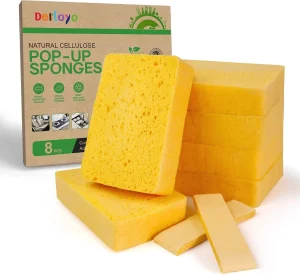
Natural cellulose sponges made from pure cellulose fibers from wood pulp without any synthetic additives are fully biodegradable. They are effective for light cleaning in your plastic free kitchen or bathroom. They are perfect for the general cleaning of surfaces or as biodegradabe sponges for dishes but won’t be stubborn on grease or stains though. They can also be purchased as “pop up sponges” because they are compressed in thin rectangles, but after being immersed in water, they expand and “pop up”.
Buy from Amazon USA – Canada – UK – Australia
Buy from Blueland USA
Buy from Plastno USA
2. Half Cellulose – Half Walnut / Loofah Scrubber Sponges
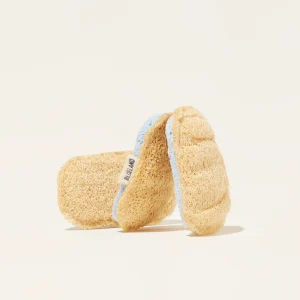
This type has been designed to resemble the classic yellow/green sponges we are all used to but instead of the PU foam, plant-based cellulose has been used and instead of nylon and polyester, walnut scrubber sponges have crushed walnut shells embedded in them to help scrub away grime and grease. These are also available with a loofah backing as the “tougher side”. They are designed as a sustainable alternative to traditional synthetic sponges, utilizing natural materials that can be composted at their end of life.
Buy from Amazon USA – Canada – UK – Australia
Buy from Blueland USA
Buy from Plastno USA
Buy from Biome Australia
3. Natural Loofah Sponges
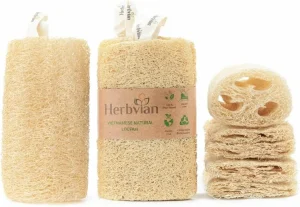
Derived from dried gourds, loofah dish sponges are naturally abrasive for scrubbing without having the risk to damage your non-toxic cookware etc. Natural loofah kitchen sponges are also spelled as luffah, luffa, loofa, and lufa. These different spellings all refer to the same plant and the fibrous material derived from its fruit, which is used as a sponge for bathing and cleaning. You can buy the seeds and grow them yourself, buy them from a farmers’ market or here online.
Personal tip: cut the loofah in multiple parts, and use it in smaller portions, so it’ll last longer overall.
Buy from Amazon USA – Canada – UK – Australia
Buy from the social enterprise SuperBee USA/Worldwise – 10% off with code IMPLASTICF10
Buy from the social enterprise SuperBee Australia – 10% off with code IMPLASTICFREE
Buy from Biome Australia
4. Hemp or Cotton Pot Scrubber

Reusable, washable, and compostable at their end of life, such pot scrubbers are made with 100% cotton-base and a non-plastic, hardened coating derived from tree resin. They are ideal for pans, pots, and cookware. They can be used on different surfaces without fearing to scratch them like glass, ceramics, and stainless steel.
Personal tip: wash them frequently in the top rack of your dishwasher or in your washing machine (with a plastic-free laundry detergent!) to keep their longevity. We are very happy with this sponge scourer as it’s very durable!
Buy from Amazon USA – Canada – UK – Australia
Related: 10 Best Zero Waste Cleaning Products
5. Coconut Fiber Scourers or Tawashi Vegetable Scrub Brushes
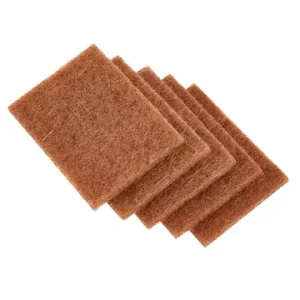
These types of scourers are made with natural coconut bristles and fibers. They are tough on grime, 100% biodegradable, and plastic-free. As an alternative to plastic scrub brushes they are suitable for glassware, ceramicware, and various types of cookware.
What is a Tawashi? It is a traditional Japanese scrubbing brush for cleaning, which traditionally made from hemp palm fibers, but nowadays it is mostly made from other materials like coconut coir. It’s known for its durability and effectiveness in removing dirt and grime from various surfaces, including dishes, vegetables, and even muddy shoes.
Buy coconut fiber scourers from Amazon USA – Canada – UK – Australia
Buy Tawashi scrub brushes from Amazon USA – Canada – UK – Australia
6. Non-Scratch Copper Scrubbers and Scrub Sponges
Copper scrubbers are great for greasy pans and pots and are less abrasive than steel wool. So you won’t scratch your non-toxic cookware if you are careful! We used one for a very long time in our kitchen, and it was held together by organic cotton. As copper is an inorganic material, it’s not compostable, but it can be recycled as a valuable material.
Buy from Amazon USA – Canada – UK – Australia
Image Copyright: I’m Plastic Free – Testing different types of plastic free sponges.
7. Konjac Sponges

Konjac sponges are cleansing and exfoliating facial sponges made from the konjac root, which is a porous vegetable native to Asia. They are known as a “natural face scrub”, but gentle compared to harsh exfoliants. They effectively cleanse, remove makeup, and promote a smoother, brighter skin, and can be used in your face or body.
Buy from Amazon USA – Canada – UK – Australia
Buy from EORTH Australia
Related: 9 Plastic-free Soap Dispensers for Eco Conscious Individuals
7. (Marine) Sea Sponges
Even though many brands claim to have 100% sustainably harvested sea sponges, offering an eco-friendly bathing experience with a natural material that is gentle on your skin, we do not recommend this type because, with 8 billion people on earth, it still involves destroying an ecosystem and the animals that depend on it. We listed this alternative to show you they exist.
9. Sisal Sponges and Sisal Gloves
Sisal sponges are made from natural sisal fibers, which are extracted from the agave plant. These sponges are well known for their scrubbing power and are often used for both dishwashing and body care, like bathing, due to their exfoliating and cleansing properties. In fact, they are also available in the form of a glove that can be used for exfoliating the skin.
Buy from Amazon USA – Canada – UK – Australia
Buy from Biome Australia
10. Steel Wool Scourers and Steel Wire Dishcloths
Steel wool, also known as wire wool or a wire sponge, is a bundle of very fine, flexible, sharp-edged steel filaments. It’s used as an abrasive for cleaning, polishing, and sanding. It’s often found in the form of a pad or scouring sponge. It’s very effective on stainless steel cookware, but also very abrasive. Be careful where you use this type! Plus, as it is made of inorganic materials, it is not compostable!
Another “softer” alternative is to use the steel wire dishcloth but only if they are free of synthetics.
Buy from Amazon USA – Canada – UK – Australia
Related: Homemade Plastic-free Cleaning Spray
11. Swedish Dishcloths
Why are Swedish dish cloths called this way? Because they were invented by a Swedish engineer and they are widely used in Scandinavian countries. They look like traditional plastic sponges to wipe surfaces, they also feel like ones and are super absorbant, but they are made of home-compostable cellulose. They are reusable sponges, and a great alternative to single-use paper towels.
Personal tip: wash them frequently in the top rack of your dishwasher as they get “yucky” relatively quickly.
Check the latest price from Amazon USA – Canada – UK – Australia
Buy from Plastno USA
I’m Plastic Free testing the Swedish dishcloth’s water absorbency.
Our Test of Microplastic Free Sponges
As we tested all of these sponge and scourer options and we use them in our household, we developed this table for you to understand whether each of these plastic alternatives produce a lather, are good at removing grease, are good at scrubbing burned pots, etc. Plus, we added an approximate time period, of how long they last and how prone they are to mold.
| Material / Option | Lathers? | Grease Removal | Scrubbing Burned Pots | Approx. Lasts | Mold Risk |
|---|---|---|---|---|---|
| Cellulose Sponges (Pop-up sponge) | 👍 High (holds suds well) | 👍 Basic grease | ⚪ Light debris | ~2–6 weeks | 🔺 Higher if kept wet |
| Half Cellulose + Walnut/Loofah | 👍 Moderate (high for the cellulose part) | 👍 Good | ⚪–👍 Better than plain cellulose | ~3–8 weeks | 🔺 Can mold if not dried |
| Natural Loofah (Gourd) | ⚪ Lower (needs good soap distribution) | 👍 Good | 👍 Good (abrasive fibres) | ~3–12 weeks* | ⚪ Medium (needs thorough drying) |
| Hemp/Cotton Pot Scrubber | ⚪ Low–Moderate (not absorbent) | 👍 Good | 👍 Good–Strong | ~>2–4 months* | ⚪ Medium (air dry to avoid mildew) |
| Coconut Fiber Scourer / Tawashi | ⚪ Low–Moderate | 👍 Very good | 👍 Good–Strong | ~2–3 months* | ⚪ Medium (rinse & dry) |
| Non-Scratch Copper Scrubber | ⚪ No lather; metal | 💪 Excellent on grease | 💪 Excellent (pots/pans) | ~6+ months* | ❌ No mold (metal) |
| Konjac Sponge (Face/body type) | 👍 Good (when wet and used with a cleanser) | ⚪ n.a. | ⚪ n.a. | ~1–3 months (facial use) | 🔺 Can mold if not dried |
| Sisal Sponges / Sisal Gloves | ⚪ Low–Moderate | ⚪ Good, if used for dishes | 👍 Good (abrasive fibres) | ~2–3 months* | ⚪ Medium (needs thorough drying) |
| Steel Wool / Steel Wire Dishcloths | ⚪ No lather (metal) | 💪 Excellent | 💪 Excellent (very tough) | ~Long | ❌ No mold (metal) |
| Swedish Dishcloths (Cellulose + cotton) | 👍 Moderate (less then cellulose fluffy sponges) | 👍 Basic grease | ⚪ Light debris | ~2-6 weeks* | 🔺 Higher if kept wet |
* Usage & care dependent
Personal Tips From Using Compostable Sponges
- Be careful where you purchase your sponges. We have seen a lot of sponges “online” described as “looffah” and “natural” that are synthetic.
- Don’t buy them in bulk initially. Try a few different variations to see which ones suit you best, then you can stock up on your favorite versions.
- Sponges made of natural fibers lather less than the ones made with synthetics. Don’t expect the same soap foam! Instead, make sure to use hot water when doing the dishes to effectively remove grease and grime.
- Pair your natural sponges with a plastic free dish soap, even it doesn’t lather as much, as it’s non toxic and doesn’t cause skin dermatisis like conventional dish washing liquid.
Related: 7 Plastic Free Essential Oils for Your Home
Conclusion: Alternatives to Plastic Sponges Do Exist and are Better for Your Long Term Health
We hope that you will make the switch to these eco-friendly sponge alternatives and other non-toxic cleaning products from today and that you’ll leave plastic kitchen sponges and other synthetic versions behind forever, so you can reduce your microplastic exposure levels and at the same time.
Scientific Research Sources:
(1) https://pubs.acs.org/doi/abs/10.1021/acs.est.4c00846
(2) https://www.sciencedirect.com/science/article/abs/pii/S0048969722010555
(3) https://www.breastcancer.org/news/triclosan-breast-cancer-risk