

Dishwashers often seem as a cleaner, more efficient alternative to handwashing, but what we put into them matters. Many conventional dishwasher detergents come in plastic jugs, bottles, or pods that contribute to plastic pollution in ways most people do not realise.
Choosing a plastic-free dishwasher detergent helps reduce both packaging waste and microplastic pollution.
What is the Waste Problem with Dishwasher Detergent in Jugs and Bottles?
Traditional dishwasher detergents are commonly sold in large jugs or bottles. While these containers can be recycled, it is estimated by the Organisation for Economic Co-operation and Development (1), that only 9% are successfully recycled. This means that the majority of dishwasher detergent packaging ends up in landfills or the environment.
Because these containers are treated as single-use and can be rejected from recycling due to cross contamination, households are generating a continuous stream of plastic waste simply from cleaning dishes.
What is the Environmental Problem with Dishwasher Detergent Pods and Detergent Sheets?
Many people switch to dishwasher pods or detergent sheets, believing they are more environmentally friendly, however, these products often contain polyvinyl alcohol (PVA). PVA is a synthetic plastic polymer used as the dissolvable film that holds detergent pods together and as a binder in detergent sheets.
Although PVA dissolves in water, dissolving does not necessarily mean it fully biodegrades in wastewater conditions. A 2021 peer-reviewed study (2), published in the International Journal of Environmental Research & Public Health, assessed PVA from laundry and dishwasher pods in U.S. wastewater treatment plants, and estimated that only around 4–20% of PVA blends were biodegraded in standard tests. Based on these findings, researchers estimated that up to 75% of PVA from pods may pass through treatment systems and be released into the environment.
Once in the environment, these plastic particles can accumulate in rivers, lakes, and oceans, where they disrupt ecosystems, stress wildlife, and enter the food chain. Over time, they also act as carriers for other pollutants, adsorbing heavy metals and persistent chemicals onto their surfaces.
What are the Health Issues With Dishwasher Detergent Pods or Detergent Sheets?
Concerns about PVA in detergent pods have already entered into policies. In 2024, New York City proposed the “Pods are Plastic” bill (3) as a local law that prohibits selling or distributing laundry and dishwasher pods and sheets containing polyvinyl alcohol. This shows regulators are starting to treat PVA not just as a clever packaging trick, but as part of the wider plastic and microplastics problem.
As previously mentioned above, PVA does not fully dissolve, meaning that residue can end up on dishes. The Chemical Engineering Journal found (4) that PVA nanoplastics specifically alter gut/lung bacteria and cause cellular stress in animal models, even if milder than other plastics like PVC. For households, this means routine dishwashing contributes to low-level, chronic risks, especially for vulnerable groups like children or those with respiratory issues.
Switching to PVA-free, plastic-free detergents minimises residues on dishes and cuts microplastic release, aligning with precautionary health advice
5 Best Non-toxic Dishwasher Detergents Free of PVA
At I’m Plastic Free we help you eliminate the issue at the source. For all the reasons outlined above, we provide our readers with alternative solutions that do not release microplastics.
This post contains affiliate links, which means we may receive a small commission, at no cost to you, if you make a purchase through a link. This helps us continue the hard work we put into researching products and solutions.
Please Note: Our health content is for informational purposes only and is not intended as professional medical advice. Consult a medical professional on questions about your health. Please read our disclaimer.
1. Blueland 100% Plastic-Free Dishwasher Detergent Tablets
Blueland’s dishwasher tablets are designed to eliminate both plastic packaging and plastic-based films often used in conventional pods. Unlike many dishwasher tablets, they are free from PVA and come wrapped in compostable paper packaging rather than plastic. The formula uses plant and mineral-based ingredients to effectively remove grease and food residue while avoiding synthetic fragrances and dyes.
We have been using these tablets for years and we are very happy with their performance. Because of the enzymes in the formula, the dishes come out clean of the dishwasher and we have peace of mind that the product is safe! In fact, they have received the EPA Safer Choice seal.
We also love that you can buy the refills and fill in your forever tin container!
Key ingredients: Sodium carbonate, sodium citrate, protease enzymes, plant-based surfactants
Sizes: 60 or 120 tablets
Made in: USA
Shop from Amazon USA – Canada
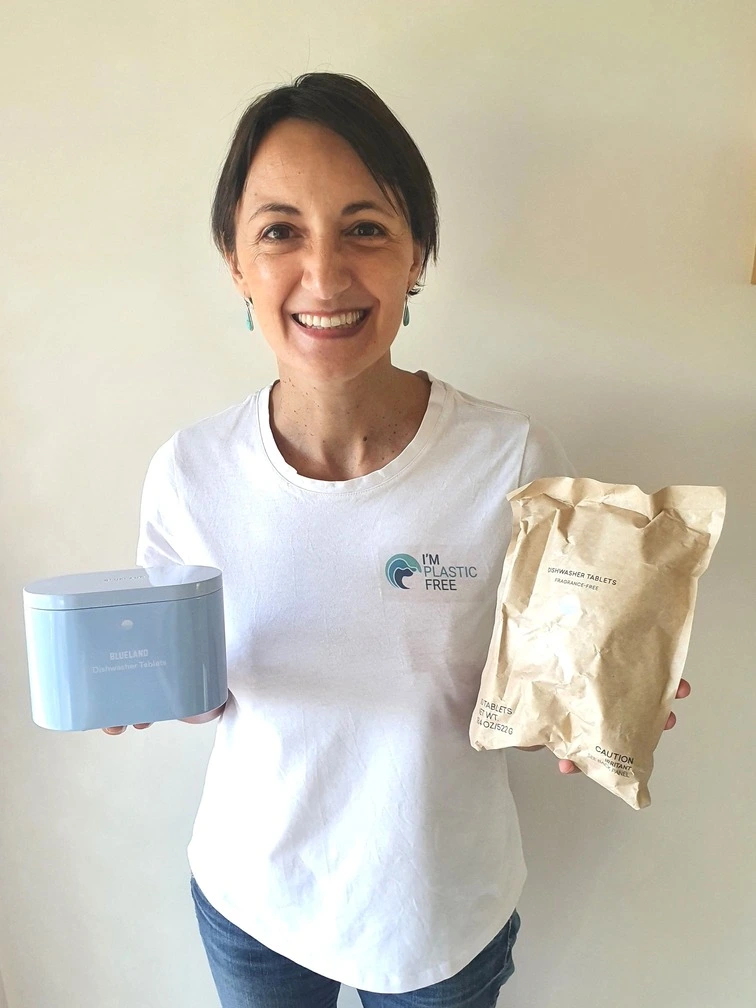
Image Credit: I’m Plastic Free / Simona Paganetto holding Blueland Plastic-free Dishwasher Detergent
Related: Plastic-Free Wet Wipes: 7 Biodegradable Swaps to Ditch the Synthetic Ones
2. Dirty Labs 2-in-1 Bio Enzyme Dishwasher Detergent & Booster
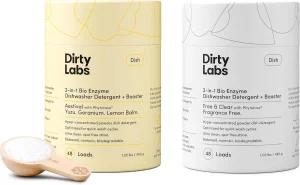
Dirty Labs Dishwasher Detergent & Booster uses a bio-enzyme cleaning system that targets grease, starches, and protein residues without relying on harsh chemicals. The formula is free from dyes, synthetic fragrances, and PVA films, and the detergent is packaged in recyclable cardboard instead of plastic containers. Yeah!
We’ve tried this product and it performs great as well.
Key ingredients: Bio-based enzymes (protease, amylase), sodium carbonate, sodium citrate, plant-derived surfactants
Sizes: 48 loads
Made in: USA
Shop from Amazon USA
Related: We Tested 11 Types of Plastic Free Sponges (Plant-based and/or Eco-friendly)
3. Ecover Eco Dishwasher Tablets
Ecover’s Eco Dishwasher is an industry first tablet which is wrapped in plant-based, home compostable wrappers rather than plastic film. The formula is designed to break down grease and dried food while using biodegradable ingredients and avoiding phosphates. The tablets come packaged in recyclable cardboard boxes, reducing single-use plastic waste.
Key ingredients: Plant-based surfactants, sodium carbonate, sodium citrate, enzymes, oxygen bleach
Sizes: 45 tablets
Made in: United Kingdom
Shop from Amazon UK
Related: Plastic Free Dish Soap: 8 Best Eco-Friendly Brands for Non-Toxic Dishwashing
4. Kin Kin Eco Dishwasher Powder
Kin Kin Naturals Dishwasher Powder is an Australian-made, biodegradable cleaning product designed to clean dishes effectively without synthetic fragrances, phosphates, or chlorine. The powder formula allows users to control the amount used per wash, which can help reduce waste and extend the life of the product. It is packaged in recyclable packaging and formulated to be safe for septic systems and waterways.
Key ingredients: Sodium carbonate, sodium bicarbonate, sodium citrate, oxygen bleach (sodium percarbonate), natural surfactants
Sizes: 1.1kg (70 loads) or 2.5kg (160 loads
Made in: Australia
Shop from Biome Australia
Related: Plastic Free Laundry Detergent: We Tested 9 Non Toxic Options
5. DIY Non-toxic Dishwasher Detergent Powder
Homemade powdered dish detergent can be challenging to get right. Factors such as water hardness and washing temperature often affect performance, making it difficult to find a formula that works consistently. We tried many recipes and found this one to work best with our water:
Ingredients
1 cup baking soda
1 cup washing soda
1/4 cup salt
1/4 cup citric acid (available in the baking aisle of the supermarket)
A few drops of lemon or tea-tree oil
Combine all ingredients in a sealed container and shake well to mix. Use about two tablespoons per load.
Related: 9 Best Plastic Free Fabric Softeners for a Non-Toxic Laundry
Our Personal Tip
If the recipe above is not strong enough for your household, you can mix it with one of the eco-friendly dishwasher powders listed above. It’s a way to save money while still reducing waste and achieving a non-toxic cleaning in your kitchen!
Related: Best Plastic-Free Soap Dispensers: Eco-Friendly, Refillable & Zero-Waste Options
Q&As about Toxin Free Dishwashing Detergent
– Are Dishwasher Pods and Detergent Sheets Plastic Free?
No, they usually aren’t. Many dishwasher pods and detergent sheets use a material called polyvinyl alcohol (PVA / PVOH) as a dissolvable film or binder. This material holds the detergent together and dissolves in water during the wash cycle. Although it disappears visually, it is still a synthetic plastic polymer made from fossil fuels.
– What Is PVA?
PVA stands for polyvinyl alcohol, a synthetic polymer that is colourless, odourless, and water soluble. It is commonly used as the dissolvable coating around dishwasher and laundry pods and as a binder in detergent sheets.
Conclusion
Dishwashers can be an efficient and convenient way to clean dishes, but the detergents we use in them can have hidden health and environmental impacts. From plastic jugs and bottles to pods made with dissolvable plastic films like PVA, conventional dishwasher detergents can contribute to both plastic waste and microplastic pollution. Small changes in everyday products, like the detergent we use to wash our dishes, can make a meaningful difference for both our homes and the environment. Plastic-free cleaning made easy!
References and Scientific Literature Sources:
(1) https://www.oecd.org/en/about/news/press-releases/2022/02/plastic-pollution-is-growing-relentlessly-as-waste-management-and-recycling-fall-short.html
(2) https://pmc.ncbi.nlm.nih.gov/articles/PMC8199957/
(3) https://cen.acs.org/policy/regulation/New-York-City-considers-detergent/102/i6
(4) https://www.sciencedirect.com/science/article/abs/pii/S1385894724016085
This article was written by Ella Matthews, and reviewed by I’m Plastic Free’s Editor, Simona Paganetto
—
Do you have any question or comments? Let us know in the comments section below.
Browse our platform for non-toxic plastic alternatives: I’m Plastic Free





Add a comment