While the “slow fashion” movement has transformed how we buy coats and shoes, one of the most intimate parts of our wardrobe remains a major source of hidden pollution: our underwear and hosiery. Most traditional undergarments are made from petroleum-based synthetics like polyester, nylon, and spandex, which contribute to a mounting microplastic crisis and pose direct risks to reproductive health.
Choosing compostable, plastic-free underwear is no longer just an environmental statement, it is a functional necessity for skin breathability and chemical safety.
What is the Environmental Problem with Synthetic Fabric Underwear?
Petroleum-based synthetic fibers not only contribute to the growing plastic pollution crisis but also have a significant carbon footprint due to their energy-intensive production processes. Moreover, these synthetic fabrics are non-biodegradable, meaning they persist in the environment for hundreds of years when discarded, releasing microplastics that harm marine wildlife and contaminate ecosystems.
It’s easy to recycle shoes, clothing, accessories, but what about underwear?
The most common scenario for this type of garment is landfill, or composting (if all fibers are of organic origin). In fact, around 11 million pounds of underwear end up in a landfill every single day. This is very alarming and it is one of the reasons why eco-friendly organic underwear is on the rise.
Furthermore, there’s another aspect that needs to be clarified. Before they end up in landfill, we need to think about their environmental impact while in life. For an average wash load of 6 kg of synthetic fibers, over 700,000 microplastic fibers could be released per wash (1) into our oceans through the washing machine. This environmental issue is even more concerning!
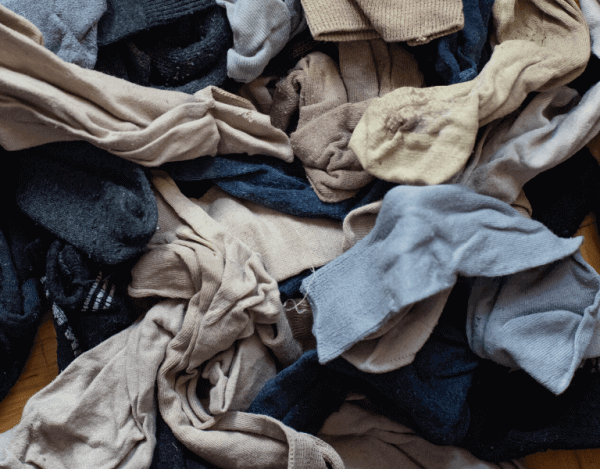
Synthetic underwear and stockings. Source: Sustainable Hosiery Australia
How Does Synthetic Underwear Affect Vaginal Health and BPA Exposure?
One of the factors associated with vaginal yeast infections is wearing synthetic fabric underwear. This was the result of a 2003 Italian study published in the European Journal of Obstetrics & Gynecology and Reproductive Biology (2) that looked into underwear and health. It’s not surprising. Synthetic fabric doesn’t allow our skin to ‘breathe’ and thus keeps the genital area warm and moist, which are perfect conditions for the growth of yeast and infections. Have you ever noticed that synthetic fibers easily smell?
Bacteria that cause body odor grow better on synthetic fibers like polyester for example. It’s, therefore, very important to wear breathable underwear, aka underwear made of natural fibers, even more if you live in a hot and humid climate like the tropics.
2022 research from The Center for Environmental Health (CEH) in the USA revealed high levels of BPA in sports bras (3), athletic shirts and even in polyester-based clothing with spandex, including socks made for infants (4). Bisphenol A (BPA) is a well-studied endocrine disrupting chemical (EDC), which mimics estrogen and can disrupt the normal hormonal functioning of the body, including metabolism, growth and development, and reproduction.
CEH found that those sports bras could expose wearers to up to 22 times the safe limit of BPA, based on standards set under California law — specifically Proposition 65, enacted in 1986 — that the maximum allowable dose level for BPA via skin exposure is 3 micrograms per day. Throughout 2021, CEH has pushed more than 90 companies to reformulate their products to remove all bisphenols including BPA, and some have already agreed to do so. It’s no wonder that more and more people are now searching for BPA free organic sports bras.
Is Plastic-free Underwear Important for Men’s Health?
Plastic-free underwear is also increasingly recognized as a critical factor for male reproductive health due to its impact on sperm quality and hormonal balance. Here is a brief breakdown of why this topic is important:
-
Microplastic Accumulation: Recent studies (including 2024 study published in the Journal of Toxicological Sciences (5)) have detected microplastics in 100% of human testicular tissue samples tested. These particles are linked to oxidative stress and inflammation, which can damage sperm DNA and reduce motility.
-
The “Scrotal Hyperthermia” Effect: Synthetic fabrics like polyester and nylon trap heat and moisture, raising the temperature of the testes. Because sperm production requires an environment 3–4°C cooler than core body temperature (6), even a slight increase can significantly lower sperm count. Men who use the sauna with synthetic boxers should think twice!
-
Endocrine Disruptors (BPA & Phthalates): Many synthetic garments contain plasticizers like BPA and phthalates, which are anti-androgens. These chemicals can leach into the skin and mimic estrogen, potentially disrupting testosterone production and the hormonal signals required for healthy sperm development.
-
The Polyester Reversibility Study: Historical clinical data from the 90s, published in the Journal Contraception (7), was already showing that continuous exposure to polyester in the groin could even lead to temporary azoospermia (zero sperm count), highlighting how sensitive the male reproductive system is to petroleum-based materials.
The Advantages of Non-toxic Underwear which can be Composted
Reducing Plastic Pollution:
By choosing plastic-free underwear, consumers can actively contribute to reducing plastic waste and its detrimental impact on the environment. Plastic-free alternatives are made from natural, biodegradable materials that break down over time, leaving no lasting harm. Look also for plastic-free period underwear or plastic-free panty liners if you want to reduce your plastic waste footprint.
Natural Fibers for Breathability and Comfort:
Polyester-free underwear often utilizes organic natural fabrics like cotton, hemp, lyocell, modal, which are known for their breathability and softness. These materials allow air circulation, preventing sweat buildup and enhancing overall comfort. Please note: viscose/rayon is marketed as “bamboo fabric” but actually involves heavy chemical processing, whereas Lyocell is at least a closed-loop alternative.
Health Benefits:
Natural fibers used in plastic-free underwear, non-toxic leggings, and non-toxic bedding for example are hypoallergenic and gentle on the skin. They reduce the risk of irritation, rashes, and allergies that can be caused by synthetic fabrics and chemical dyes commonly found in conventional underwear. You can also find latex free underwear if you are allergic to this material.
Sustainability and Ethics:
Plastic-free underwear brands are committed to sustainable production practices. They prioritize fair trade, ethical sourcing, and use eco-friendly manufacturing techniques, reducing their carbon footprint and supporting responsible supply chains.
Related: Plastic-free Sanitary Pads: 13 Best Eco-brands
Best 10 Ethical and Non-toxic Underwear Brands
Here is a list of ethically made sustainable lingerie brands that we discovered around the world. We did some thorough research to bring you underwear made of natural fibers that you can compost at the end of its life and we specify these details for every brand.
This post contains affiliate links, which means we may receive a small commission, at no cost to you, if you make a purchase through a link. This helps us continue the hard work we put into researching products and solutions to plastic/ microplastic pollution.
Please Note: Our health content is for informational purposes only and is not intended as professional medical advice. Consult a medical professional on questions about your health. Please read our disclaimer.
While we make our best efforts to scout plastic-free products around the world, we are also aware that sometimes we do have to make some compromise. In this article, we are presenting the best versions of what is available on the market and we disclose where we see some plastic / synthetic materials, according to our values.
1. The Very Good Bra – Compostable Bra & Compostable Underwear

The Very Good Bra is the only brand offering 100% plastic-free bras in 34 sizes (not just S/M/L), that are toxin-free, using natural tree rubber and organic cotton. Their compostable undies and brefs are made using only natural, botanically-sourced materials such as organic cotton, natural rubber, and cellulose sewing thread, which means no toxins are created through manufacture and processing, and which means no spandex, polyester, or nylon.
A part from bras, they make all their products like plastic free briefs & sustainable sleep and loungerwear with 100% organic cotton or tencel, with tree rubber elastic and cellulose sewing thread. All products are compostable or wormable at end of life, which is absolutely amazing! They are a certified BCorp, and winner of many prizes including Good Design Awards best in Class.
In 2023, after a lot of requests by customers, they launched a world-first plastic-free nursing bra to overcome the issues listed above with endocrine disruptors like BPA found in traditional nursing bras and affecting breastfeeding babies. This bra has a front-fastening, wrap-over style, pull-down cup for feeding, and adjustable by up to 6cm on each side of the bra to expand and contract with you.
It is made from 100% organic cotton, undyed and unbleached, grown in Turkey, processed and knitted in Spain, 100% natural tree rubber and organic cotton elastic, made in Austria, and 100% cellulose sewing thread made in Portugal.
We personally love their V for Victory Bra, the only plastic-free bra we could find that makes a nice shape also for people with a small breast. See the link below to our review.
Sustainable fabrics: 100% organic cotton or tencel, with tree rubber elastic and 100% cellulose sewing thread.
Compostability: YES! 100% plastic free down to thread, labelling, hook and eye pieces. All materials are listed onto the individual product pages.
Made in: Portugal (family-owned and run factory, established 48 years ago)
Shipping: free postage in Australia for orders over $150, free international postage for orders over $200 (ex US).

Credit: Image by I’m Plastic Free / Simona Paganetto testing The Very Good Bra V for Victory made with 100% organic cotton.
Related: The Very Good Bra: 100% Organic Cotton Padded Bra Review
2. Cottonique Hypoallergenic Underwear & Clothing
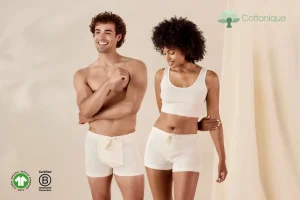

Cottonique has been one of the pioners in hypoallergenic clothing made of 100% cotton with zero latex and zero spandex since 2008. They knew that millions of people suffer quietly everyday from the harmful fabrics, chemicals, allergens, and irritants in clothing, because the founders had this specific problem too! So they created Cottonique, a US brand, based in California that developed allergy-free 100% organic cotton apparel that allows people to live easily without the use of synthetics.
Their patented (CHTP®) hydro-thermal fabric finishing technology stabilizes the fabric using just heat and water, making them chemical-free, soft, and highly absorbent. Their clothing is also pH-balanced to conform to the body’s natural acidic level, breaking free from dyes, bleaches, and textile chemicals commonly used in other apparel. Their product range is vast and includes also plastic free underwear, tops, pants, shorts, and allergy-free clothing for men and kids.
Sustainable fabrics: 100% organic cotton with zero latex and zero spandex.
Compostability: Yes! All of their natural-colored items without the latex spandex elastic (i.e. drawstring items for the bras and bottoms, tops) are compostable. The Natural color fabric has 100% organic cotton and 100% cotton thread.
Please note: some items may include a synthetic elastic. Check each item description accordingly. This is their 100% plastic-free collection with no elastics.
Made in: the Philippines (controlled, allergen-free facility)
Shipping: worldwide
Shop Cottonique – use code IMPLASTICFREE for a 10% off
Shop on Amazon USA – Canada – UK – Australia
Related: 8 Non-Toxic Leggings for a Microplastic Free Workout
3. ODDOBODY 100% Organic Cotton Underwear
ODDOBODY is a New York based company that has developed a range of 100% organic cotton underwear. Why? Because 300 million people around the world suffer from vaginal infections each year, and doctors and health experts agree that 100% organic cotton is the best fabric for letting your vulva breathe!
Sustainable fabrics: 100% organic cotton fabric that is GOTS certified and the cotton is grown without the use of pesticides, chemical fertilizers, or GMO seeds.
Compostability: Yes, their underwear is home compostable after removing the elastics.
Made in: Peru
Shipping: USA and Canada.
Shop ODDOBODY
Shop on Amazon USA – Canada – UK
4. Juliemay Sustainable Lingerie

Juliemay is a sustainable lingerie brand in the UK that specializes in luxurious comfort bras, briefs and nightwear. Their allergy-friendly underwear is made with soft organic pima cotton and silk linings that cool down even the most sensitive skin. The inner crotch of all plastic-free knickers and briefs are also made with 100% fair trade mulberry peace silk, because it is a fabric that absorbs and perspires moisture quickly, it prevents odours and provides the best feminine hygiene care. They design bras for every situation and request: from comfort bras, to wired and non-wired bras, front-fastening bras, bralettes, and post-surgery bras. They are all nickel and latex free.
We also love that from their website, you can also shop by skin condition like allergies, skin rashes, hot flushes / menopause, post-surgery eczema & psoriasis, making it a fully inclusive and unique online shopping experience particularly when you suffer from one of these conditions and it is hard to find products that suit. We personally tested one lingerie set from this brand and wrote a product review about it.
Please note: the products that contain silk are not vegan.
Sustainable fabrics: GOTS certified organic pima cotton, 100% pure peace silk for the linings.
Compostability: They use cotton threads, embroidery cotton lace & trims across the whole product range. However, all hooks, adjusters and wires on Juliemay’s products are acrylic plastics, as this is a safer option for nickel-sensitive people. Therefore remove these parts and the straps if you want to compost your bra at the end of its life.
Made in: Hong Kong (handmade in an exclusive production paying above living wage)
Shipping: UK shipping £3.99 – Worldwide shipping to USA/ Canada/ Australia/ New Zealand and other countries for £6.50. Free shipping on all orders over £100.
Shop Juliemay Lingerie – 15% OFF sitewide with code PLASTICFREE
Credit: Video by I’m Plastic Free / Simona Paganetto testing The Juliemay Rosie Silk and Organic Cotton Lace Lingerie Set.
Related: JulieMay Rosie Silk & Organic Cotton Lace Lingerie Set Review
5. AYA Organic Pima Cotton Underwear & Basics

Aya is a single origin brand with the entire supply chain based in Peru. All of their clothes and undewear are 100% free of plastic and made from the finest and softest Organic Pima Cotton from Peru. They do not only create a solution to plastic pollution, but they are also on a mission to educate the whole world about it through educational content. A part from latex free underwear, their product range includes plastic-free tops, shirts, dresses, and accessories with options for women, and men (i.e. boxer shorts and boxer briefs).
Sustainable fabrics: 100% organic Pima cotton from Peru.
Compostability: YES, absolutely!
Made in: Peru
Shipping: free shipping on US orders over $50.
Related: 9 Organic, Truly Non-Toxic Bedding Brands That Use Only Natural Fibers
6. KENT Organic Pima Cotton Underwear

KENT is a super natural basics brand focused on 100% GOTS certified organic pima cotton underwear made in the USA, precisely in California, that is plastic-free, vegan and the world’s first compostable briefs. All KENT products are free of synthetics, microplastics, BPA’s, pesticides and petrochemicals to let your body, and our planet, breathe easy. They offer plant-based basics for women and for men.
We love their slogan that you can literally “Plant Your Pants” – in fact, when you compost their underwear, they will disappear back to earth in 90 days enriching the soil. By choosing KENT, you’re joining our mission to save the earth, one super natural basic at a time.
Sustainable fabrics: 100% GOTS certified organic pima cotton, ZERO synthetics – aka zero plastic / petrochemical based materials.
Compostability: YES, 100% home and commercially compostable underwear, you can plant your undies! Their “back-to-earth” basics are designed to wear slow and last long. When their time is up, pop your KENT products in your compost and they will become nutrient-rich soil. They also introduced the “Compost Club” which facilitates the circular journey of compostable clothing. Here is how it works: customers purchase a Compost Club shipping label and send their KENT briefs ready for compost with carbon neutral shipping. Their team sorts, sanitizes and preps all items for the compost, and customers receive a credit for future compostable products. Isn’t this circular, zero waste underwear solution absolutely innovative and fantastic? You can “feel” our enthusiasm here…
Made in: the USA (California)
Shipping: free shipping on US orders over $75.
Related: 9 Best Sustainable Fashion Brands to Shop in 2026
7. MARO Plastic Free Boxers & Organic Cotton Basics

MARO has introduced 100% Plastic-Free Boxers made in Europe with 100% GOTS certified Organic Cotton made in Portugal, Europe. This mens’ underwear has a loose fit like traditional boxers but is constructed more like boxer briefs.
Contrary to most brands that use the term “exclusive of trims” to justify nylon and elastane elastic, they use a completely natural waistband made with 50% Natural Rubber and 50% Organic Cotton. This waistband is wrapped for extra comfort, so it’s not visible, but it ensures that their underwear is 100% Plastic-Free in direct contact to the skin.
Sustainable fabrics: 100% GOTS certified cotton
Compostability: yes, 100%! At end of use, you can send it back to them for 10% store credit, so they can recycle the cotton.
Made in: Portugal and Turkey
Shipping: worldwide
Shop MARO – 10% OFF sitewide with code IMPLASTICFREE
8. PRIMALS 100% Merino Wool Boxer Briefs with Natural Rubber Waist
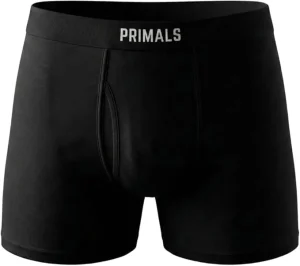
PRMALS developed a range of 100% pure merino wool boxer briefs. Unlike synthetic underwear that traps heat and moisture, our naturally breathable merino wool wicks sweat, regulates temperature, and keeps you dry and comfortable all day. Their plastic free trunks have no polyester, and no plastic fibers! Even the elastic waistband is made from natural rubber and organic cotton, and not the elastic chemical cocktail found in other “natural” underwear. This brand is truly clean from top to bottom and manufactures in the USA!
Sustainable fabrics: 100% merino wool.
Compostability: YeS!
Made in: the USA.
Shop on Amazon USA – Canada
9. Organic Basics Organic Cotton Underwear

Known for their timeless designs and commitment to sustainability, Organic Basics offers a range of underwear made ethically from organic cotton and TENCEL™ Lyocell directly in Europe and designed in Denmark. They ensure fair wages and responsible production while maintaining a high standard of quality and comfort.
Sustainable fabrics: organic cotton, recycled cotton, TENCEL™ Lyocell, and yes, also recycled nylon
Compostability: Only the garments made with 100% organic materials. Please note some of their garments have 9% elastane. Check with the manufacturer about the threads. They’ve chosen this material as its strength improves the longevity and performance of the garments, they say, helping you building a wardrobe that lasts.
Shipping: European Union, UK & USA.
Made in: Europe (Portugal, Italy, Turkey, Austria, and Scotland).
Shop Organic Basics – 10% off with code IMPLASTICFREE
Related: 5 Organic Non Toxic Blankets and Throws in Super Soft Natural Fibers
10. Tripulse Natural Performance Activewear

Tripulse is a Swedish brand that makes innovative natural performance activewear made from certified eucalyptus wood fibers for the conscious minded. Why? Because most activewear today is made from plastic like polyester which is itchy, smelly and bad for our planet and health as we discovered above. Their no plastic activewear product line is free from toxins, climate positive, designed in Sweden, and ethically made in Europe.
In 2023 they launched the Next Gen sustainable sports bra on Kickstarter and it was an immediate success. This eco-friendly sports bra is made with an eucalyptus fabric, called TENCEL™ Lyocell which is sourced from Portugal and the final product is also ethically made in Portugal. Because it’s plant-based, it’s naturally becteria & odor-resistent and stays fresh no matter how hard you train. It’s highly breathable for extra skin confort and suitable for people with skin allergies as it doesn’t itch when you sweat.
Sustainable fabrics: TENCEL™ Lyocell made from certified eucalyptus wood fibers.
Compostability: please note that the products include some elastane in them which is why they are not compostable. Being used for activewear, they require extreme stretchiness to ensure the performance of the product. For the time being, there aren’t any well performing biodegradable elastane options on the market (but they’re monitoring the market in case this changes).
Made in: Portugal
Shipping: free climate-compensated shipping within EU above EUR 90.
Shop Tripulse Activewear – 15% off with code IMPLASTICFREE15
Related: 5 Organic Non Toxic Blankets and Throws in Super Soft Natural Fibers
FAQs about Synthetic Free Underwear
1. Is the thread also plastic-free?
This is important for allergy reasons as well as for compostability. Have you often noticed labels behind the neck that prickle your skin? They are often sewn with synthetic threads.
2. Is the elastic natural rubber or synthetic?
This is an important question, and most brands will have a synthetic elastic because it’s cheaper to manufacture. We’ve scouted brands in this article that have gone above and beyond and have used natural rubber in the elastic band of the briefs, boxers, trunks etc.
3. Can I compost my underwear if if has a small percentage of synthetic fibers? i.e. 5%?
No, unfortunately if the fibers are a mix of natural and synthetic ones, they cannot be composted as this would release microplastics into the soil.
4. Is polyester underwear bad for male fertility?
Yes, it is. As mentioned above, the study by Shafik at al (7), in the 90s, suggested that wearing 100% polyester can significantly impair male fertility. While these effects were found to be reversible within roughly 150 days of removing the fabric, the study highlights a potential risk from synthetic materials.
Conclusion: Check The Labels to find Compostable Underwear Made of 100% Natural Fibers
As we strive to make more sustainable choices in all aspects of our lives, it’s crucial to consider the environmental impact of our clothing, including free of plastic underwear. Embracing plastic-free underwear offers numerous benefits, from reducing plastic pollution and promoting eco-friendly materials to enhancing comfort and supporting ethical manufacturing practices. By supporting brands that prioritize sustainability, we can contribute to a healthier planet and a more sustainable future, one garment at a time. So, let’s start our journey towards a wardrobe that reflects our commitment to a plastic-free world.
References & Scientific Literature Sources:
(1) Napper, I. E., & Thompson, R. C. (2016). Release of synthetic microplastic plastic fibers from domestic washing machines: Effects of fabric type and washing conditions. Marine Pollution Bulletin, 112(1–2), 39–45. https://www.sciencedirect.com/science/article/abs/pii/S0025326X16307639
(2) Corsello, S., Spinillo, A., Osnengo, G., Penna, C., Guaschino, S., Beltrame, A., & Nicola, M. (2003). An epidemiological survey of vulvovaginal candidiasis in Italy. European Journal of Obstetrics & Gynecology and Reproductive Biology, 110(1), 66–72. https://www.ejog.org/article/S0301-2115(03)00096-4/abstract
(3) Center for Environmental Health. (2022). New testing shows high levels of BPA in sports bras and athletic shirts. CEH Press Release. https://ceh.org/latest/press-releases/new-testing-shows-high-levels-of-bpa-in-sports-bras-and-athletic-shirts/
(4) Center for Environmental Health. (2021). BPA in socks. CEH Health Reports. https://ceh.org/bpasocks/
(5) Hu, C. J., Garcia, M. A., Nihart, A., Liu, R., Yin, L., Adolphi, N., Gallego, D. F., Kang, H., Campen, M. J., & Yu, X. (2024). Microplastic presence in dog and human testis and its potential association with sperm count and weights of testis and epididymis. Toxicological Sciences, 200(2), 235–242. https://pubmed.ncbi.nlm.nih.gov/38745431/
(6) Tang, Q., Liang, J., Ji, J., Liu, D., & Yang, Z. (2022). The impact of high ambient temperature on human sperm parameters: A meta-analysis. Frontiers in Physiology, 13, 928840. https://pmc.ncbi.nlm.nih.gov/articles/PMC9288403/
(7) Shafik, A. (1992). Contraceptive efficacy of polyester-induced azoospermia in normal men. Contraception, 45(5), 439–451. https://www.contraceptionjournal.org/article/0010-7824(92)90157-O/abstract