


A 2015 study published in the Archives of Environmental Contamination & Toxicology (1) found that 14,000 tons of sunscreen enter our oceans every year, and this is ever-increasing as people flock to coastal areas for holidays or a new lifestyle. Why is this bad? Because typical chemicals used in sunscreen have been shown to cause ocean toxicity in highly visited swimming areas, contributing to coral die-off. This study showed record amounts of oxybenzone & octinoxote in their water samples and a direct correlation with the declining health of the tropical reef in Hawaii and the US Virgin Islands. Such research led the Hawaiian government banning all sunscreens that use these chemicals in 2018.
Now we have a cumulative effect where the chemicals in sunscreen are being measured in ever higher levels in our oceans. If we don’t stop using toxic sunscreens, we will likely see an accelerated decline in the health of these beautiful ecosystems.
The sun protection market worldwide generated a revenue of USD 15.2 bn in 2025 (2), and traditional chemical sunscreens are designed in liquid form and packaged in plastic bottles. Can you imagine how many plastic bottles are discarded each year? For these reasons, it’s important to opt for zero waste sunscreen packaging when possible.
What are the Toxic Ingredients in Chemical-based Sunscreen?
Some of the main toxic ingredients in chemical-based sunscreen are:
- oxybenzone
- octinoxate
In 2021 Hawaii, USA has banned these two ingredients, and in Australia most brands have stopped using them due to the findings that have unveiled their toxicity. By regulation, all Australian sunscreens have to list the active ingredients on the packaging, so it is easy for you to check which chemicals they use. If you see either of these ingredients, put it back on the shelf!
Other potentially harmful ingredients are:
- avobenzone
- homosolate
- octocrylene
- butyloctyl salicylate
- all kinds of parabens etc.
These have yet to be studied extensively like oxybenzone but are best avoided.
Another thing to consider is the base formula that sunscreens are made with. Legally sunscreen brands don’t have to disclose this ingredient list, so even if the active ingredient is zinc oxide, the base can be made of undesirable ingredients. Many sunscreens are made with synthetic oils such as mineral oil (which sounds nice but is actually made from fossil fuels!). They are often very high in preservatives, fragrances, stabilizers, and emulsifying agents.
What are the Synthetic Ingredients (Microplastics) in Conventional Sunscreen?
Common synthetic polymers, aka liquid microplastics, to look out for include:
- Acrylates/C10-30 alkyl acrylate crosspolymer
- Carbomer
- Polyethylene
- Polymethyl methacrylate (PMMA)
- Styrene/acrylates copolymer
- Dimethicone and other silicones (crosspolymers)
Because they aren’t biodegradable, these ingredients rinse off your skin with every swim, shower, or sweat, ending up in our waterways. They also penetrate our skin, our largest organ.
Quick Comparison: Top Plastic-free Suncreens
To better protect both your skin and the environment, our editorial team researched and evaluated the top zero-waste, mineral-based sunscreens available today. Each product featured below uses non-nano zinc oxide for protection and comes in 100% plastic-free packaging.
| Brand | SPF Rating | Main Active Ingredient | Packaging Type | Best For |
| Etee Daily Facial | SPF 47 | 24.7% Non-Nano Zinc Oxide | Compostable Pods / Aluminum | Daily wear & no white cast |
| ATTITUDE Mineral | SPF 30 | 20% Non-Nano Zinc Oxide | FSC Cardboard Tube | Sensitive skin & fragrance-free |
| Raw Elements | SPF 30 | 25% Non-Nano Zinc Oxide | Compostable Cardboard Tube | Water sports & active kids |
| ZERO Waste Stick | SPF 20 | Non-Nano Zinc Oxide | Cardboard Tube | Budget-friendly plastic-free value |
| Raw Love Mineral | SPF 35 | Non-Nano Zinc Oxide | Aluminum Tin | Swimmers needing water resistance |
| SurfDurt Reef Safe | SPF 30 | Non-Nano Zinc Oxide | Bamboo & Aluminum | Reusable & upcyclable packaging |
| Little Hands Hawaii | SPF 35+ | 23% Non-Nano Zinc Oxide | Aluminum Tin | Toddlers, kids, & sensitive skin |
| Sunbutter Skincare | SPF 50 | 22.75% Non-Nano Zinc Oxide | Aluminum Tin | Maximum UV exposure & water sports |
8 Best Zero Waste Sunscreen Brands that are also Reef Safe and Non-Toxic
The best sustainable sunscreen or sunblock is the one that shields your skin from sunlight and also protects the environment from plastic waste. There are many eco-friendly sunscreen brands available that best suit your purpose of sun protection and anti-aging during summer days. Our editorial team tested these 8 brands across different skin types.
This post contains affiliate links, which means we may receive a small commission, at no cost to you, if you make a purchase through a link. This helps us continue the hard work we put into researching products and solutions to plastic/ microplastic pollution.
Please Note: Our health related content is for informational purposes only and is not intended as professional medical advice. Consult a medical professional on questions about your health. Please read our disclaimer.
1. Etee Daily Facial Sunscreen Mineral SPF 47 – No White Cast
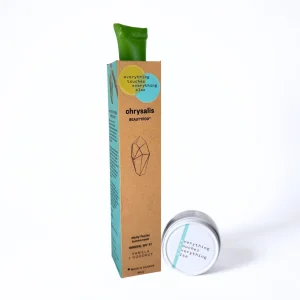
We were excited to hear that this daily facial sunscreen with mineral SPF 47 has been 3rd party tested and approved by Health Canada (3) (NPN # 80149150), which classifies zinc oxide as a natural ingredient and recognizes it as a physical UV filter.
It rubs in easily without leaving a white film (cast) on all skin tones. It’s meant to be used as a daily facial moisturizer thanks to its algae derived beta glucan, but with sun protection.
We love the fact that it comes in backyard compostable re-fill pods, to refill the forever aluminum jar. Each pod holds 42 ml of sunscreen. It’s scented with vanilla and coconut.
- Active ingredients: 24.7% Non-Nano Zinc Oxide
- Inactive Ingredients: Aloe Barbadensis (Aloe Vera) leaf extract, Hydroxyapatite, Simmondsia Chinensis (Jojoba) seed oil, Argania Spinosa Kernel (Argan) oil, Opuntia Ficus Indica (Prickly Pear) seed oil, Coco-caprylate (Coconut), Theobroma cacao seed (cacao) butter extract, Butyrospermum Parkii (Shea) butter extract, Cetearyl Olivate, Sorbitan Olivate, Prunus Amygdalus Dulcis (Sweet almond) oil, Glycerin, Sucrose Laurate, Benzyl alcohol, Potassium sorbate, HYDROLYZED BETA-GLUCAN, Rosemary Oleoresin.
- Microplastics in Ingredients: no
- PFAS in Ingredients: no
Vegan: Yes
Made in: Canada
Shop on Etee
Shop on Amazon USA
Related: Plastic Free Shaving Creams: 8 Zero Waste Options
2. ATTITUDE Mineral Sunscreen Stick for Sensitive Skin, SPF 30 (Fragrance Free)
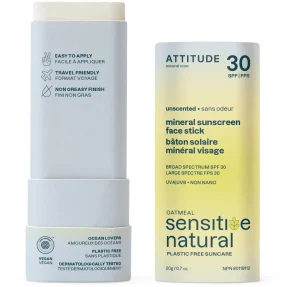
We’ve chosen this product because if possible, you should always chose cosmetics that are dermatologically tested and fragrance free! So, we’re pleased to see this in the ATTITUDE plastic-free suncare product portfolio. Apart from the unscented version, they also offer Orange Blosson, Tropical, Mint & Cucumber scents.
We love that it comes in FSC cardboard from eco-managed forests, and they have a specific range for babies and children.
- Active ingredient: 20% Non-Nano Zinc Oxide
- Inactive ingredients: Vitis Vinifera (Grape) Seed Oil, Caprylic/Capric Triglyceride, Cocos Nucifera (Coconut) Oil, Helianthus Annuus (Sunflower) Seed Oil, Polyhydroxystearic Acid, Helianthus Annuus (Sunflower) Seed Wax, Behenyl Behenate, Ricinus Communis (Castor) Seed Oil, Mica, Coco-Caprylate/Caprate, Butyrospermum Parkii (Shea) Butter, Glyceryl Behenate, Euphorbia Cerifera (Candelilla) Wax, Avena Sativa (Oat) Kernel Oil, Capryloyl Glycerin/Sebacic Acid Copolymer, Silica.
- Microplastics in Ingredients: no
- PFAS in Ingredients: no
Vegan: Yes
Made in: Canada
Shop ATTITUDE on Amazon USA
Shop ATTITUDE Baby & Kids on Amazon USA
Related: 12 Plastic Free Shampoo Brands You Can Feel Good About Using
3. Raw Elements Ocean Ramsey World Reef Day SPF 30 Organic Sunscreen Lotion Stick (USA)
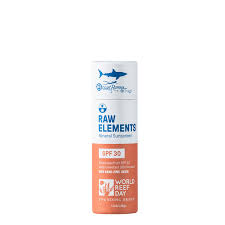
Raw Elements developed the Ocean Ramsey Stick in partnership with marine biologist and conservationist Ocean Ramsey, featuring a coral reef safe formula with 25% non-nano zinc oxide for ultimate sun protection. It offers a broad spectrum protection and 80 minutes of water resistance for your water-based activities.
The Raw Elements Ocean Ramsey World Reef Day comes in a compostable cardboard tube. Plus, 10% of proceeds support Save the Turtles International and One Ocean Conservation.
The same brand also offers a natural sunscreen for babies & kids, as well as a face and body all-natural mineral sunscreen.
- Active ingredients: 25% Non-Nano Zinc Oxide
- Inactive Ingredients: Helianthus Annuus (Sunflower) Seed Oil, Theobroma Cacao (Cocoa) Seed Butter, Sera Flava, Cocos Nucifera (Coconut) Oil, Helianthus Annuus (Sunflower) Seed Wax, Calendula Officinalis Flower Extract, Organic Chamomilla Recutita (Matricaria) Flower Extract, Rosmarinus Officinalis (Rosemary) Leaf Extract, Tocopherol.
- Microplastics in Ingredients: no
- PFAS in Ingredients: no
Vegan: Yes
Made in: the USA
Shop Raw Elements World Reef Day on Amazon USA
Shop Raw Elements baby sunscreen on Amazon USA – Canada
Related: 7 Best Plastic Free Face Wash Brands to Supercharge Your Skincare
4. ZERO Waste Natural Sunscreen Stick 100% Plastic Free SPF 20
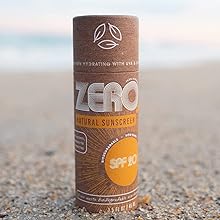
ZERO (the brand name says it all!) has created a zero waste sunscreen that is safe for the oceans, fully plastic-free, and affordable! With non-nano zinc oxide as its only active ingredient, this sunscreen provides UVA-UVB true broad spectrum protection. It offers also a great value for money as it’s a full 1.5 oz cardboard tube – not a small chapstick size! It contains NO benzene, alcohol, or parabens.
We love that you can toss it back to Earth when you run out, so it’s truly ZERO Waste Packaging!
- Ingredients: Coconut Oil, Shea Butter, Non-Nano Zinc Oxide, Beeswax, Vitamin E
- Microplastics in Ingredients: no
- PFAS in Ingredients: no
Vegan: No
Made in the USA.
Shop on Amazon USA
Related: Plastic Free Deodorant: 15 Zero Waste Options
5. Raw Love All-Natural Mineral Sunscreen SPF 35

This branded eco-friendly sunscreen product is made up of non-toxic, water-resistant components like beeswax which is quite suitable for swimmers. It is a zero-waste, plastic-free sunscreen that contains natural ingredients while still offering UVA and UVB protection. It is free of all toxic chemicals, parabens, PABA, preservatives or synthetic fragrances. The packaging is done in environment-friendly aluminum containers.
- Ingredients: Non-Nano Zinc Oxide, Coconut Oil, Extra Virgin Olive Oil, Jojoba Oil, Sesame Oil, Beeswax, Shea Butter, Eucalyptus oil, Lavender Oil, Peppermint Oil, Vitamin E Oil, Sunflower Seed Oil, Carrot Seed Extract.
- Microplastics in Ingredients: no
- PFAS in Ingredients: no
Vegan: No
Made in Hawaii, USA, with love in and aloha.
Shop on Amazon USA
Related: 7 Best Plastic Free Eye Creams
6. SurfDurt Reef Safe Sunscreen SPF 30
SurfDurt is a reef safe sunscreen made with 11 food-grade ingredients and made with non-nano zinc oxide. They replaced harmful toxins for a natural sunscreen that protects your skin and keeps marine and aquatic life safe, while being resistant in the water for 80 minutes.
For packaging, they use a bamboo reusable container lined with an aluminum interior lining, which is perfect to use for future DIY zero waste beauty products.
- Ingredients: Non-Nano Zinc Oxide, Cocoa Butter*, Coconut Oil*, Jojoba Oil*, Avocado Oil, Beeswax, Beeswax Derivative, Mango Butter, Vitamin E, Iron Oxide Pigment
*All Ingredients Certified Organic. - Microplastics in Ingredients: no
- PFAS in Ingredients: no
Vegan: No
Made in California, USA.
Shop on Amazon USA
Related: 10 Best Plastic Free Perfumes for a Natural, Non-Toxic Scent!
7. Little Hands Hawaii Mineral Sunscreen
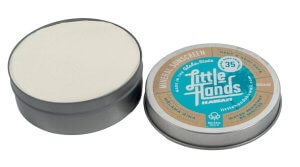
This brand has focused on chemical-free formulations of body and face sunscreen that are safe for users, especially children. Its sunscreen products are made of natural ingredients like jojoba oil and kokum butter. It also contains minerals in the form of zinc oxide that has good UV protection capability but doesn’t get absorbed into your skin due to its greater particle size (more than 300 nanometers). It is available in aluminum packaging which is reusable and prevents plastic pollution.
- Active Ingredients: 23% Non-Nano Zinc Oxide.
- Inactive Ingredients: Organic Sunflower Oil, Organic Jojoba Oil, Kokum Butter, Local Beeswax, Vitamin E Oil, and Frankincense Essential Oil.
- Microplastics in Ingredients: no
- PFAS in Ingredients: no
Vegan: No
Made in the USA, Hawaii
Shop from Amazon USA
Related: 7 Plastic Free Essential Oils for Your Home
8. Sunbutter Sunscreen & Tinted Sunscreen Skincare
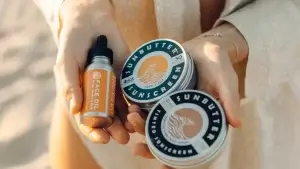
SunButter is an Australian, marine-biologist-founded brand known for its SPF50 reef-safe mineral sunscreen. Its formulas are palm oil–free, vegan, and microplastic-free, providing two hours of water-resistant UVA/UVB protection.
- Active Ingredients: Non Nano Zinc Oxide 227.5mg/g
- Inactive Ingredients: Medium chain triglyceride (from coconut oil), Castor Oil, Coconut Oil, Candelilla wax, Hydrogenated castor oil, Isostearic acid (plant based binder), Polyglyceryl-3 polyricinoleate (vegetable based emulsifier), d-alpha-tocopheryl acetate (Vitamin E).
- Microplastics in Ingredients: no
- PFAS in Ingredients: no
Vegan: Yes
Made in Australia
Shop Sunbutter from Biome Australia
Related: 9 Best Toothpaste Without Plastic and BPA
Our Personal Tip: Cover Yourself as Much as Possible so that You Don’t Need Much Sunscreen at All!
As skin cancer rates are rising (4), particularly in Australia, one of the countries with the highest rate of skin cancer in the world, we cannot reiterate the importance of limiting your time in the sun, having a proper skin barrier with a daily SPF, and most importantly covering yourself in the sun as much as possible with high quality UPF 50+ UV protecting clothing and/or long sleeve swimwear.
Related: What is Plastic Doing in My Shampoo?
FAQ about Non-toxic Sunscreen
– Why Choose a Mineral-based Sunscreen?
Choosing a zinc based sunscreen will keep you well clear of the harmful consequences of typical chemical sunscreens. Zinc is known as a physical sunscreen, which forms a layer on top of the skin and usually comes in thicker formulas that don’t wash off into the water as easily. It is a naturally occurring mineral that provides a physical barrier on the skin, essentially shading you from the sun.
Zinc has many other good qualities, it can help to heal acne and scarring, it can soothe inflamed skin, and it helps to regulate oil production.
There are many types of zinc-based sunscreens available. A good brand will clearly list all its ingredients on the packaging, (active AND base ingredients) so that’s the first thing to look out for. Zinc should be the only active ingredient.
Related: Easy DIY Zero Waste Beauty Recipes
– What Does Non-Nano Zinc Mean?
There has been some confusion regarding the size of zinc particles commonly used in sunscreens. Zinc is typically known for the white pasty cast it leaves on the skin. Engineers & formulators have learned that if particles are ground into smaller ones (micronised or nanoparticle), this significantly reduces the white cast and greatly improves the SPF making for smoother formulas that feel lighter on the skin.
Nanoparticles are used in a multitude of applications such as medications, cosmetics, construction, and paints. The concern with sunscreen is that these small-sized particles can be absorbed by the skin and possibly by microorganisms such as coral. Studies (5) are inconclusive as to the ecological effects of nano zinc used in sunscreens. There is no universal approach regarding nanoparticles in sunscreens, and they are approved and used widely across the globe. We simply don’t know enough about non-nano zinc oxide to claim that it has no effect when it comes into contact with coral reefs. Due to the conflicting research (6) regarding this topic, for now, we recommend choosing a sunscreen brand that clearly states the type of zinc they use, and opt for one that uses non nano zinc, but even better cover your skin so that you don’t need sun lotion.
Related: 5 Tips to Reduce Plastic Waste When Shaving
– What is a Reef-Safe Sunscreen?
“Reef Safe” is used to refer to a chemical formula that will not have any negative effects on the coral reef ecosystem. Formulas that are labeled as “Reef Safe” should not include known toxic chemicals (7) like oxybenzone and octinoxate that can disrupt the fragile balance of water chemistry or be consumed by ocean organisms to cause harm.
Unfortunately, terms like “reef safe”, “reef conscious”, “reef-friendly” or “ocean-friendly” are not regulated, and there is no internationally accepted definition of “Reef Safe”, making it hard to define. There is no standardized test method or internationally recognized certification process for this terminology, which again makes it difficult to regulate the products on the market.
A 2021 US class action lawsuit was filed against Target Corp. (8) claiming that Target falsely advertises that its “up & up” brand sunscreen has a “reef-conscious formula,” when, in reality, it contains ingredients that are harmful to corals.
– How Do I Know If My Sunscreen Contains Microplastics or PFAS?
Identifying microplastics and PFAS in sunscreen can feel overwhelming, but there are reliable tools that make it much easier.
- The Beat the Microbead (9) database by the Plastic Soup Foundation is one of the most comprehensive resources available for identifying microplastics in cosmetics. Their guide to microplastics explains which ingredients are considered plastic-based and why they matter. They also offer an app that allows you to scan products while shopping.
- For ingredient transparency,INCIDecoder (10) is a practical everyday tool. By copying and pasting a sunscreen’s ingredient list, you can quickly see which ingredients are synthetic polymers, potential microplastics, or PFAS-related compounds.
Conclusion: Choose a Reef-safe Sunscreen to Protect Your Skin When You can’t Cover Up!
We hope that our overview of biodegradable sunscreen brands has helped you find the perfect one for your needs.
In today’s fashion and beauty-oriented lifestyle, sustainable and non-toxic skincare products are in high demand. As people become more conscious about their skin and the environment, beauty products have to meet some essential requirements in taking care of the well-being of the users without causing any adverse effects. At the same time, the environmental impact of such products has also become a matter of concern due to the presence of chemical and toxic components that lead to higher waste generation and increased pollution. So there is a growing demand for more zero-waste, plastic-free, organic products that protect the environment and marine lives from harmful effects.
References and Scientific Literature Sources:
(1) https://link.springer.com/article/10.1007/s00244-015-0227-7
(2) https://www.custommarketinsights.com/report/sun-protection-market/
(3) https://www.canada.ca/en/health-canada.html
(4) https://www.skincancer.org/skin-cancer-information/skin-cancer-facts/
(5) https://www.tga.gov.au/resources/publication/corporate-reports/literature-review-safety-titanium-dioxide-and-zinc-oxide-nanoparticles-sunscreens
(6) https://www.ewg.org/sunscreen/nanoparticles-in-sunscreen/
(7) https://savethereef.org/about-reef-save-sunscreen.html
(8) https://www.classaction.org/news/class-action-alleges-target-falsely-advertised-up-and-up-sunscreen-as-reef-conscious
(9) https://www.beatthemicrobead.org/
(10) https://incidecoder.com/
—
Browse the I’m Plastic Free platform to discover more plastic-free beauty brands, or read more blogs in our plastic-free beauty category.






Add a comment